

Jeffries signals push for sanctions on violent West Bank settlers
House Democratic leader calls for potential arms transfer restrictions, marking a significant shift in U.S. policy toward Israel.
Shifting Democratic strategy
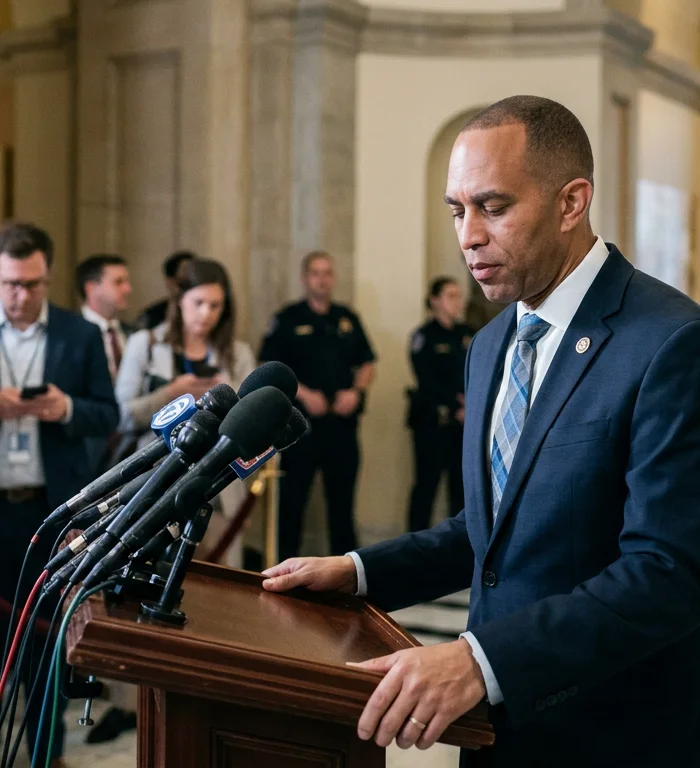
House Minority Leader Hakeem Jeffries indicated a pivotal change in the Democratic Party’s approach to the Israel-Hamas conflict, stating he will support sanctions against violent settlers in the West Bank. The move follows his remarks describing the current humanitarian situation in Gaza as unacceptable and unsustainable, signaling a hardened stance from the Democratic leadership in the lower chamber.
Jeffries explicitly stated his intention to open discussions regarding the restriction of arms sales to Israel, a departure from the traditional bipartisan consensus on unconditional military support. According to his comments provided to a U.S. media outlet, the transition toward a two-state solution now requires an urgent, comprehensive diplomatic effort from Washington.
Legislative and regional context
Democratic lawmakers have faced increasing internal pressure to Democratic lawmakers have faced increasing internal pressure to enforce the Leahy Laws, which prohibit the provision of military assistance to foreign security forces implicated in gross human rights violations. Since the onset of the conflict on October 7, the debate surrounding the oversight of U.S. defense exports has shifted from a fringe concern to a central tenet of the party's foreign policy platform.
The geopolitical ramifications are significant for Gulf states currently serving as mediators between Israel and Hamas. Efforts by nations such as Qatar and Egypt to negotiate a ceasefire rely heavily on the perceived stability of U.S.-Israel strategic ties. A move by the U.S. to condition military aid could disrupt these delicate diplomatic channels, potentially altering the leverage both Hamas and the Israeli government perceive during negotiations.
Security alliance implications
Conditioning military aid presents a direct challenge to Conditioning military aid presents a direct challenge to the long-standing defense cooperation between the United States and Israel. If legislative efforts gain traction, the shift could undermine the strategic partnership that has defined the regional security architecture for decades.
The primary uncertainty remains whether these discussions will translate into concrete legislative action before the end of the year. Investors and regional observers are monitoring the potential introduction of bills that link military equipment transfers directly to humanitarian access or settler activity, which would necessitate a formal review of existing aid packages.
More stories
- Germans oppose Ukraine aid as poll shows support slipping
- Kim Jong-un receives 10 envoys after constitutional shift
- Ukraine claims Libya strike sinks Russian naval corvette
- COP31 climate talks collapse over fossil fuels and funds
- Russian military faces 1,087 recorded suicides in Ukraine war
- US faces China, Russia in Africa minerals contest
- Estonia to close 5 Russia road crossings for six months
- Mashatile seeks GBVF action after 1-in-3 violence finding
- Indian authorities search for 1 sailor after Oman tanker attack
- Atiku aide backs crude-contract review for petrol subsidy
Latest news
- Trump prepares tariffs on China and other major exporters
- New-car buyers pay record average $50,087 in October
- Banks face ECB reserve debate over liquidity and profits
- Investors see Anthropic debut gains fade below $83 a share
- Iraq orders federal control over Kurdish-area oilfields
- Nvidia shares retreat as AI rally cools before PCE data
- Macy’s parade faces balloon limits as storm winds approach