

Japan Faces Cultural Hurdles Integrating Growing Muslim Workforce
Japan’s reliance on foreign labor is driving corporate policy changes, but rising social and political resistance to accommodating Muslim cultural practices…
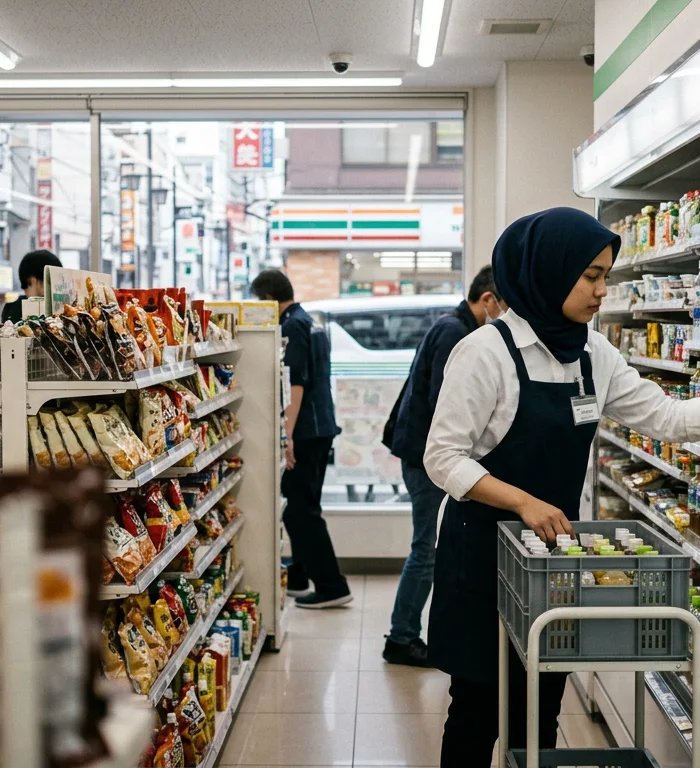
Japan’s labor market is increasingly reliant on foreign workers to mitigate severe shortages, with major retailers like FamilyMart, Lawson, and 7-Eleven adjusting corporate policies to accommodate religious requirements, such as the use of hijabs. This shift reflects a broader demographic trend, as the Muslim population in Japan grew from approximately 110,000 in 2010 to an estimated 350,000 by the end of 2023. Despite corporate efforts to integrate these workers, significant friction exists between institutional policy and public sentiment.
Public opposition to accommodating specific religious practices, particularly Islamic burial rites, has intensified. Local government initiatives to establish burial sites in Miyagi and Oita prefectures were abandoned following widespread community resistance and concerns regarding public health. This social friction is exacerbated by the prevalence of misinformation, including unsubstantiated claims regarding welfare usage and criminal activity, which have contributed to isolated incidents of violence, such as the 2026 arson of a mosque in Hokkaido.
Political entities, including the Sanseito party, have begun to leverage these cultural tensions, framing the accommodation of Muslim practices as antithetical to Japanese social norms. This political positioning complicates the efforts of private enterprises to foster a multicultural workforce. The disconnect between corporate inclusivity and public skepticism suggests that businesses may face reputational risks if they do not coordinate with policymakers to address broader societal concerns.
For policymakers, the challenge lies in reconciling the economic necessity of foreign labor with the preservation of social cohesion. Without a systematic, government-led framework for integration, the current trajectory points toward the development of parallel communities rather than assimilation. Institutional stakeholders should anticipate continued volatility as the country attempts to balance its labor requirements with deep-seated cultural expectations.
More stories
- ICE arrests at Seattle airport draw protests and scrutiny
- EU rejects COP31 deal as fossil fuel divisions block pact
- Staff notice in Commission cyberattack tests EU response
- Britain-EU deal eases food checks and youth travel rules
- European troops in Poland drill near reported missile crash
- Brooklyn collapse kills eight as city orders site sweeps
Latest news
- Trump prepares tariffs on China and other major exporters
- New-car buyers pay record average $50,087 in October
- Banks face ECB reserve debate over liquidity and profits
- Investors see Anthropic debut gains fade below $83 a share
- Iraq orders federal control over Kurdish-area oilfields
- Germans oppose Ukraine aid as poll shows support slipping
- Kim Jong-un receives 10 envoys after constitutional shift
- Ukraine claims Libya strike sinks Russian naval corvette