Israel’s India pivot tests a wider Middle East–Indo-Pacific security arc
Israel is increasingly framing India and the Abraham Accords partners as part of a wider strategic geometry to counter Iran, a thesis that could reshape…
Mei Lin ·
# Israel’s India pivot tests a wider Middle East–Indo-Pacific security arc
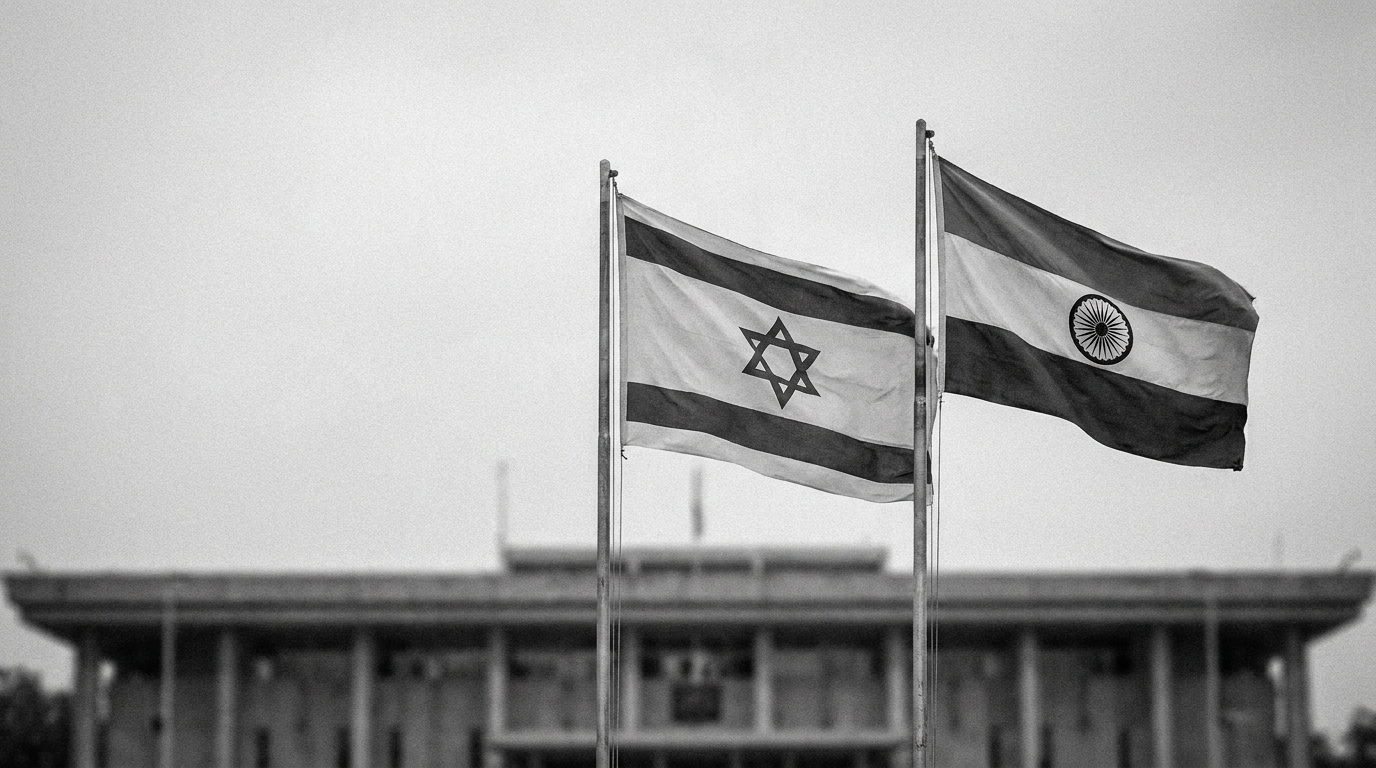
Israel is placing fresh emphasis on building links that run from the Eastern Mediterranean through Abraham Accords partners and onward to India, positioning the network as part of a long-term approach to containing Iran. The idea, outlined in a recent analysis in Israeli media, reflects an effort to widen Israel’s strategic map beyond its immediate neighborhood and into the Indo-Pacific.
Middle East
For Asia, the relevance is less about symbolism and more about whether Israel’s partnerships with India and Gulf states turn into repeatable patterns: joint exercises, intelligence coordination, or new trade and technology arrangements. If those mechanisms appear, they would add a new layer to the region’s already crowded security architecture.
The Abraham Accords refer to normalization agreements Israel signed in 2020 with the United Arab Emirates and Bahrain, followed by Morocco and Sudan taking steps toward normalization. The accords lowered political barriers to diplomatic, commercial, and in some cases security engagement between Israel and several Arab states, creating new corridors for travel, investment, and coordination.
In parallel, Israel has cultivated ties with India across technology, agriculture, and defense, while India has expanded partnerships across the Gulf, where large Indian expatriate communities and energy trade give New Delhi strong incentives to keep channels open. The analysis frames these relationships as a potential bridge system: Israel connected to Gulf partners in the Eastern Mediterranean and Arabian Gulf, and India connected through its own Gulf relationships.
Middle East
If Israel, India, and Abraham Accords countries begin treating one another as an integrated strategic set rather than as separate bilateral relationships, the spillover could reach beyond the Middle East. Trade routes and logistics planning could adjust toward more formalized East Med–Gulf–India commercial pathways, especially for dual-use technologies and infrastructure projects that sit on the edge between civilian and defense applications.
On the security side, the framing of a shared “containment” logic toward Iran raises the stakes for maritime security in the Arabian Sea and wider Indian Ocean, where energy flows, shipping insurance costs, and naval signaling matter for Asia’s inflation and supply chains. It could also complicate regional diplomacy for countries trying to keep balanced relations with Tehran while deepening ties with Israel or Gulf partners, particularly as foreign policy rhetoric hardens around blocs.
By 2024-07-28, watch for observable proof points that move the concept from strategic narrative to operational reality: joint statements naming trilateral or minilateral cooperation involving Israel, India, and at least one Abraham Accords country; new trade or technology agreements that explicitly reference cross-regional corridors; or announced military or maritime exercises that include these partners. The signal is right if concrete, dated announcements appear that bind the relationships into repeatable formats; it is wrong if follow-through is absent or if public diplomacy shifts back to vague intent without scheduled actions or named frameworks.