Mumbai Submarine Cable Hub Poses India Infrastructure Risk
India faces infrastructure risks with 95% of its westward data traffic concentrating in Mumbai, threatening digital services and AI operations.
Jason Kwon ·
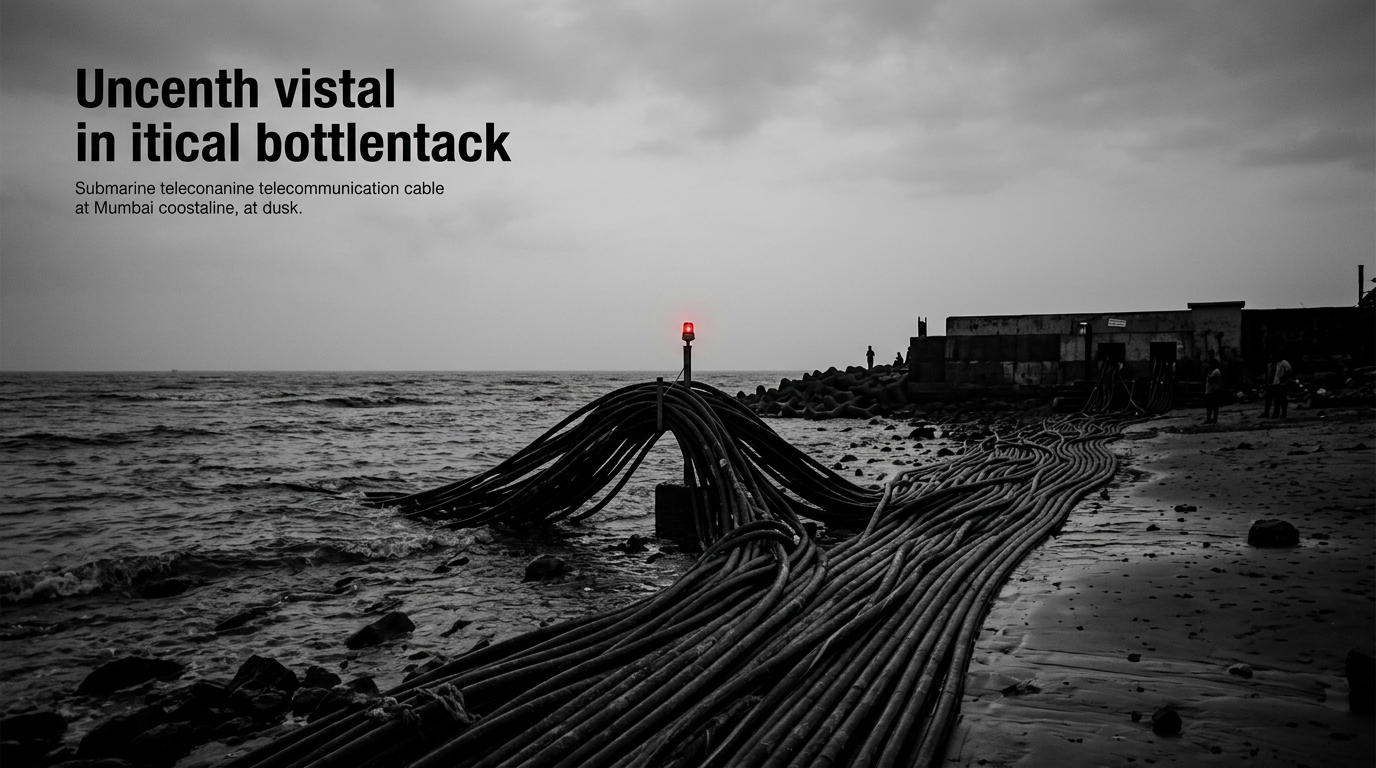
India's critical digital infrastructure is concentrated in a small geographic area, creating a significant risk of service disruption. A report from the Takshashila Institution highlights that 13 submarine cables, responsible for carrying 95 percent of India's westward data traffic, converge within a six-kilometer radius in Mumbai. This concentration makes the nation's financial services, cloud computing, and government operations vulnerable to potential widespread outages if these cables were to be simultaneously breached.
While the country's cable architecture allows for traffic rerouting through alternative landing points in cities like Chennai and Kochi, any disruption could still lead to performance degradation. Such slowdowns could impose substantial costs on critical sectors, including banking and stock exchanges. Artificial intelligence infrastructure is particularly susceptible to these delays, given its reliance on high-volume, high-speed data transfers.
Aging Network and Repair Dependency
A substantial portion of India's physical network is aging. The Takshashila Institution research indicates that 11 of the 18 active international cables are nearing their 25-year operational lifespan. This infrastructural vulnerability is compounded by India's dependency on foreign repair capabilities.
The nation currently lacks domestic subsea repair vessels. Consequently, any cable fault in Indian waters necessitates foreign repair ships to travel from distant hubs such as Dubai or Singapore. Takshashila researcher Anwesha Sen noted that securing licenses for these foreign vessels to operate in Indian waters can add several weeks to the repair timelines, exacerbating potential downtime.
Connectivity Gap Amid Surging Demand
Despite being a major consumer of digital services, India's submarine cable connectivity significantly lags its data consumption. The Takshashila Institution reports that India accounts for 20 percent of global data consumption but possesses only 3 percent of the world's submarine cable connectivity. The Broadband India Forum noted that India operates 21 cable landing stations, representing a mere 1 percent of the approximately 1,900 planned and active global gateways.
As domestic demand for digital services, including artificial intelligence data centers, continues to accelerate, policymakers confront a growing infrastructure gap. Should the rapid pace of digital expansion continue to outstrip the development of domestically managed physical connectivity, India risks encountering structural bottlenecks within its burgeoning digital economy.