

IRGC claims tanker strikes near Strait of Hormuz
Iran’s Revolutionary Guard reported seven maritime incidents, asserting operational control over the critical energy transit bottleneck.
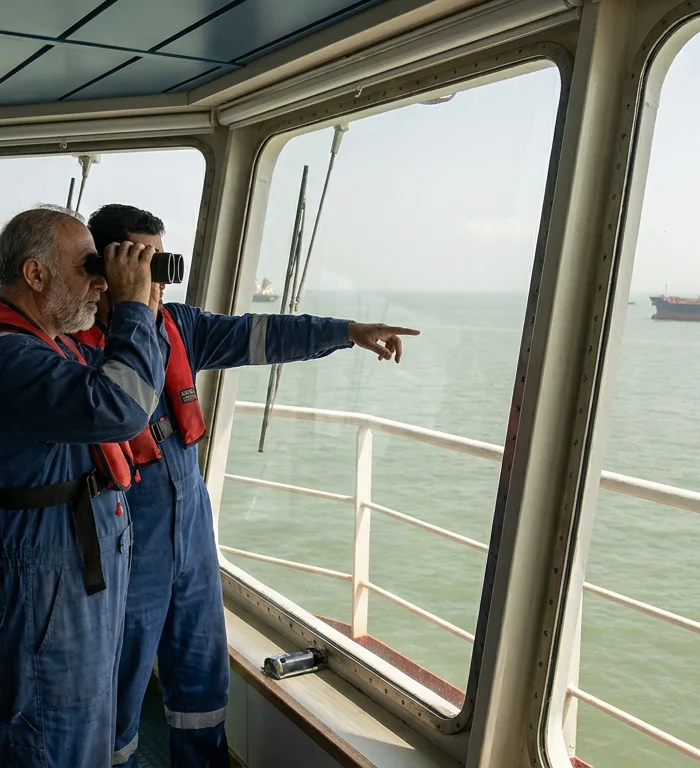
IRGC reports vessel damage in Gulf
The Islamic Revolutionary Guard Corps (IRGC) Navy reported that four vessels were struck and set ablaze in the Persian Gulf, while three additional ships hit mines near the Strait of Hormuz. The announcement, released on October 22, 2026, marks an escalation in maritime security concerns within one of the world's most critical energy chokepoints. IRGC naval personnel stated they are managing maritime movement with support from the Iranian public. “With this enormous national support, the IRGC Navy sailors continue to manage and control the Strait of Hormuz,” the force said in its official release.
Strategic importance of Hormuz transit
The Strait of Hormuz serves as a vital maritime passage for hydrocarbon exports from major producers including Saudi Arabia, the United Arab Emirates, and Qatar. Analysts frequently identify the waterway as a primary lever for Iranian power projection, particularly when the nation seeks to offset the impact of international sanctions regimes. The region faces heightened logistical sensitivity as global trade remains impacted by ongoing security issues in the Red Sea. Any disruption to the flow of Very Large Crude Carriers (VLCCs) through these waters historically forces shifts in energy pricing and immediate reactions from international maritime insurance markets.
Energy markets and regional security Gulf The Islamic Revolutionary The IRGC's assertion of control introduces direct risks to regional stability and global energy supply chain security.
If the claimed kinetic activity results in verified damage to transit volumes, the market reaction is expected to manifest through increased war-risk premiums for commercial shipping operating in the Persian Gulf.
The primary uncertainty remains whether these incidents represent a sustained campaign of maritime interference or tactical posturing. Observers are now monitoring for responses from the U.S. Fifth Fleet and signs of volatility in Brent crude pricing to determine if global traders view the current threat levels as credible.
More stories
- Germans oppose Ukraine aid as poll shows support slipping
- Kim Jong-un receives 10 envoys after constitutional shift
- Ukraine claims Libya strike sinks Russian naval corvette
- COP31 climate talks collapse over fossil fuels and funds
- Russian military faces 1,087 recorded suicides in Ukraine war
- US faces China, Russia in Africa minerals contest
- ECB faces 6.1% Lithuania inflation with 2.50% rate
- Philippine Supreme Court bars Congress budget increases
- Monte Paschi bid fight prompts Meloni to rule out Rome role
- US sanctions warning puts next Iran-linked bank on notice
Latest news
- Trump prepares tariffs on China and other major exporters
- New-car buyers pay record average $50,087 in October
- Banks face ECB reserve debate over liquidity and profits
- Investors see Anthropic debut gains fade below $83 a share
- Iraq orders federal control over Kurdish-area oilfields
- Nvidia shares retreat as AI rally cools before PCE data
- Macy’s parade faces balloon limits as storm winds approach