Iran drone attack hits Bahrain as Hormuz tanker is struck
Iran drone attack reports in Bahrain and a tanker strike in the Strait of Hormuz intensified pressure on U.S.-led efforts to secure shipping lanes.
Lauren Collins ·
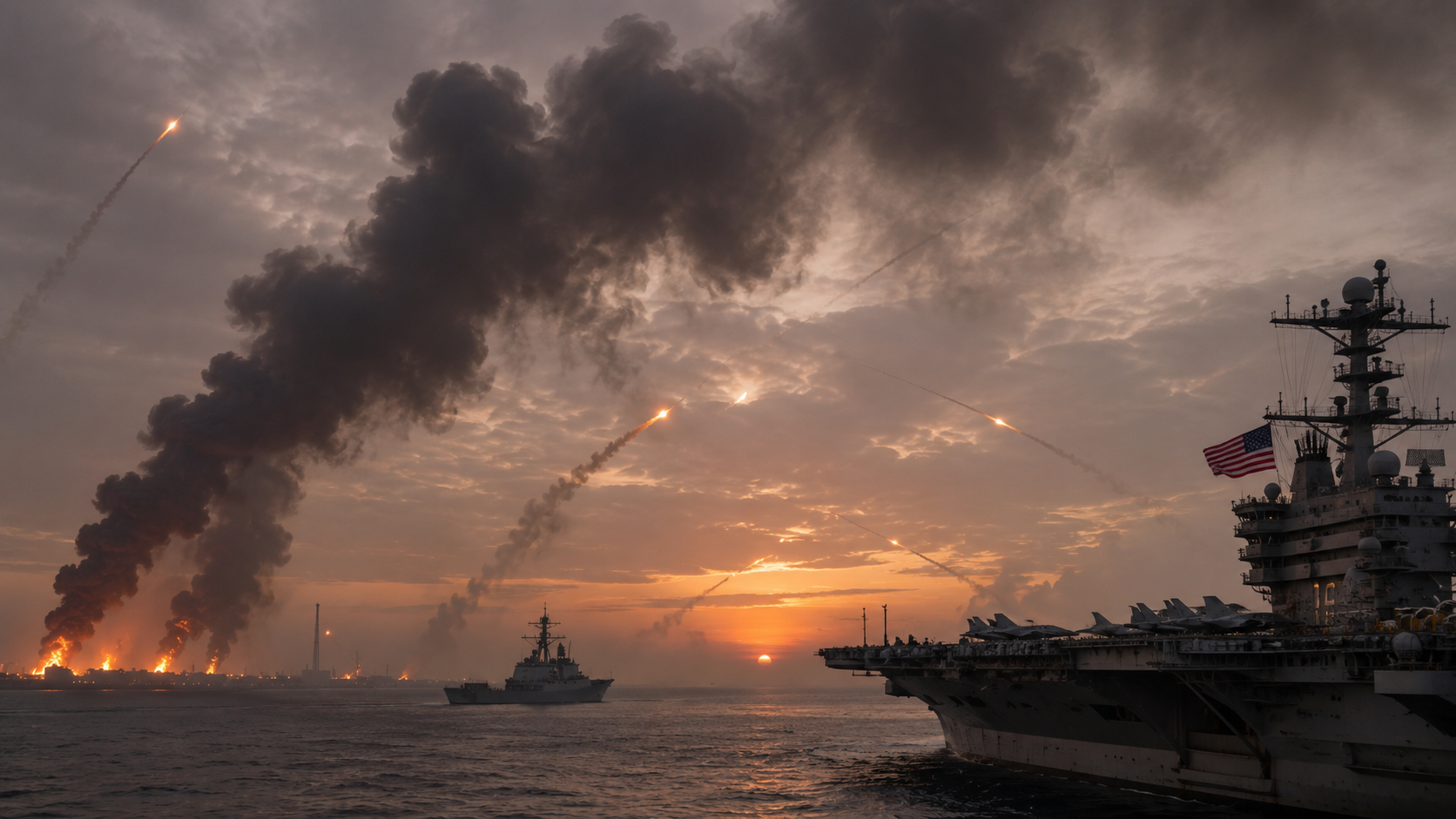
Iran drone attack reports in Bahrain and a tanker strike in the Strait of Hormuz intensified pressure on U.S.-led efforts to secure shipping lanes.
Bahrain said “a number of Iranian drones” targeted the country on Saturday, while British authorities reported an attack on a tanker in the strait the same day. The incidents followed overnight U.S. airstrikes on Iranian military sites, deepening worries that the war’s fragile ceasefire could unravel.
Bahrain, which hosts the U.S. Navy’s 5th Fleet, condemned the drone operation as a threat to public safety. There were no immediate reports of damage, and officials did not describe the sites struck.
Bahrain, Tehran, and Washington trade signals
In a statement, Bahrain’s Foreign Ministry called the drone targeting “a flagrant threat to the security of citizens and residents.” The government has been one of Tehran’s most vocal Gulf critics and is a key U.S. security partner in the region.
The timing put additional focus on Bahrain’s recent diplomacy with Washington and its neighbors. The country had just hosted U.S. Secretary of State Marco Rubio for a Gulf Cooperation Council foreign ministers meeting that ended with a call for Iran to stop its attacks and for the Strait of Hormuz to remain fully open.
Iran’s Islamic Revolutionary Guard Corps, in remarks carried by the state-run IRNA news agency, said it had struck multiple locations linked to what it called “the U.S. terrorist army in the region.” The IRGC statement did not specify where those targets were or whether it was referring to Bahrain.
The U.S. military’s Central Command said the United States conducted overnight strikes on Iranian missile and drone positions, as well as coastal radar sites. The U.S. action came after an Iranian drone attack on a container ship that was trying to depart the strait on Thursday.
Vice President JD Vance, who is leading negotiations with Iran, warned on social media Friday night that violence would be answered in kind. He also urged Iran to “pick up the phone” if disputes arise over the ceasefire framework.
Shipping corridors expand as tanker comes under attack
Separately on Saturday, the United Kingdom Maritime Trade Operations center reported that a tanker in the Strait of Hormuz was attacked. UKMTO said the crew was safe and there was no reported environmental damage.
No party immediately claimed responsibility for the strike, though suspicion fell on Iran in early reporting. The strait has been a repeated flashpoint during the conflict because it is a choke point for global oil and natural gas shipments.
Shortly after the UKMTO advisory, the Joint Maritime Information Center—overseen by the U.S. Navy—said it would broaden a route near Oman’s shoreline. The purpose, the center said, was to support both inbound and outbound ship traffic.
That shift is intended to reduce the exposure of commercial vessels to attack, but it also risks sharpening a familiar dispute: who sets the rules of transit. Iran has asserted that ships must comply with its directions and has warned it will begin charging fees for passage through the strait.
Interim deal clock runs as leverage shifts at sea
The latest violence arrives during a narrow negotiating window. Under an interim deal, the United States and Iran have 60 days to settle terms aimed at reaching a broader agreement.
The talks include security for maritime traffic through the strait, as well as questions tied to Iran’s nuclear program and its stockpile of highly enriched uranium. Another key element is ending the fighting in Lebanon between Israel and Hezbollah, the Iran-backed militant group.
For U.S. partners in the Persian Gulf, the immediate priority is keeping the waterway open without giving Tehran new leverage. For Iran, control over the strait has long been a pressure point in negotiations, and disputes over transit could spill into wider military escalation.
The next test will be operational as much as diplomatic: whether expanded shipping routes can function safely amid continued strikes, and whether Washington and Tehran can keep talks on track while military exchanges continue near critical energy infrastructure.