India’s tri-service security forum flags ‘strategic communication’ and tech, a procurement tell for defense software vendors
At a five-day Integrated Defence Staff programme in New Delhi running September 14–18, senior officers are discussing technological transformation in warfare…
Hannah Vogel ·
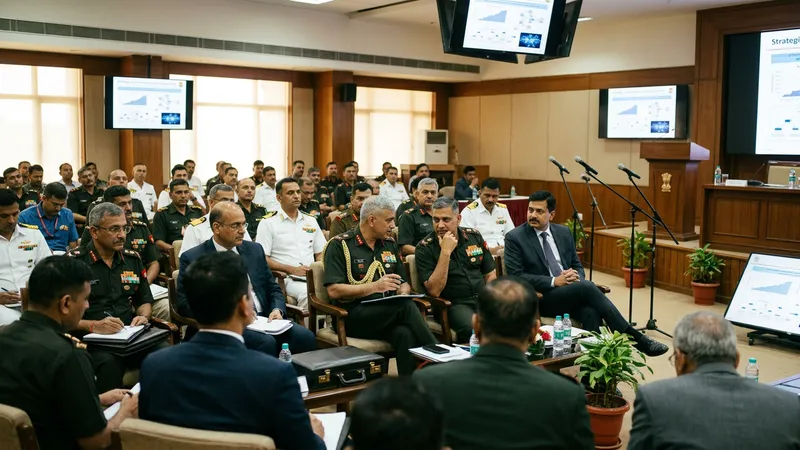
Senior Indian military leaders spent Tuesday, the second day of a five-day Integrated Defence Staff programme in New Delhi, discussing “emerging challenges in national and regional security,” with sessions slated on technological transformation in warfare and “strategic communication,” according to Prokerala’s report of a Ministry of Defence briefing and an IDS Headquarters post on X. The Combined Operational Review and Evaluation (CORE) programme runs September 14–18 at the Manekshaw Centre and includes officers from the Ministries of Defence, External Affairs and Home Affairs, Prokerala reports. IDS Headquarters described it as a “five-day professional development programme for senior officers of the Defence Forces” aimed at enabling “balanced and well-informed decisions in their future leadership roles.” No procurement figures, vendors, or specific initiatives were named. [S1]
The five-day tri-service programme puts “strategic communication” and tech transformation on the agenda
Prokerala’s account of the IDS-led CORE programme emphasizes two themes with direct commercial implications for defense technology providers: “technological transformation in warfare” and “strategic communication.” The presence of officers from Defence, External Affairs and Home Affairs expands the conversation beyond purely kinetic domains into information operations, civil-military coordination, and inter-ministry data sharing. For software, data, and communications vendors, that agenda typically presages new requirements: cyber-resilience, cross-domain data governance, and operational tooling that works across services and ministries. No contract actions were disclosed, and the event is framed as professional development, not an acquisition announcement. But in defense markets, agendas are leading indicators: what is taught to senior officers is often what is later asked for in tenders. [S1]
This is a single-source report without procurement figures; treat the signals, not the spin
This piece relies on a single reported source — Prokerala’s article citing a Ministry of Defence official and a same-day IDS Headquarters social post — with no independent confirmation, budget lines, or policy documents attached. That means every inference about buying behavior must be treated as analysis, not established fact. The lack of disclosed baselines, timelines, or KPIs also limits quantification: there are no numbers on programme headcount, spending intentions, or pilot outcomes to compare against previous years. What the packet does provide is a list of topics and participating ministries. In government procurement, those two elements shape the buying center and the evaluation criteria long before a request for proposal appears. [S1]
If “strategic communication” is a priority, the software buying center widens beyond the services
When IDS foregrounds “strategic communication,” it elevates information advantage to a core operational capability. In practical procurement terms, this tends to pull new stakeholders into the buying process — public information units, legal and diplomatic liaisons, and internal security agencies — alongside the tri-service command. For enterprise software sellers, that broadens the requirements stack: auditability of content workflows, multilingual monitoring, interoperability with public-diplomacy systems, and stringent data-protection terms demanded by Home Affairs. It also changes who must sign: deals may require concurrence from ministries beyond Defence, complicating timelines and approval paths. The Prokerala-reported participation of External Affairs and Home Affairs officers at CORE hints at that widened decision loop. Vendors whose sales motions rely on a single-service sponsor should expect more gatekeepers in the room. [S1]
Tri-service integration raises the interoperability bar vendors must clear
CORE is run by IDS, the “apex-level tri-service organisation … responsible for the higher management and integration of the Indian Armed Forces,” per the IDS post Prokerala cites. Integration-led forums often translate into procurement language as joint requirements, common data standards, and tests for cross-service deployment. That’s good news for platforms that already support multi-domain operations and bad news for narrow, service-specific tools. It will also pressure vendors to document how their systems reconcile identity, access control, and logging across separate service networks, and how they handle degraded or disconnected environments common in joint operations. No standard names or frameworks were cited in the report, but the direction of travel — interoperability as a gating criterion — is clear from the tri-service framing. [S1]
More ministries at the table means longer cycles and tougher data terms
Prokerala’s piece notes participation by officers from Defence, External Affairs and Home Affairs. Each brings a different statutory and operational lens to technology decisions: external messaging constraints from diplomatic channels, internal security and data retention requirements, and military-grade resilience. For procurement, that typically means: longer evaluation cycles, expanded security and privacy annexes, and a higher bar for on-premises or sovereign-hosting options. Vendors selling cloud-based analytics or communications tooling should expect more rigorous scrutiny of data flows, localization, and incident response — and plan for contract riders that reflect Home Affairs’ internal security priorities. While the report does not mention cloud or hosting, the expanded participant list is a straightforward proxy for stricter data terms ahead. [S1]
The skeptic’s read: a training conclave with no immediate buying signal
A reasonable counter-argument is that CORE is simply a professional development programme, not a policy forum, and therefore not a meaningful predictor of procurement. Prokerala names no budget, no pilot, and no directive; the IDS post emphasizes leadership development, not acquisition. On this view, vendors reading specifics into a general agenda risk misalignment. That skepticism is fair — and it sets the operational test for the next quarter: whether upcoming tenders or standard updates explicitly reference cross-service interoperability or strategic communication outcomes. If they do not, this week’s discussions will have been just that: discussions. [S1]
The near-term tells will show up in tenders and training rosters
The cleanest observable is in the language of forthcoming requests for information and proposals. If “strategic communication,” inter-ministry coordination, and joint-operability show up as evaluation criteria or mandatory requirements, then CORE’s agenda is shaping the buying center. Training rosters are another tell: expanded courses for information operations and joint data platforms often precede tooling rollouts. Finally, watch for procurement templates or standards updates issued under tri-service or inter-ministry banners; those can tighten compliance obligations overnight. None of these are confirmed by Prokerala’s report, but they are where a discussion-led signal converts into buying behavior. [S1]
What changes for sellers over the next renewal cycle
Assuming the agenda foreshadows requirements, sellers into India’s defense ecosystem should pressure-test three areas before renewal cycles: documented cross-service interoperability, evidence of secure information-operations workflows, and readiness for multi-ministry data-protection terms. Sales leaders will need to re-map stakeholders and expect additional sign-offs. Marketing chiefs should pivot messaging from single-service wins to joint-use cases and emphasize audit trails, controls, and interagency coordination. Procurement teams on the vendor side should pre-negotiate data-location and incident-reporting provisions that commonly extend reviews. None of this is guaranteed by the single-source report — but given IDS’s integration remit and the themes Prokerala highlights, preparing for these asks is cheaper than losing a renewal on compliance. [S1]