

India’s 15% gas goal puts Petronet’s US LNG pitch in DC focus
Akshay Kumar Singh’s Lake Charles appearance links India’s gas-import needs to US export-permit fights and Quad energy diplomacy.
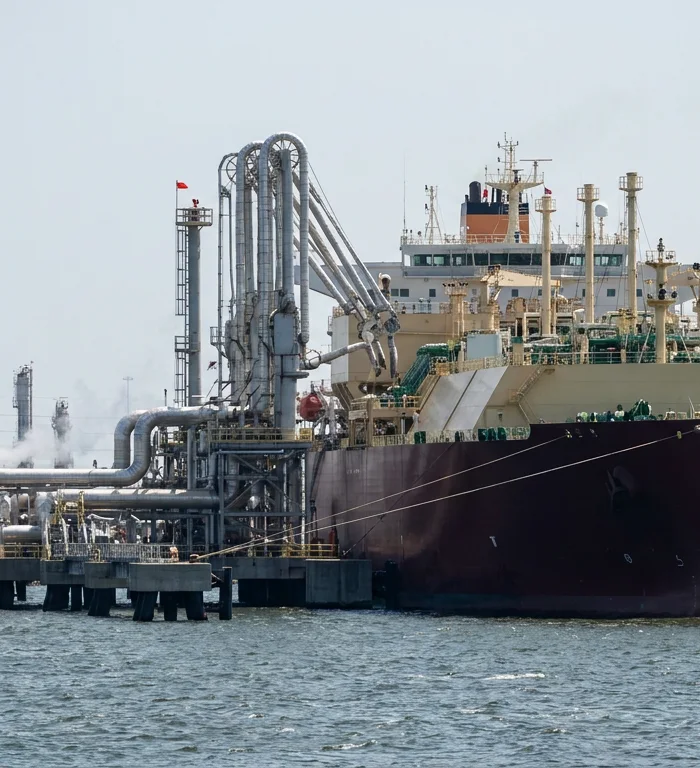
Petronet LNG MD and CEO Akshay Kumar Singh discussed India’s LNG demand in Lake Charles this week, as New Delhi targets 15% gas in its 2030 energy mix, a trade-news report said.
The report puts Singh’s comments inside a US policy fight over LNG exports to non-free-trade-agreement countries, with India seeking to lift gas from roughly 6% of its energy mix to 15% by 2030.
Petronet LNG MD
For Washington, the point is not only commercial. Long-term LNG supply from the Gulf Coast would give India another fuel source as US officials try to deepen Quad cooperation and reduce New Delhi’s exposure to Russian hydrocarbons.
The near-term constraint sits at the Department of Energy. A 2024 pause on pending non-FTA LNG export approvals has been contested in federal courts and Congress, according to the supplied material, leaving new export capacity tied to a regulatory process as well as market demand.
Petronet’s role matters because the company is one of India’s main LNG importers, and Singh’s appearance in Louisiana put an Indian buyer in the middle of a debate usually framed in Washington around domestic gas prices, climate policy, Gulf Coast investment and strategic competition.
If approvals move faster
The commercial question is whether US exporters can offer contract terms that match India’s demand growth and financing needs. If approvals move faster, Gulf Coast suppliers would have a clearer route to long-term Indian offtake; if they do not, Indian buyers may look harder at QatarEnergy, UAE suppliers or other producers.
The risk for the Trump administration is that permitting delay becomes a strategic signal. India’s gas target requires multi-decade supply planning, while US licensing fights can run on court and congressional calendars that do not match utility and refinery procurement cycles.
The next observable test is whether DOE filings, court arguments or congressional hearing records explicitly cite India or Quad partners when discussing the public-interest case for non-FTA LNG exports.
More stories
- Wolfspeed faces dilution risk in $1.5bn Pentagon loan
- Iran targets Starlink with jail terms of up to 5 years
- Iran changes Hormuz attack tactics, senior officials say
- Ethiopian troops reach Zalambessa border town, sources say
- Russian hybrid threat stretches MI5 after 1,000 expulsions
- Sharjah Islamic Bank profit rises 9% as financing expands
- China Iran talks press Hormuz reopening before Xi-Trump
- EU Canada alliance plan tests bloc appetite for looser ties
Latest news
- NEXANS request sets two-week wait for Cyprus cable surveys
- Fairfax wins Cabinet approval for ₹52,878 crore IDBI stake
- Poundland bosses back buyout for about 600 stores
- Fairfax faces CSB choice in $5.6bn IDBI stake deal
- Stocks face rotation risk at 5.9% Treasury yield, according to BofA
- LLM crisis reports capture 5.4%-11.0% of official figures
- Natacha Polony joins France's 2027 presidential race
- Publicis beats Q3 forecasts with 5% organic revenue growth