

Indian Semiconductor Startup Bharat Semi Secures $24 Million for AI Sensor Development
Bharat Semi has raised $24 million to develop AI-integrated image sensors, aiming for commercial production by 2027 to reduce hardware costs in industrial…
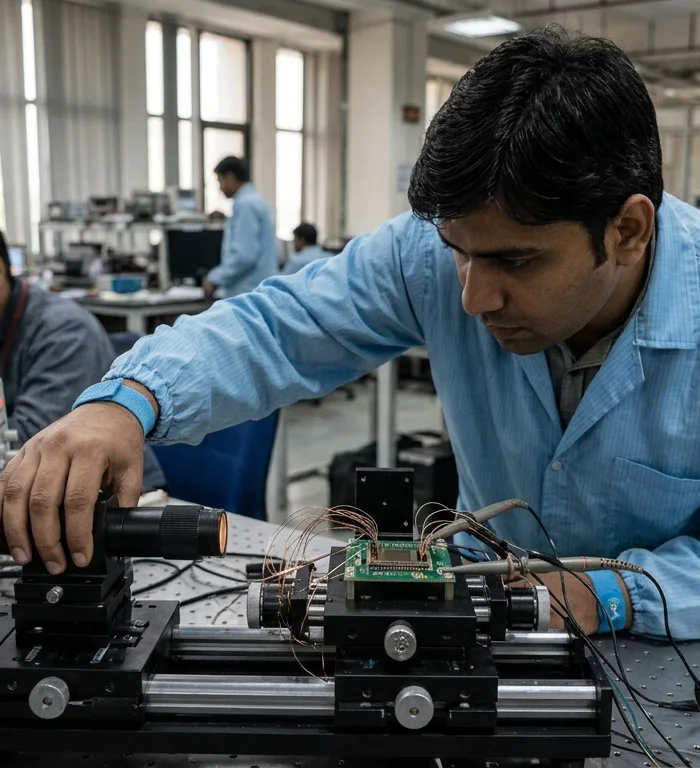
New Delhi-based semiconductor startup Bharat Semi has secured $24 million in seed funding to advance the development of AI-enabled image sensors. The company intends to utilize these funds to transition from prototype development to commercial production, with a target launch date set for 2027.
The firm operates on a fabless model, focusing exclusively on semiconductor design and software integration while outsourcing manufacturing. Its core technology aims to consolidate image capture and AI processing onto a single chip, a configuration the company claims can reduce system costs by at least 70% compared to traditional multi-component architectures.
Bharat Semi is currently pre-revenue and is actively pursuing international market entry, specifically targeting the United States. The company has reported preliminary design wins with General Atomics and Kaynes Semicon, though its products remain in the development phase.
Operational expansion is underway, with the company maintaining a workforce of approximately 75 employees across India and the U.S. Plans include increasing the U.S.-based engineering and business development staff to 20 by mid-2027 and initiating recruitment in Europe to support global scaling efforts.
New Delhi
The startup’s product roadmap includes the release of second-generation sensors with enhanced AI capabilities by mid-2027. These components are intended for use in industrial automation, aerospace, surveillance, and smart home applications, where localized data processing is required to minimize reliance on external hardware.
This capital infusion aligns with broader national efforts to establish India as a significant hub for semiconductor manufacturing and design. The company's ability to execute its 2027 commercialization timeline will be a critical indicator of its viability in the competitive global AI chip market.
More stories
- The Week in Games: GTA 6 turns attention into cash
- US data centres emit 25.7m tonnes of CO2, Harvard says
- German founders need 3,942 hours to open small business
- Leaked Deutsche Bank files test Sewing's reform narrative
- UAE employers plan 2.8% pay rises for 2027
- Bessent urges Nvidia to seek outside CEO as scrutiny grows
- JSW Cement shares fall 1.2% despite 33% revenue gain
- InstallatørGruppen Q3 revenue rises 42.8%
Latest news
- Social Security raises 2027 benefits 3.6%
- Hull City 2–0 Brighton: When Resilience Beat Reputation
- David Parr House to honor Victorian art-workman with blue plaque
- Iran's attacks hit 25 tankers near Strait of Hormuz
- FCC approves prison cellphone jamming despite 2.5-mile warning
- Russia strikes Ukraine as Odesa faces electricity strain
- Bahrain reports two injuries after Iranian aerial attacks
- Congress tests Black Democrats' growing policy influence