India protests spur new ethanol challenge to Modi rule now
India protests that forced concessions from Modi's government are inspiring an E20 fuel campaign, raising pressure over ethanol policy and accountability.
Raj Patel ·
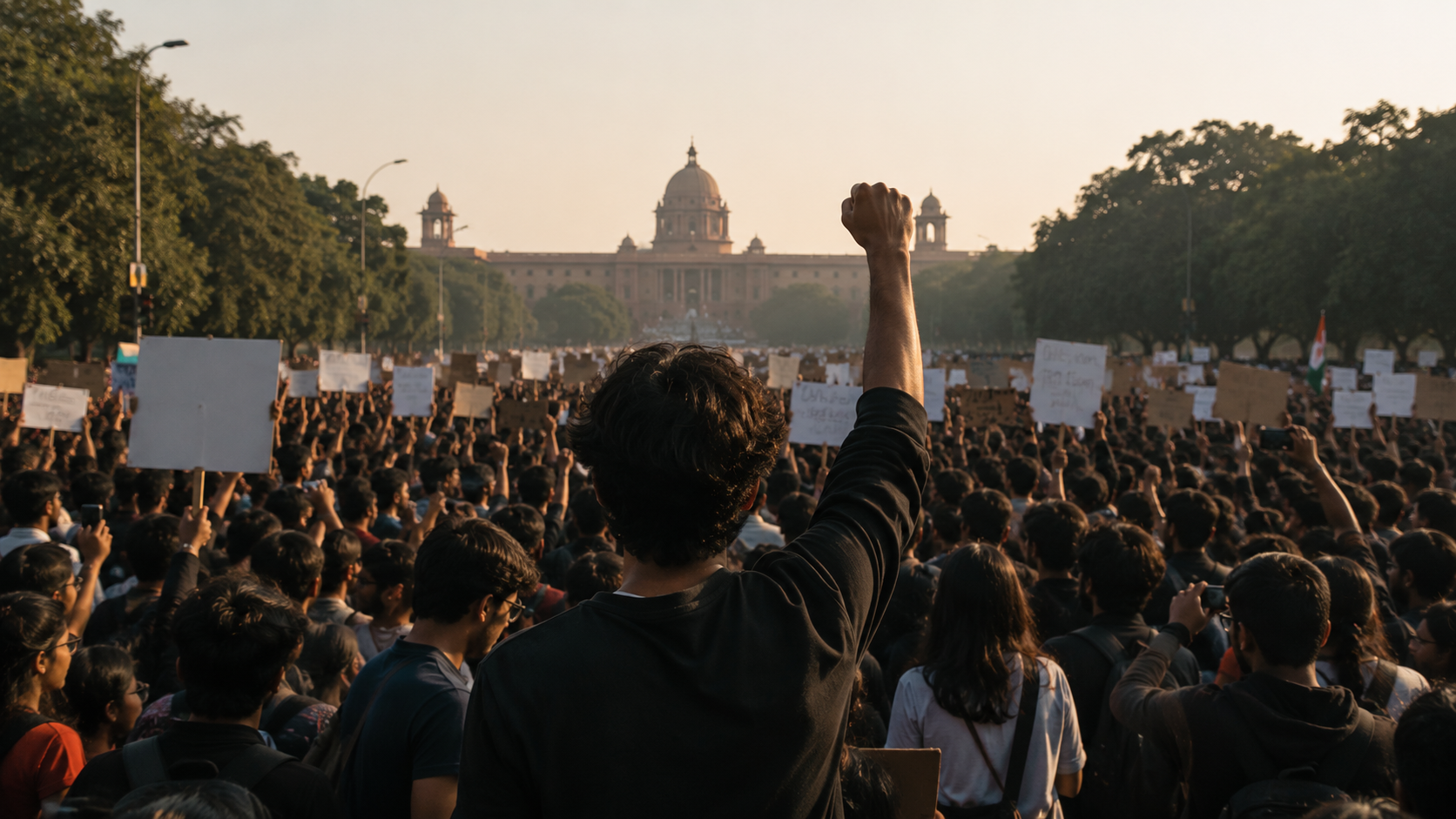
India protests gained fresh force after a student campaign pushed Modi's government into concessions and inspired an ethanol-fuel challenge.
The political signal is bigger than one campus movement. In 36 days, the Cockroach Janta Party, or CJP, turned anger over exam-system failures into a national campaign with student turnout measured in the hundreds of thousands, followed by Dharmendra Pradhan's resignation as education minister.
Cockroach campaign resets pressure
New Delhi's protest site has been physically cleaned, with municipal workers removing slogans and washing streets, but the episode has left a harder mark on Indian politics. Critics of Prime Minister Narendra Modi now see the CJP as proof that a disciplined, youth-led campaign can extract a response from a government used to setting the agenda.
Pratap Bhanu Mehta, an Indian political scientist and lecturer at Princeton University, said the campaign offered "a template for a new way of making demands on the state." He added that many citizens doubt formal channels can carry grievances, making public protest a more attractive route when a demand gathers scale.
E20 account gains traction
The first visible imitation is the E20 Janta Party, which appeared Sunday on X and drew 34,000 followers during its first day online. Its name refers to E20, a petrol mix containing 20% ethanol that the government has pushed nationwide.
The campaign is trying to channel consumer anger over two claims: that the blend can raise fuel consumption and that older engines may be exposed to damage. Its stated demand is for every fuel station to sell 100% petrol at an affordable price, along with the resignation of a minister.
The E20 Janta Party describes itself on its X profile as the "Voice of the People" and says it seeks justice, transparency, accountability and "People's Rights." The language deliberately echoes the CJP's anti-establishment style, but its base is different: motorists and fuel consumers rather than students angry about examinations.
Gadkari enters ethanol dispute
The campaign is aimed at Nitin Gadkari, Modi's transport minister, whose sons operate a family ethanol business. Gadkari has denied any conflict of interest and has said his sons account for less than 0.5% of India's ethanol market.
That denial matters because the fuel argument mixes consumer costs, industrial policy and political trust. If the campaign cannot move beyond social media, the immediate macro effect is likely to be limited to perceptions of policy risk, while the E20 Janta Party remains a protest brand rather than a negotiating force.
If the movement expands into street action by motorists, the mechanism changes. Wider pressure could force the government to offer clearer consumer choice at fuel pumps, put scrutiny on Gadkari's ministry and require fuel retailers to manage parallel availability of E20 and 100% petrol.
Modi's protest risk widens
For Modi's government, the risk is not only the ethanol dispute. The CJP episode suggests that a focused grievance, a catchy identity and rapid online organisation can turn a technical issue into a national accountability test.
The wider fuel sector would feel the impact first if policy concessions follow. Ethanol producers could face a slower or more contested rollout, while fuel retailers may confront new operational demands if stations are required to stock more than one petrol option.
The open questions are specific. Can the E20 Janta Party verify its claims on mileage and engine damage, can it mobilise beyond X, and will the government treat accommodation as cheaper than confrontation after the CJP's success?