

Humyn Labs Secures $47m in Series A Funding for Robotics Data Infrastructure
Humyn Labs raised $47 million in Series A funding to scale its global robotics data collection infrastructure and expand its operational presence in key…
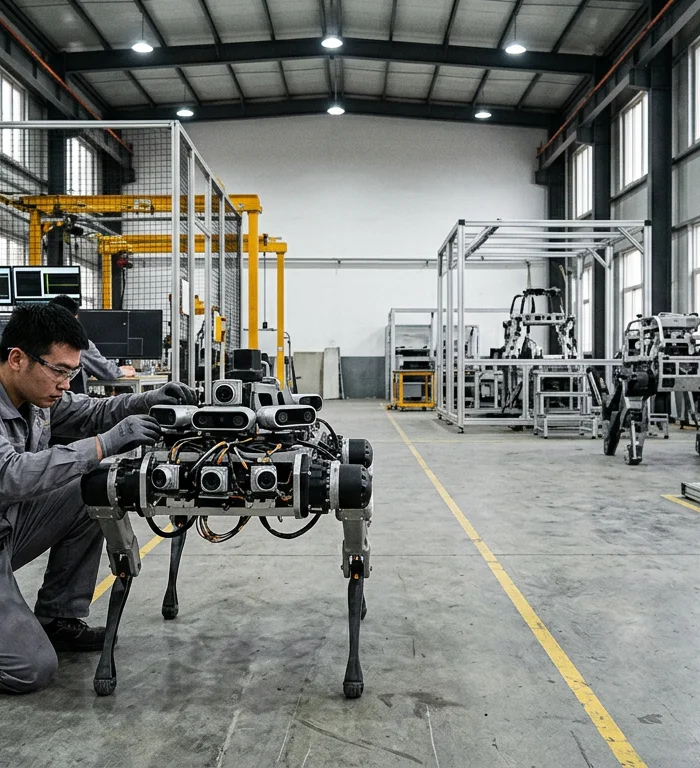
Humyn Labs has secured $47 million in Series A funding, comprising $26 million in equity and $21 million in venture debt. The company reports reaching $50 million in annualized revenue within its first six months of operation. This capital injection is intended to scale the firm’s data collection infrastructure and expand its global operational footprint.
The equity round was led by Accel, with participation from Prosus Ventures, BeeGlobal, Finserv Intelligence, Bajaj Alts AI Opportunities Fund, Dallas Venture Capital, Lighthouse Canton, and Jump Trading LLC. The venture debt portion was led by Lighthouse Canton, supported by Trifecta Capital. The company provides specialized data capture and enrichment services for robotics and artificial intelligence developers.
Humyn Labs operates across more than 20 countries, utilizing proprietary hardware to collect data across vision, sound, touch, and motion modalities. The firm focuses on bridging the gap between simulated environments and real-world deployment by providing labeled, training-ready datasets. Its operations are currently concentrated in Latin America, Southeast Asia, South Asia, and East Asia.
Humyn Labs
The company intends to allocate the new funding toward three primary objectives: enhancing deployment readiness infrastructure in Brazil, South Korea, and India; advancing its proprietary capture hardware and enrichment engine; and establishing a physical presence in San Francisco, London, and Seoul. These investments aim to streamline the research-to-deployment pipeline for robotics labs.
By acting as a deployment partner, Humyn Labs seeks to address the industry-wide bottleneck of transitioning robotics from controlled laboratory settings to complex real-world environments. The company supports a range of robot embodiments, including stationary industrial arms and mobile commercial units, to facilitate the development of both embodiment-agnostic and specific AI models.
More stories
- The Week in Games: GTA 6 turns attention into cash
- US data centres emit 25.7m tonnes of CO2, Harvard says
- German founders need 3,942 hours to open small business
- Leaked Deutsche Bank files test Sewing's reform narrative
- UAE employers plan 2.8% pay rises for 2027
- Bessent urges Nvidia to seek outside CEO as scrutiny grows
- Fairfax faces CSB choice in $5.6bn IDBI stake deal
- Publicis beats Q3 forecasts with 5% organic revenue growth
Latest news
- Social Security raises 2027 benefits 3.6%
- Hull City 2–0 Brighton: When Resilience Beat Reputation
- David Parr House to honor Victorian art-workman with blue plaque
- Iran's attacks hit 25 tankers near Strait of Hormuz
- FCC approves prison cellphone jamming despite 2.5-mile warning
- Russia strikes Ukraine as Odesa faces electricity strain
- Bahrain reports two injuries after Iranian aerial attacks
- Congress tests Black Democrats' growing policy influence