Huawei Aims for 1.4nm Chips via New Tech
Huawei unveiled a new chip scaling law aiming for 1.4nm equivalent performance within five years, defying US sanctions.
Jason Kwon ·
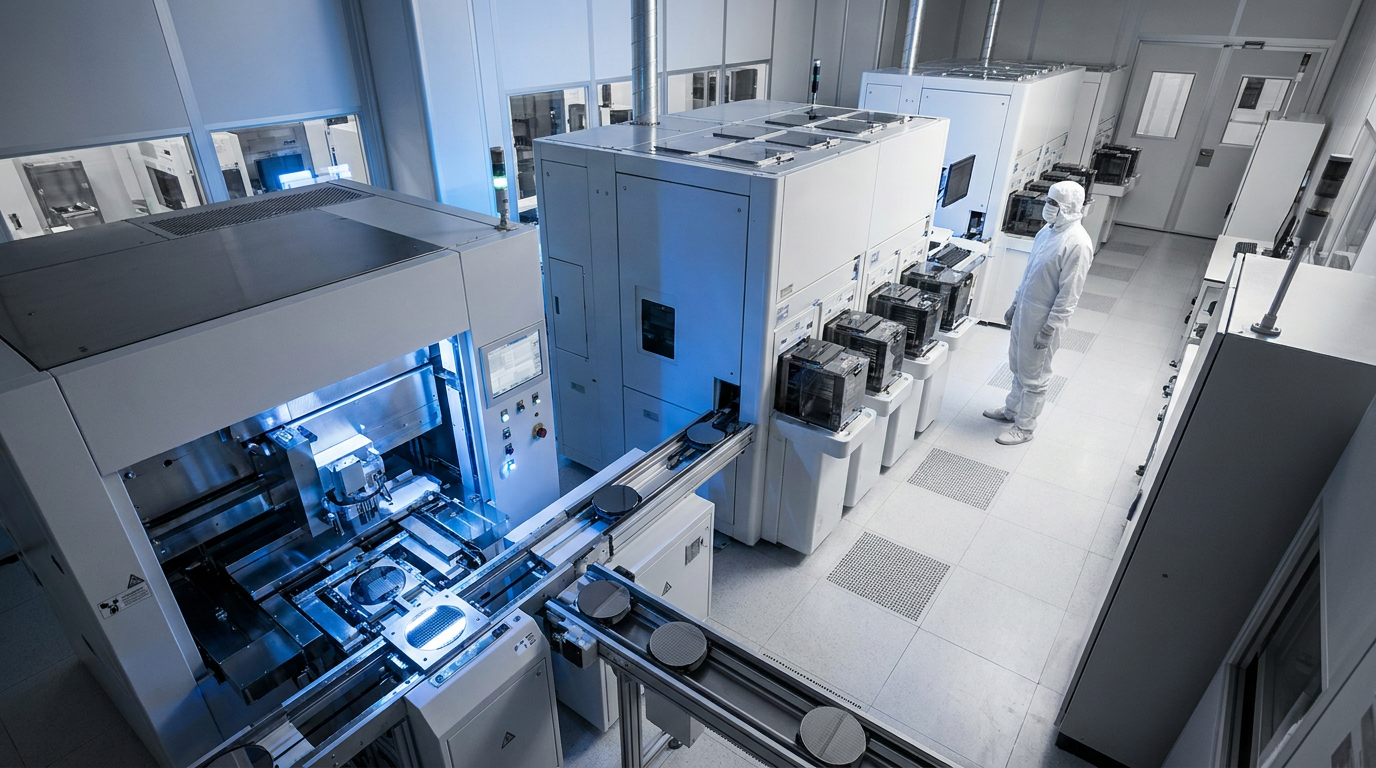
Huawei Technologies announced ambitious plans to achieve semiconductor manufacturing capabilities equivalent to 1.4-nanometer (nm) processes within five years. This strategic move, detailed at a Shanghai symposium, aims to circumvent U.S. sanctions that have limited China's access to advanced chipmaking technology. The company stated its high-end chips would reach this transistor density by 2031, though independent performance benchmarks were not provided.
A New Principle for Chip Advancement
The announcement hinges on a novel principle dubbed the 'Tau Scaling Law.' Huawei posits that traditional methods of improving chips, primarily through shrinking transistors as per Moore's Law, are becoming increasingly impractical due to the atomic scale of modern components. Instead, this new law focuses on reducing the time it takes for signals and data to traverse chips and larger computing systems.
This shift is particularly critical for China, which faces restrictions on acquiring leading-edge lithography equipment. While TSMC, the world's largest chipmaker, currently uses 2nm technology and plans 1.4nm mass production by 2028, Huawei's approach offers an alternative route to performance gains. Industry analysts suggest this system-level efficiency scaling is a credible strategy when conventional lithography is constrained.
AI and Domestic Capabilities Drive Innovation
The pursuit of advanced semiconductors is closely linked to the global artificial intelligence boom, where cutting-edge chips are crucial for economic growth and geopolitical influence. Huawei's Ascend chip series, essential for powering Chinese AI models, is slated to benefit from this new architecture. The company reported that its Kirin smartphone chips, due later this year, will be the first to integrate a Tau Scaling variant called LogicFolding.
LogicFolding is designed to shorten internal wiring, significantly boosting chip performance. Huawei intends to apply this technology to its Ascend AI chips by 2030, as well as to large-scale AI clusters used in data centers. Over the past six years, Huawei has reportedly designed and produced 381 chips utilizing Tau Scaling principles for various industrial applications.
S. S. technologies and global contract manufacturing. This led the company into an "extreme survival mode," with its semiconductor division playing a pivotal role. Despite these challenges, Huawei surprised the market in 2023 with its 5G-capable Mate 60 series smartphones, powered by chips from SMIC using 7nm technology. The announcement on Monday saw SMIC shares increase, highlighting the interdependency and ongoing collaboration within China's domestic chip ecosystem.