Brazil Oil Exports Surge to Asia
Brazil's oil exports to China and India surged in early 2026 due to Middle East disruptions, making it a critical alternative supplier.
Atlas Newsdesk ·
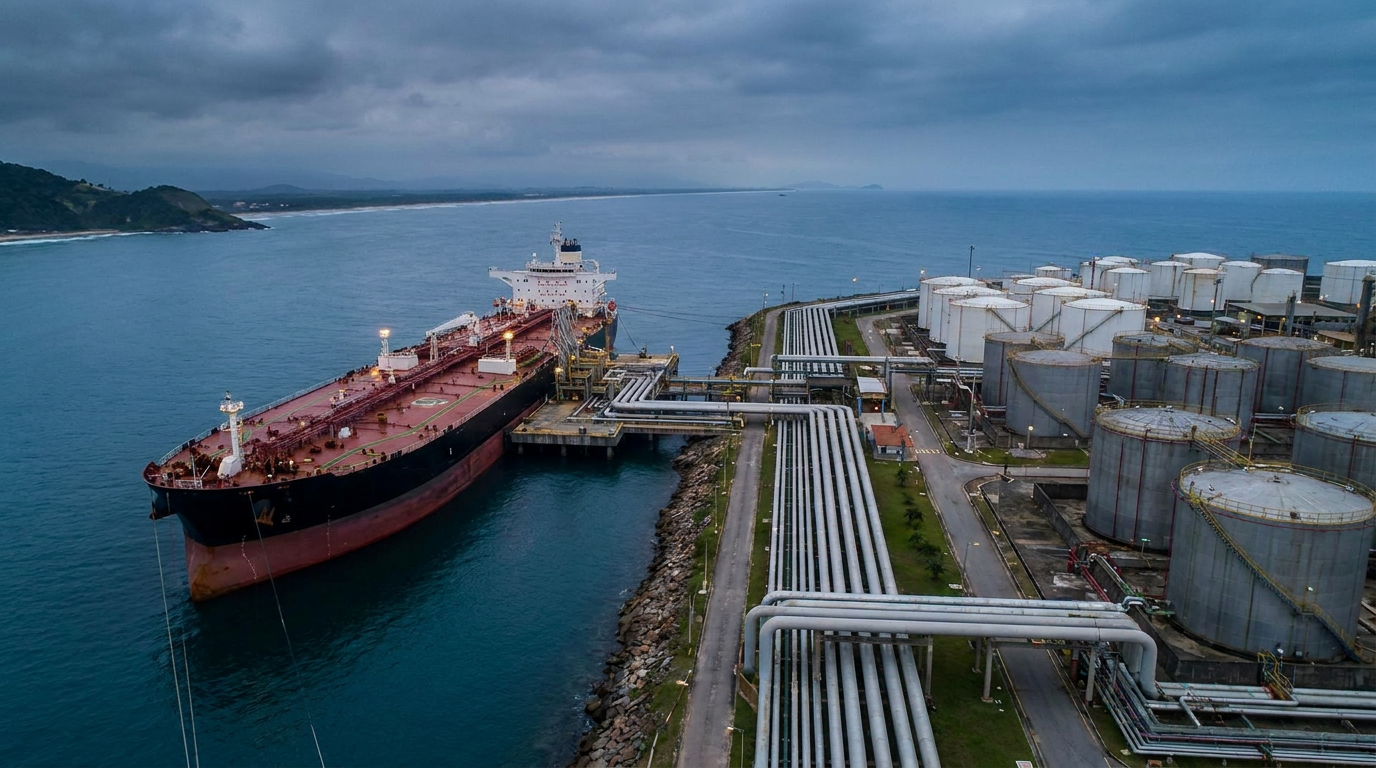
China and India significantly increased their imports of Brazilian crude oil between January and May 2026, driven by disruptions to Middle Eastern energy trade via the Strait of Hormuz. This shift positions Brazil as a key alternative supplier for Asian refiners seeking to mitigate supply risks. The United States-Israel conflict with Iran has impacted shipping through the Strait of Hormuz, prompting major Asian economies to diversify their oil sources.
Asian countries collectively imported approximately 1.8 million barrels per day (bpd) of crude from Brazil during the first five months of 2026, an increase from about 1.2 million bpd in 2025. China's imports of Brazilian crude averaged 1.316 million bpd in the January-May 2026 period, up from 704,000 bpd in 2025. India's imports also rose, averaging 238,000 bpd during the same period, compared to roughly 100,000 bpd in 2025, making Brazil its fourth-largest crude supplier in April 2026.
Brazil's overall oil production reached an average of 4.06 million bpd between January and May 2026, with 4.11 million bpd in May, up from 3.77 million bpd in 2025. While production increases have been marginal, the redirection of existing exports, particularly by state oil company Petrobras, towards Asia has been substantial. Over 60 percent of Petrobras exports are now directed to China, with exports to the U.S. reportedly ceasing from a previous 60,000 bpd in March 2026. This reorientation is expected to support Brazil's trade balance, with the Ministry of Finance estimating that Brent crude reaching $100 per barrel could generate revenue equivalent to almost 1 percent of GDP above current 2026 budget projections.