

New Retail Development in South Africa Targets $60 Billion Informal Economy
The launch of a major township mall highlights the shift toward formalizing South Africa’s $60 billion informal economy through sustainable, high-efficiency…
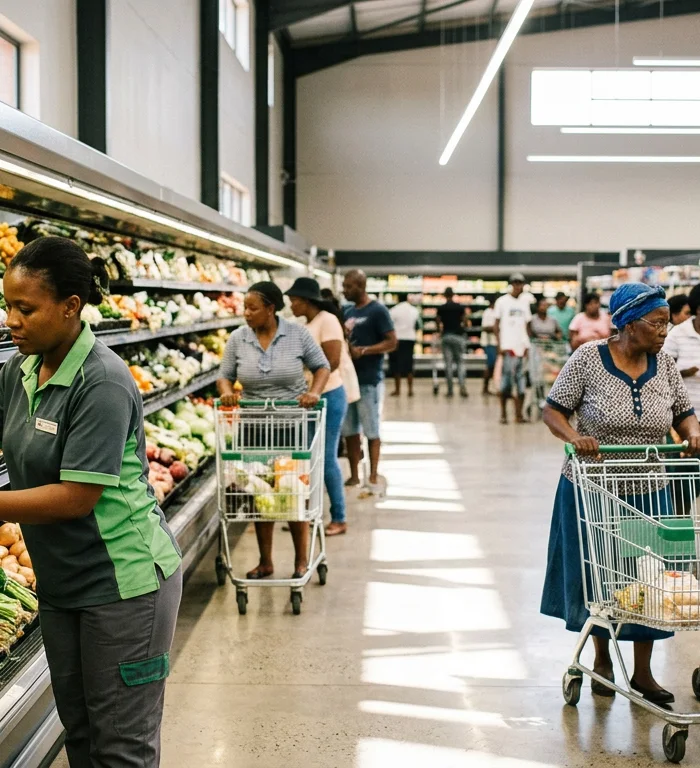
The opening of the Leratong City Mall in the Kagiso township marks a strategic expansion into South Africa’s informal retail sector. The project, which generated 1,096 construction jobs and 2,500 permanent retail positions, serves as a model for capturing consumer spending previously lost to transportation costs and informal market fragmentation.
Economic data suggests the informal economy in South Africa generates between $55 billion and $62 billion annually. This sector includes significant turnover from spaza shops, fast-food outlets, and transport services, much of which remains uncaptured by formal national employment and GDP metrics. By localizing retail infrastructure, developers aim to retain capital within township boundaries that would otherwise be spent on transit to urban centers.
Leratong City Mall
Institutional interest in these developments is increasingly driven by operational efficiencies and ESG compliance. The Leratong facility is positioned to achieve EDGE certification, utilizing a 3.3MW solar installation to reduce energy consumption by 20% compared to standard benchmarks. These sustainability measures have reportedly increased the project's internal rate of return from 10.5% to 11%.
Engineering innovations have further optimized capital expenditure, with structural designs reducing steel usage by 40% compared to industry standards. The integration of primary structural elements, such as roof gutters serving as compression chords, allows for greater floor-space flexibility and lower material costs.
Market analysts note that high demand for employment, evidenced by the receipt of over 21,000 applications for 2,500 roles, underscores the socio-economic pressure within these regions. Future institutional investment in township retail will likely continue to prioritize high-density areas where formalization can bridge the gap between informal turnover and documented economic growth.
More stories
- The Week in Games: GTA 6 turns attention into cash
- US data centres emit 25.7m tonnes of CO2, Harvard says
- German founders need 3,942 hours to open small business
- Leaked Deutsche Bank files test Sewing's reform narrative
- UAE employers plan 2.8% pay rises for 2027
- Bessent urges Nvidia to seek outside CEO as scrutiny grows
- Kodiact raises $2.5m for raw-material sourcing software
- Major Drilling adds 8 dewatering rigs with Bunbury deal
Latest news
- Social Security raises 2027 benefits 3.6%
- Hull City 2–0 Brighton: When Resilience Beat Reputation
- David Parr House to honor Victorian art-workman with blue plaque
- Iran's attacks hit 25 tankers near Strait of Hormuz
- FCC approves prison cellphone jamming despite 2.5-mile warning
- Russia strikes Ukraine as Odesa faces electricity strain
- Bahrain reports two injuries after Iranian aerial attacks
- Congress tests Black Democrats' growing policy influence