

Houthi siege of Taiz nears breaking point as fuel stocks dwindle
The blockade of Yemen’s third-largest city threatens to derail fragile Saudi-Houthi negotiations as humanitarian corridors remain severed.
Critical supply disruption
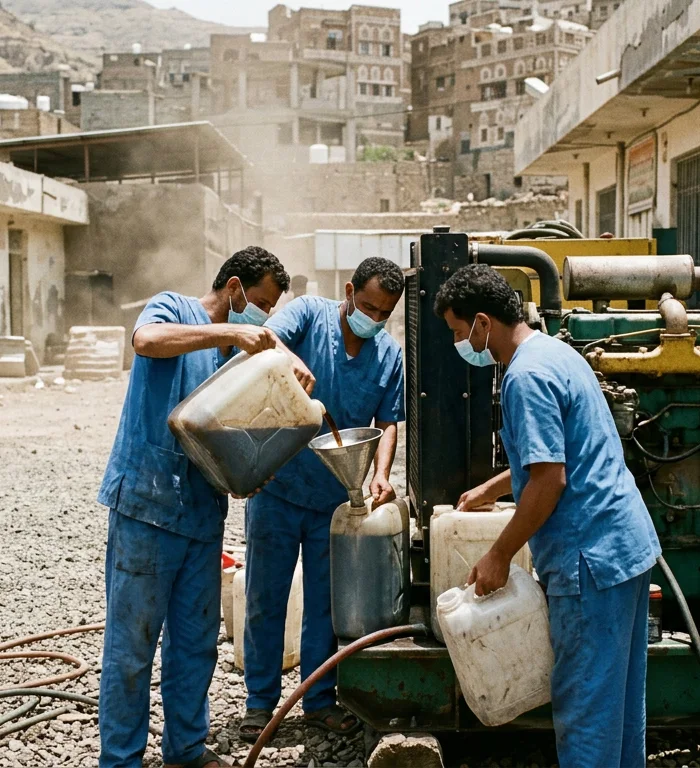
The Houthi movement has intensified its blockade of Taiz, effectively cutting off every major artery connecting the city to the rest of Yemen. Local health authorities reported that 12 hospitals are now within hours of exhausting their fuel reserves, a development that threatens to halt life-saving surgeries and emergency care. The total severance of humanitarian access follows a period of heightened maneuvering by Houthi forces along the city’s perimeter.
Fragile regional stability
Taiz has served as a central flashpoint since the conflict began, representing a persistent test for the 2022 UN-brokered truce. While the broader de-escalation between the Saudi-led coalition and Houthi leadership has largely held, the current siege highlights the fragility of these back-channel arrangements. The Houthis appear to be leveraging the city’s humanitarian crisis to force concessions in ongoing permanent ceasefire negotiations held in Riyadh.
Strategic humanitarian leverage The humanitarian collapse in Taiz poses a direct challenge to the Saudi-led coalition's policy of military restraint. By tightening the blockade, the Houthi movement is attempting to isolate pro-government factions within the city while testing the coalition’s threshold for re-engaging in active combat.
If the current status quo persists, the city faces a severe escalation in food insecurity as existing stockpiles approach exhaustion.
Global shipping risks
Regional instability in Yemen remains inextricably linked to the security of critical shipping lanes, including the Bab al-Mandab Strait. While the siege in Taiz is a localized urban conflict, its capacity to derail broader ceasefire talks has far-reaching consequences for maritime insurance premiums and energy transit security. Any breakdown in the regional truce risks creating a vacuum that could exacerbate existing tensions along the Red Sea corridor.
Future paths for the coalition The primary open question is whether the Saudi-led coalition will authorize military intervention to force open humanitarian corridors.
If the coalition chooses to resume tactical air support against Houthi positions surrounding the city, it would effectively signal the end of the current de-escalation period. Conversely, if the United Nations successfully brokers an emergency local access deal, the incident may be contained without broader military confrontation. Observers are now waiting to see if a formal coalition response is issued before November 20, 2024.
More stories
- Germans oppose Ukraine aid as poll shows support slipping
- Kim Jong-un receives 10 envoys after constitutional shift
- Ukraine claims Libya strike sinks Russian naval corvette
- COP31 climate talks collapse over fossil fuels and funds
- Russian military faces 1,087 recorded suicides in Ukraine war
- US faces China, Russia in Africa minerals contest
- ICN warns on misinformation after Congo Ebola nurse killing
- Ukraine rail attacks expose Dnipro passenger safety risks
- Refinery attacks put Russia's diesel export plans in focus
- Spain faces high-speed rail trust crisis after 69-death crash
Latest news
- Trump prepares tariffs on China and other major exporters
- New-car buyers pay record average $50,087 in October
- Banks face ECB reserve debate over liquidity and profits
- Investors see Anthropic debut gains fade below $83 a share
- Iraq orders federal control over Kurdish-area oilfields
- Nvidia shares retreat as AI rally cools before PCE data
- Macy’s parade faces balloon limits as storm winds approach