

Houthi arsenal shifts to local assembly as foreign supply chains thin
Recent missile component seizures confirm the Houthis’ pivot to domestic production, complicating long-term regional naval interdiction efforts.
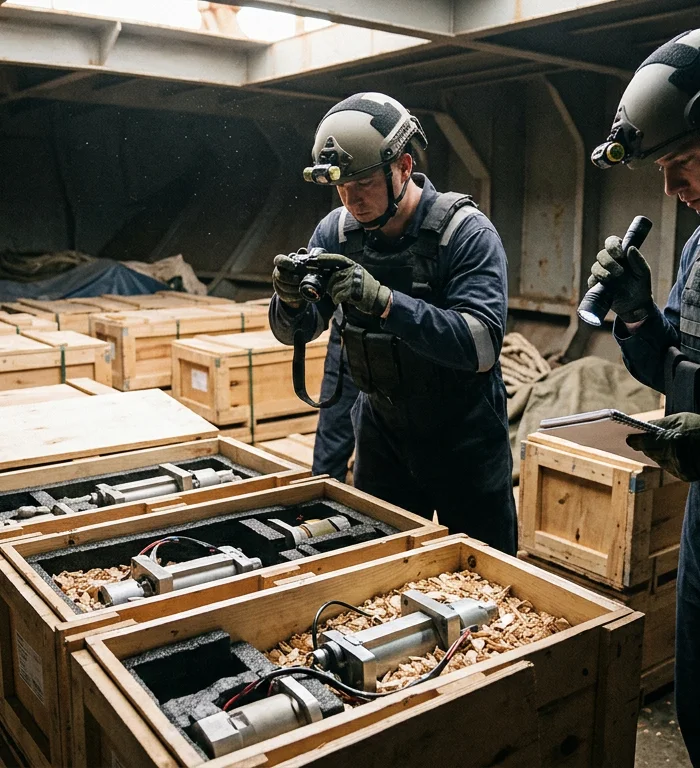
Tactical pivot in maritime warfare Seizures of missile components in the Aden region provide fresh evidence of the Houthi movement shifting its tactical reliance away from finished weapon imports. Analysis by Conflict Armament Research identified seven distinct missile components among recent cargo intercepts, signaling an evolution in the group's technical capabilities. The transition is further documented by data from the Century Foundation, which found that raw production materials increasingly dominated the inventory of intercepted goods throughout 2024 and 2025. This move suggests that the Houthi leadership is successfully transitioning toward localized assembly rather than depending solely on external supply lines. Regional security context For years, the movement relied heavily on direct supply chains from Tehran to sustain its offensive operations. This reliance created a vulnerable logistical tail that multinational naval coalitions sought to exploit through interdiction campaigns. The shift to internal manufacturing marks a structural change in the conflict, as domestic production facilities are harder to detect and neutralize than seaborne shipments. International naval efforts, including the Prosperity Guardian initiative, have struggled to degrade the movement's operational tempo despite sustained strikes on launch sites. By moving assembly inland, the group has effectively insulated its primary offensive capabilities from the kinetic pressure applied by Western and regional maritime forces. Shipping and economic implications
Conflict Armament Research
The shift carries significant consequences for Red Sea trade stability. Transit volumes through the Suez Canal have remained under pressure as maritime insurers adjust risk premiums to account for the sustained threat. The persistence of Houthi offensive capacity ensures that regional security costs will remain elevated for the foreseeable future.
The primary uncertainty remains whether current naval mandates will evolve to address these localized supply chains. If coalitions continue to focus exclusively on launch sites while manufacturing infrastructure remains intact, the cost of securing the Bab el-Mandeb strait is expected to rise further. Stability in the corridor now hinges on whether military pressure can evolve to match this localized manufacturing shift or if diplomatic efforts yield the dismantling of production sites.
More stories
- Germans oppose Ukraine aid as poll shows support slipping
- Kim Jong-un receives 10 envoys after constitutional shift
- Ukraine claims Libya strike sinks Russian naval corvette
- COP31 climate talks collapse over fossil fuels and funds
- Russian military faces 1,087 recorded suicides in Ukraine war
- US faces China, Russia in Africa minerals contest
- Bulgaria vote gives Yotova victory in preliminary count
- Bulgaria vote gives Yotova victory in preliminary count
- Machado returns to Venezuela, testing Rodríguez’s opening
- Portugal police remove 171 housing protest structures
Latest news
- Trump prepares tariffs on China and other major exporters
- New-car buyers pay record average $50,087 in October
- Banks face ECB reserve debate over liquidity and profits
- Investors see Anthropic debut gains fade below $83 a share
- Iraq orders federal control over Kurdish-area oilfields
- Nvidia shares retreat as AI rally cools before PCE data
- Macy’s parade faces balloon limits as storm winds approach