
H-1B visa fee proposal raises stakes for tech hiring plans
The Trump administration proposed a $103,265 H-1B visa fee for most new filings, shifting immigration costs toward tech and finance employers.
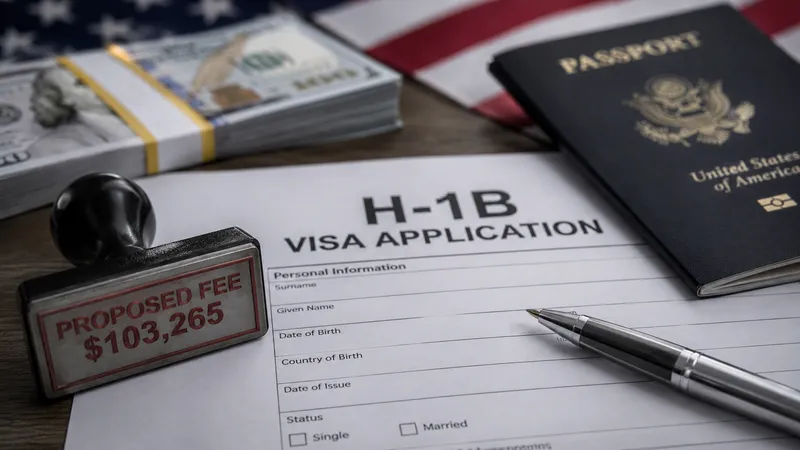
The H-1B visa fee proposal would charge most new applicants $103,265 before review, reshaping hiring costs for U.S. employers.
$103,265 before adjudication
The Department of Homeland Security said in a Monday filing that the charge would apply to new H-1B petitions and must be paid before officials decide the case. The proposal carries a 30-day public comment period before it can be finalized.
The new figure is $3,265 above the $100,000 levy President Trump announced last year. A federal appeals court in Boston rejected that earlier one-year charge after finding that it exceeded executive authority and followed an improper process.
The H-1B program lets U.S. employers sponsor foreign workers in specialty roles. New private-sector slots are capped at 85,000 a year, while universities, hospitals and other nonprofit employers are outside that ceiling.
The visa has become a target for some of President Trump's supporters, who have alleged that companies use it to hire foreign workers at pay levels below comparable U.S. employees. The program is used heavily in technology hiring, including for skilled workers from India.
Tech employers lose exemption
If finalized, the proposal would reach many companies that were largely outside the earlier charge. The prior version was structured around entry into the U.S., while many new technology and finance hires are already in the country on student visas.
Those employers typically cover visa costs for recruits, making the filing-stage fee a direct hiring expense. The timing also matters: the money would be due before the government approves or rejects the petition.
For technology and finance firms, the mechanism is clear. A higher upfront cost would make each sponsored graduate more expensive at the point when employers decide whether to convert a student-visa worker into a longer-term employee.
Hospitals and nonprofits spared
The earlier $100,000 entry-based charge would have applied more directly to employers bringing workers from abroad, including information-technology firms, hospitals and universities. Hospitals, especially in rural areas that struggle to recruit domestic staff, pressed the administration for an exemption.
The new filing says hospitals, research institutions and other nonprofit employers would be exempt from the proposed fee. That carveout would protect many doctor and researcher hires from a six-figure charge that private employers would still face.
The split would leave the largest cost change with for-profit users of the H-1B system. It would also preserve a lower-cost route for nonprofit medical and research employers that compete for specialized labor.
$8.8 billion revenue projection
The government estimates the fee would generate roughly $8.8 billion for the immigration system. U.S. Citizenship and Immigration Services usually sets fees to cover application processing, but the filing says this H-1B charge would also support broader costs.
Those broader costs include immigration courts that handle deportation cases, according to the filing. That would tie a skilled-worker visa fee to parts of the immigration system beyond the review of H-1B petitions.
The administration is also considering a separate $100,000 charge on optional practical training, or OPT, according to a public federal tracker. OPT allows international students to work temporarily while they remain on student visas.
OPT decision shapes hiring route
If the H-1B fee advances while OPT remains unchanged, employers would still have an initial student-to-work route but would face a larger cost at the H-1B conversion point. That path would affect global skilled-labor flows into the U.S., company recruiting budgets and hiring practices across technology and finance.
If a $100,000 OPT fee is also adopted, the cost pressure would move earlier in the hiring chain. International students, employers and U.S. universities would then face a higher price before the H-1B stage, with the largest effect on sectors that rely on foreign graduates.
The main open question is whether the new rulemaking process survives any legal challenge if employers or other groups sue. The earlier court ruling gives opponents a recent precedent, while the administration is now using a more formal regulatory process.
More stories
- Trump urges Ukraine to replace Zelensky over stalled deal
- Harris builds political team but leaves 2028 run undecided
- Isaias leaves 840,000 without power as rain risks persist
- Zelensky criticizes Trump over Russian fuel supply deal
- Katie Zacharia Selected as White House Press Secretary
- Michigan Senate rivals clash over health care and Israel
- Supreme Court lets Trump mail-ballot order proceed for now
- Suspect Detained in US Over Alleged E-2 Visa Fraud Scheme
- Trump's Influence Wanes Among Senate Republicans
- Trump's "Anti-Woke" Crusade: A New Culture War Front
Latest news
- Beenie Man, Winky D Surprise Kadoma Festival Crowd
- Manchester City Defeats Liverpool 3-0 at Anfield
- Port City Coach Ennin Vows Response After Hearts Defeat
- Senators oppose President Trump diesel deal with Russia
- Prime Minister Releases Secret Manchester City Meeting Records
- Ghanaian Football Pitches Hamper Player Development, Coach Says
- Hearts Coach Kapor Criticizes Ghana Pitch Conditions
- Amazon’s $7 billion Decart talks test AWS margin strategy