

Nvidia and AMD Announce Specialized HPC GPU Architectures for 2028
Nvidia and AMD are launching specialized GPU architectures for 2028 to address the growing performance gap between AI-focused hardware and the requirements…
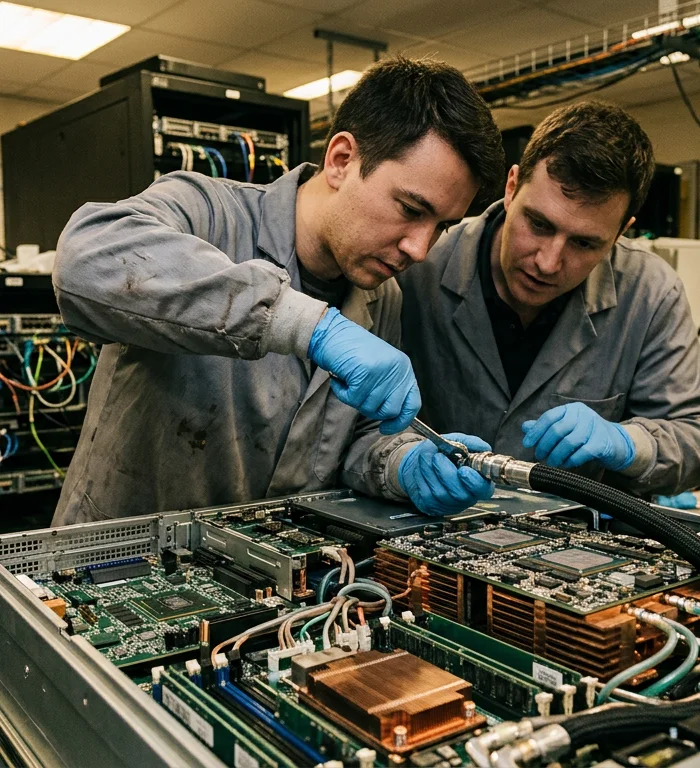
Nvidia has announced a specialized variant of its Rubin GPU architecture, specifically engineered for high-performance computing (HPC) and scientific simulation workloads. Scheduled for release in 2028, the chip will feature over 50,000 CUDA cores, representing a significant increase in core count compared to the AI-focused version of the Rubin platform. This development signals a strategic pivot to address concerns that recent hardware iterations have prioritized lower-precision AI throughput at the expense of double-precision (FP64) performance required for complex scientific modeling.
To maintain competitiveness in the HPC sector, Nvidia is moving away from a singular focus on FP64 emulation—a technique that decomposes matrix operations into lower-precision integer operations. While the company previously utilized this method to boost performance on AI-centric chips, the new Rubin HPC variant is expected to provide native FP64 matrix performance. This adjustment is intended to better support traditional engineering and high-performance analytics, which remain critical for research institutions and national laboratories.
Rubin GPU
Simultaneously, AMD has detailed its own HPC-optimized hardware, the Instinct MI430X. Unlike Nvidia’s approach, AMD is leveraging a modular chiplet architecture to create distinct hardware paths for AI and HPC applications. The MI430X is specified to deliver 288 teraFLOPS of peak double-precision performance, supported by 432 GB of HBM4 memory and 23 TB/s of memory bandwidth.
The divergence in these strategies highlights a broader market trend where hardware vendors are increasingly segmenting their product lines to satisfy the conflicting demands of AI developers and the scientific computing community. For policymakers and institutional stakeholders, this competition ensures continued advancement in supercomputing capabilities, though it necessitates careful evaluation of hardware roadmaps when planning long-term investments in national research infrastructure. The shift toward specialized HPC silicon suggests that the industry is entering a phase of architectural bifurcation, where general-purpose AI accelerators may no longer suffice for high-fidelity scientific research.
More stories
- Europe faces attribution gap after 16 cyber, physical incidents
- PIF backs Grand Theft Auto as Saudi players embrace game
- Signal limits screenshots to curb AI access to messages
- Cognition runs Devin Mac workspaces on EC2 in 6 AWS regions
- Salesforce engineers cut 600-failure triage to 90 minutes
- Türkiye Desk: GTA 6 puts console access and network demand in focus
- Microsoft plans Project Helix as Xbox console for PC games
- OpenAI buys travel startup Odessia
- Saudi Humain IPO work signals PIF listing pipeline push
- Tesla Cybercab starts limited public rides in Austin zone
Latest news
- Trump prepares tariffs on China and other major exporters
- New-car buyers pay record average $50,087 in October
- Banks face ECB reserve debate over liquidity and profits
- Investors see Anthropic debut gains fade below $83 a share
- Iraq orders federal control over Kurdish-area oilfields
- Germans oppose Ukraine aid as poll shows support slipping
- Kim Jong-un receives 10 envoys after constitutional shift
- Ukraine claims Libya strike sinks Russian naval corvette