
Gallup finds terrorism confidence tied at US record low
Gallup says terrorism confidence has fallen to a record low as 20% of Americans express no trust in federal protection.
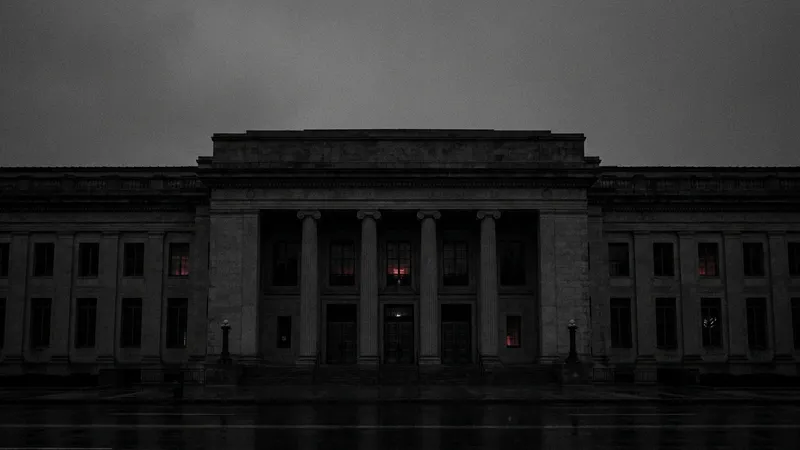
Gallup says terrorism confidence has hit a record low, with 20% of Americans reporting no trust in federal protection from future attacks.
The no-confidence reading is up from 12% in 2021 and from 2% immediately after September 11, 2001, when Gallup first asked the question. The change gives the latest result a long historical anchor: public trust is weaker now than in the period directly following the deadliest terrorist attack on US soil.
The share of Americans who say they are confident the government can protect citizens from terrorism stands at 55%, according to Gallup. That level is tied for the lowest recorded by the pollster, placing the current reading at the bottom of a series that began in the aftermath of the 2001 attacks.
Democratic skepticism reaches 36%
The partisan break is the clearest division in the figures. Gallup found that 36% of Democrats said they had no confidence at all, compared with 8% of Republicans, a 28 percentage-point gap between the two parties.
That split matters for federal security policy because counterterrorism programs rely on public acceptance as well as legal authority. Measures involving surveillance, airport screening, emergency alerts and intelligence sharing can face different political tests when one party’s voters report far lower trust in the federal government’s protective role.
The numbers also place President Trump’s administration in a sharper political frame. Republican confidence appears far stronger than Democratic confidence in the poll, but the national 20% no-confidence reading shows that skepticism extends beyond one party’s base.
9/11 ceremonies frame poll
The findings arrive one week before the United States marks the 25th anniversary of September 11, 2001. Annual commemorations are planned at the Pentagon, in New York City and in Shanksville, Pennsylvania, the three places tied to the attacks.
President Trump is scheduled to attend the Pentagon ceremony rather than the New York event. The timing links the anniversary’s official remembrance with a poll showing that confidence in future protection is at or near the weakest point Gallup has measured.
The 2001 baseline is central to the comparison. Immediately after the attacks, only 2% of Americans told Gallup they had no confidence at all in the government’s ability to protect the public from future terrorism; the latest 20% reading is 10 times that level.
Security policy faces trust test
For federal agencies, the practical issue is not only whether an attack is prevented, but whether warnings and protective measures are believed when issued. If a large minority doubts the government’s capability, public instructions after threats or incidents may run through stronger partisan filters.
If the record-low confidence reading holds in later polling, the political mechanism is likely to be pressure for more visible security commitments. That could shape federal budget priorities and affect airports, venue operators, transport networks and security contractors through compliance costs, procurement decisions and staffing plans.
If confidence improves after the anniversary period, the pressure could ease, particularly if federal agencies avoid high-profile failures and communicate threat assessments clearly. In that scenario, the Trump administration would gain more room to keep counterterrorism policy inside existing institutions rather than turning it into a broader political fight.
The main open question is whether the 55% confidence share remains tied to the record low after the commemorations pass. For the wider security sector, the answer will influence whether demand is driven mainly by routine federal spending or by a more public push for visible protection at airports, public sites and major events.
More stories
- Climate and AI Risks Drive Litigation, Reshaping Corporate Liability
- Net Zero Cost Projections Inflated by Nearly Half a Trillion Pounds
- Trump Administration Actions Lower Fuel Prices, Raise Long-Term Economic Risks
- New US AI Export Curbs Ignite Global Tech Supply Chain Chaos
- Conservative Air Defense Plan Faces Scrutiny Over Cost, Scope
- Scotland’s Power Grid Strained by Massive Data Center Expansion
- Missouri Supreme Court Reinstates Previous Congressional Map
- UK Food Supply Resilience Lacks Adequate Planning
- Pentagon Rejects Deployment of Troops to Polling Stations
- Prime Minister Burnham Confronts Key Policy Tests
Latest news
- Putin relays Iran view to President Trump
- Red Cross says Gaza hostage access involved Haniyeh talks
- Trump urges Zelensky replacement over refinery strikes
- Tesla takes 90% of output from Arizona solar project
- Saudi Arabia suspends Riyadh airport operations after attack
- Kyiv playground blast puts Ukraine air-defense stocks back on Washington’s agenda
- Rubio’s Athens speech hardens Washington’s public line on Iran
- Saudi airport hit in new Houthi attack, officials say