

Technology Distributors Pivot to AI Infrastructure to Drive Revenue Growth
Technology distributors are pivoting toward AI infrastructure and data center hardware to offset reliance on consumer electronics, citing rapid growth in…
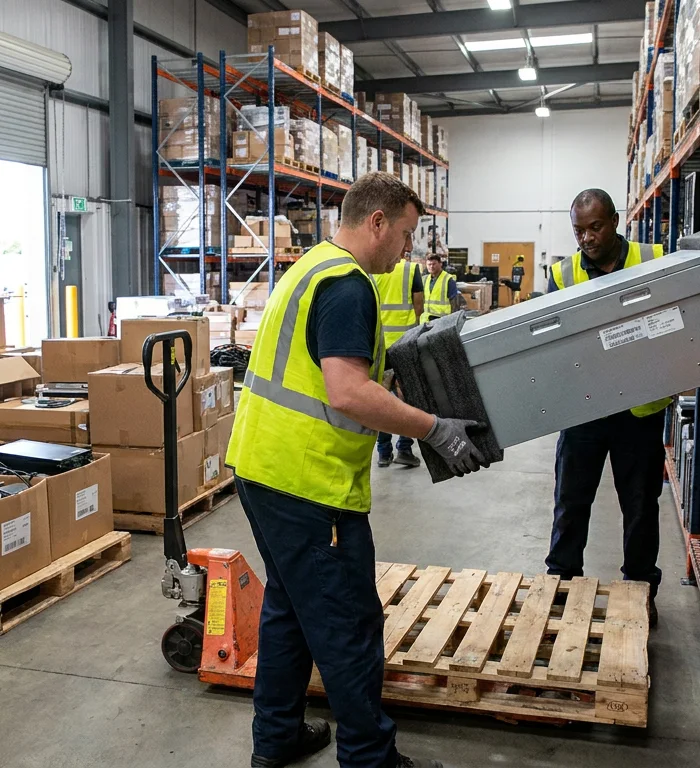
Major technology distributors are increasingly shifting their business models to capitalize on the rapid expansion of artificial intelligence and data center infrastructure. While these firms have historically relied on the distribution of consumer electronics, such as smartphones and laptops, high-performance computing components—specifically AI servers and graphics processing units (GPUs)—have emerged as primary growth drivers.
For major distributors, AI-related compute products now account for approximately 20% of total revenue. Despite this segment representing a minority share of overall business, it is currently the fastest-growing division for both Redington and Ingram Micro. Management at these firms reports that the transition toward AI-ready infrastructure is supported by significantly higher average selling prices for hardware, which can reach four times the cost of traditional computing equipment.
Redington reported a second-quarter revenue of approximately $4.5 billion, reflecting a 23% sequential increase. The company’s technology solutions and software divisions, which encompass networking, cloud, and cybersecurity services, grew by 45% and 71% respectively during the first half of the fiscal year. These segments currently constitute one-third of the company's total business, with large-scale data center projects in India contributing roughly 9% of total group revenue.
Ingram Micro, which generates approximately $5 billion in revenue from its Indian operations, has similarly identified its "advanced solutions" segment—covering servers, storage, and AI-infrastructure products—as its fastest-growing business area. Executives noted that enterprise investment cycles are currently focused on infrastructure modernization and the scaling of computing capacity to support AI workloads.
Market analysts observe that this shift is occurring against a backdrop of significant infrastructure development. India’s current installed data center capacity is estimated at 1.3 gigawatts, with an additional 7.1 gigawatts of capacity projected to come online over the next four years. As hyperscalers and enterprises continue to expand their computing footprints, distributors are positioning themselves to capture the supply chain demand for the underlying hardware and software ecosystems required to sustain these operations.
More stories
- Deal Sheet: Fortis shutdown costs over 400 jobs
- The Week in Games: GTA 6 turns attention into cash
- US data centres emit 25.7m tonnes of CO2, Harvard says
- German founders need 3,942 hours to open small business
- Leaked Deutsche Bank files test Sewing's reform narrative
- UAE employers plan 2.8% pay rises for 2027
- American Airlines puts premium products near half ticket revenue
- Wheaton revenue rises 62% on higher precious-metals prices
- Microsoft offers buyouts to roughly 60,000 eligible staff
- Anthropic seeks Nasdaq IPO after $16.3bn half-year revenue
Latest news
- Trump prepares tariffs on China and other major exporters
- New-car buyers pay record average $50,087 in October
- Banks face ECB reserve debate over liquidity and profits
- Investors see Anthropic debut gains fade below $83 a share
- Iraq orders federal control over Kurdish-area oilfields
- Germans oppose Ukraine aid as poll shows support slipping
- Kim Jong-un receives 10 envoys after constitutional shift
- Ukraine claims Libya strike sinks Russian naval corvette