Fervo Energy signs 396-MW Google geothermal deal in Utah
Fervo Energy said Google will buy 396 MW of geothermal power from Utah’s Cape Station, with an option to lift purchases near 1 GW by 2030.
Atlas Newsdesk ·
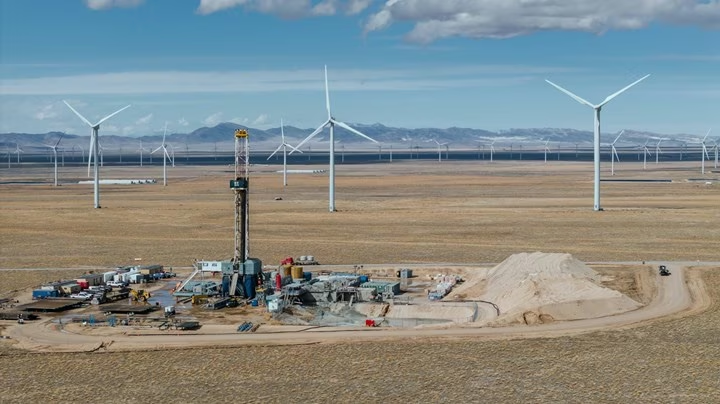
Fervo Energy said Google will buy 396 megawatts of geothermal power from Utah, expanding around-the-clock clean supply for data-center growth.
Cape Station secures Google demand
Fervo said on Tuesday that the supply will come from its Cape Station project in Utah, which the company expects to bring online in 2028. Shares rose nearly 14% in premarket trading after the announcement, compared with their prior close.
The agreement also gives Google an option to increase purchases by about 600 MW, which would take total potential capacity under the arrangement to nearly 1 gigawatt by June 2030, Fervo said. The option exceeds the 396-MW base commitment and moves the deal closer to utility-scale supply.
Data centers seek firm clean power
The contract reflects rising demand from large electricity users for clean power that can run across the day, rather than only when weather conditions support generation. The mechanism is direct: data centers need steady electricity, while many renewable contracts depend on wind or sunlight availability.
Geothermal plants draw heat from underground resources, making output less tied to weather than wind and solar generation. Enhanced geothermal projects seek to widen that resource base by using drilling and reservoir techniques in places that lack conventional geothermal fields.
For Google, the contract adds another fixed clean-power supply line as it weighs potential data-center development in Utah, according to Fervo. The location matters because electricity supply, interconnection availability and local permitting can shape where new computing capacity is built.
Nevada pilot led to Utah scale
The companies began working together through Project Red, Fervo's Nevada geothermal pilot, which came online in 2023. In 2024, Fervo signed a 115-MW power purchase agreement with Google and NV Energy, adding another reference point before the larger Utah contract.
Cape Station would be larger than that 115-MW Nevada arrangement by 281 MW if the 396-MW base supply is delivered as described. If Google exercises the option, the combined capacity would be almost nine times the size of the 2024 agreement.
The Utah project is therefore both a customer contract and a test of scale for Fervo. For developers of enhanced geothermal systems, large corporate offtake can help support financing, but construction, drilling performance, permitting and grid connection remain named execution risks.
Scenarios hinge on 2028 startup
If Cape Station reaches its planned 2028 startup, Google would gain firm clean capacity in a state where Fervo says it may expand data-center operations. Fervo would have a larger contracted revenue base, and the geothermal sector would gain a bigger commercial example for selling power to large technology buyers.
For the wider macro picture, the direct effect of one project would be limited, but the mechanism matters. More firm low-carbon capacity can reduce the need for gas-fired backup at the margin when electricity demand from computing facilities rises.
If the project slips beyond 2028 or the option is not exercised by June 2030, the effect would run in reverse. Google would need to rely on other power contracts, Fervo's scale-up timetable would look less certain, and enhanced geothermal developers would have fewer near-term proof points for bankable growth.