European allies weigh NATO eastern flank brigade surge for 2027
NATO eastern flank plans ahead of the Ankara summit center on accelerating full-strength brigade deployments to the Baltic states by the end of 2027.
Lauren Collins ·
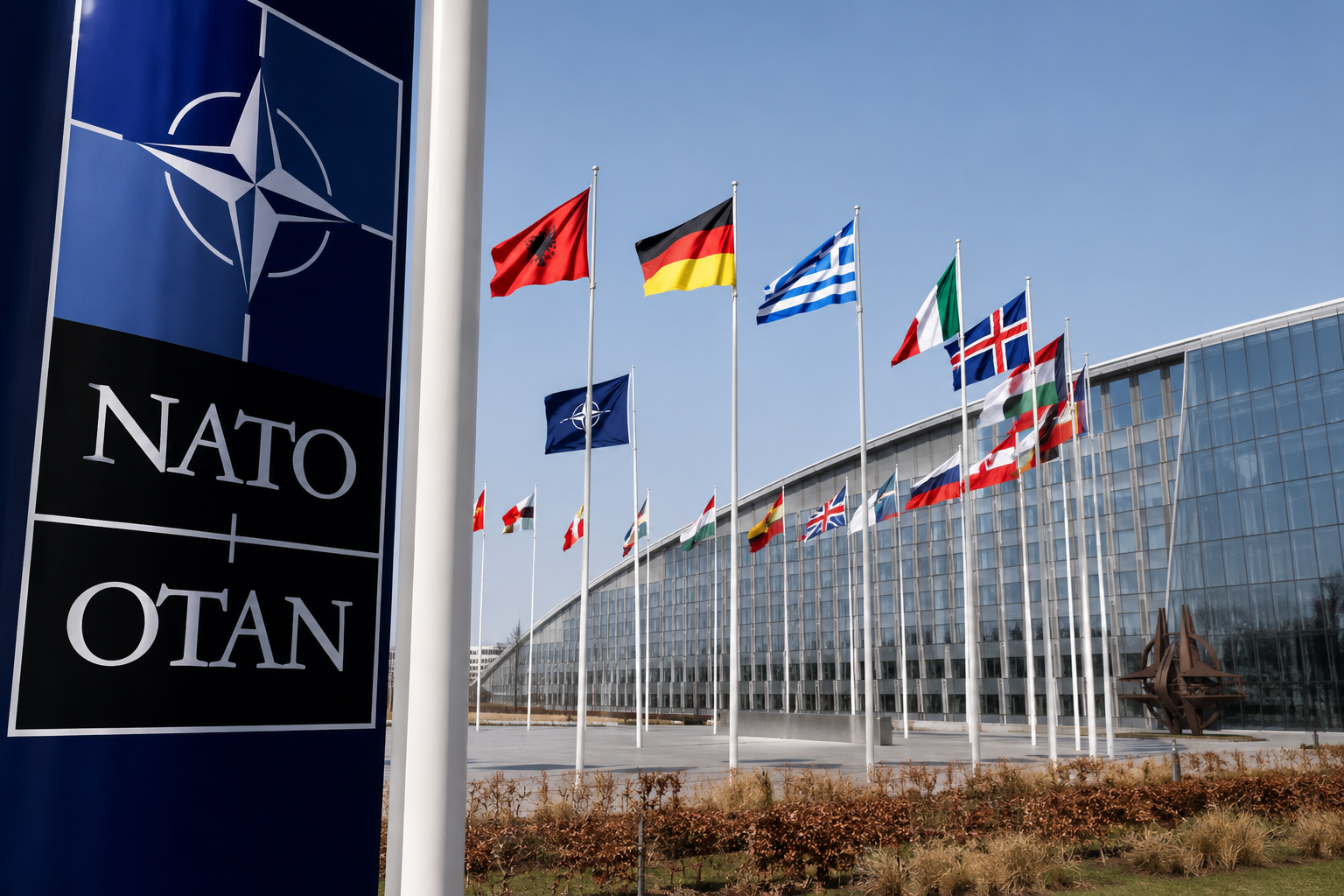
NATO eastern flank plans ahead of the Ankara summit center on accelerating full-strength brigade deployments to the Baltic states by the end of 2027.
The push follows a visibly strained political backdrop after NATO Secretary General Mark Rutte met US President Donald Trump at the White House, where defense burden-sharing and recent US military actions against Iran surfaced as points of friction. European officials are looking for a concrete deliverable that signals unity, improves readiness, and reduces doubts about allied resolve.
At stake is more than summit messaging. Several US force posture adjustments in Europe this year—announced with limited warning—have unsettled planning across the Alliance, including the cancellation of a planned rotational deployment to Poland that was later reversed and the recall of a Stryker brigade stationed in Germany.
Pressure builds for a clearer Baltic deterrent posture
European allies are weighing whether faster, larger Baltic deployments could both strengthen deterrence and ease political tension heading into Ankara. The concept is to move from smaller forward elements to full combat brigades that can fight immediately, rather than serving primarily as tripwires.
The idea builds on NATO’s 2022 Madrid summit decision to expand eastern defenses, scaling existing battlegroups to brigade-size units when required. While that direction remains in place, the pace of implementation has been uneven across the three Baltic states.
Security officials in Nordic and Baltic capitals have warned that Russia could pose a direct threat to a NATO member in the coming years as the war in Ukraine grinds on and Moscow seeks to regenerate combat power. The concern is that a window could emerge in which Russia tries to demonstrate success after setbacks in Ukraine, while testing NATO cohesion.
European governments also face a political imperative in Washington. With heightened US scrutiny of allied contributions, a Baltic-focused initiative led by European militaries would underscore a shift toward greater European responsibility for conventional defense in Europe.
Current deployments show progress—and structural gaps
In Lithuania, Germany is standing up a tank brigade that is scheduled to reach operational status by the end of 2027. The effort, however, has faced risks tied to equipment availability and disagreements over who pays for housing and infrastructure, raising concerns about schedule slippage.
Latvia’s model is built around Canada as the framework nation, providing a mechanized infantry battalion and headquarters for a multinational brigade. Sweden contributes a mechanized infantry battalion, while additional maneuver and enabling units are drawn from a wide group of contributing states, a structure that demonstrates solidarity but can complicate command-and-control and interoperability.
In Estonia, the United Kingdom serves as the framework nation and currently fields an infantry battalion battlegroup with France and Iceland contributing. The principal concern is the absence of a full brigade package with the enabling units needed for sustained operations so close to Russian territory.
What an accelerated brigade commitment would require
Defense planners discussing an accelerated approach have focused on making brigades “complete” formations rather than assembling battalions from many countries. Under this concept, larger militaries—such as the United Kingdom, France, Germany, Poland, Italy, and Sweden—would provide most combat elements, while other allies would contribute high-demand support like airlift, cyber defense, mine clearance, and chemical, biological, radiological, and nuclear defense.
A rotation model is central to the proposal. Combat units would typically rotate on six-month cycles, while brigade headquarters would rotate on an annual basis to preserve continuity, avoiding a requirement for permanent family basing and extensive new infrastructure before deployment.
Force design would emphasize mechanized brigades with at least one armor battalion each, supported by air defense, engineers, logistics, reconnaissance, drones, electronic warfare, signals, medical support, and specialized defense teams. Planners also stress secure voice and data communications and expanded interoperability training, with NATO’s Allied Land Command positioned as a certification authority.
Sustainment is a key constraint that would need early attention. Planning assumptions cited for an enhanced posture include enough munitions, fuel, spare parts, food, water, and medical stocks to support up to six months of sustained combat, along with fewer national caveats that could restrict commanders during a crisis.
If implemented, the timeline would aim to have three combat-ready brigades in Lithuania, Latvia, and Estonia by the end of 2027, aligning with earlier NATO pledges but on a sharper schedule. Options raised for addressing known gaps include sourcing additional personnel and equipment for Germany’s Lithuania brigade from within the Bundeswehr and shifting Latvia’s remaining maneuver and artillery needs toward national, rather than composite, battalions.
For Estonia, discussions have centered on expanding the UK-led forward presence from battlegroup to brigade strength under a British headquarters, with additional combat battalions potentially provided by European allies with capable land forces. The immediate next step will be whether Ankara produces a firm political commitment, backed by identifiable units and sustainment plans, rather than another incremental pledge.
The broader implication is that NATO’s deterrence posture may increasingly hinge on European execution as US expectations intensify. Ankara’s outcomes will be watched for whether allied plans translate into deployable, commanded, and supplied combat power on the NATO eastern flank.