Europe weighs AfD election shock after Paris warning Sunday
AfD won 43.8% in Saxony-Anhalt but missed a majority, leaving Germany’s party firewall and Musk’s visible support under scrutiny.
Claire Dubois ·
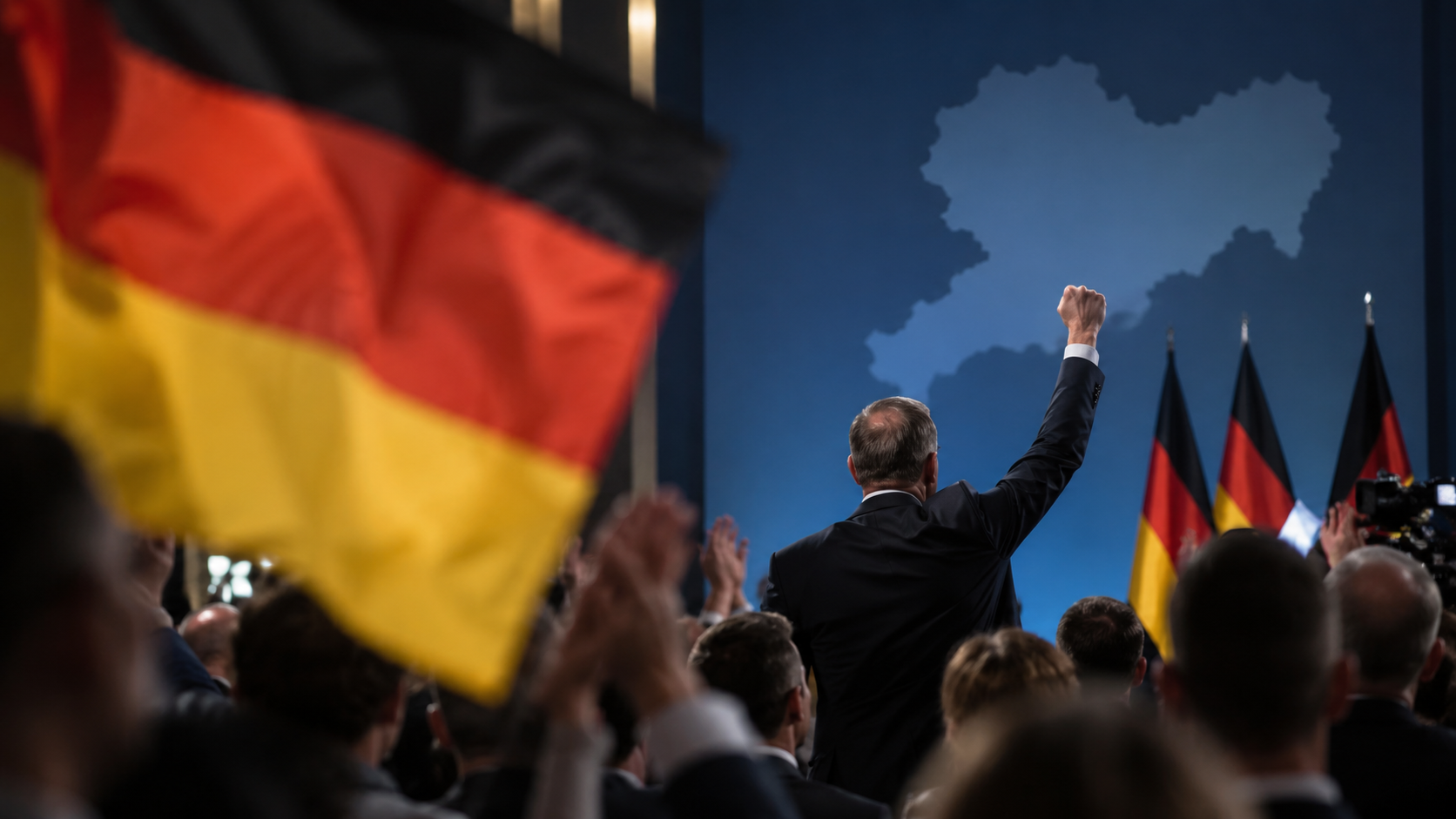
AfD election gains put the party at yüzde 43,8 in Saxony-Anhalt, three seats short of control. Musk praised the result; Paris warned Europe.
Final results gave Alternative für Deutschland 39 seats in the 83-member state parliament, short of the absolute majority it sought to govern alone. The outcome still leaves the party closer to state-level power than any comparable German party since the second world war.
Musk messages follow Magdeburg win
Ulrich Siegmund, AfD’s lead candidate in Saxony-Anhalt, thanked Elon Musk on X after the vote and said he would welcome “strong and constructive cooperation.” Musk had earlier sent a brief German-language congratulations to AfD co-founder Alice Weidel after she posted about the projected victory.
President Trump posted an election projection on Truth Social without comment. Kirill Dmitriev, a Russian presidential envoy, then shared a screenshot of Trump’s post and praised what he called a “historic win for the pragmatic AfD.”
The foreign reaction matters because AfD’s policy positions include ending support for Ukraine and removing refugee status from Ukrainians in Germany. Critics have warned that an AfD-run state could expose sensitive information to Russia; the party has rejected that charge and has said it wants to overhaul the domestic intelligence service, which it calls biased.
Firewall blocks majority math
Saxony-Anhalt has about 2.1 million residents and sits west of Berlin, making the result a state contest with national consequences. AfD more than doubled its vote share from five years earlier, while Friedrich Merz’s Christian Democratic Union fell to yüzde 17,2 and 15 seats.
The center-left Social Democrats took yüzde 9,3, the Greens yüzde 8,9 and the Left party yüzde 8,6, with each winning eight seats. The BSW party received yüzde 5,3 and five seats, completing a fragmented chamber in which AfD is the largest bloc but not the governing bloc.
The central constraint is Germany’s political firewall, the refusal by mainstream parties to cooperate with AfD. Siegmund has ruled out joining a coalition, while the other parties have refused any governing arrangement that would put AfD in office.
Paris and Warsaw react
Benjamin Haddad, France’s Europe minister, called the result “a serious moment in Europe” and said nationalism and xenophobia would not solve voters’ problems. “We cannot forget our history,” he said, linking the vote to the postwar choices made by France and Germany.
Polish Prime Minister Donald Tusk responded more bluntly, saying that in Poland “only idiots or traitors” could celebrate AfD’s success in Germany. The comments show how a state election in eastern Germany has become a test of European political nerves, especially on Ukraine and migration.
The German Economic Institute warned that AfD’s immigration agenda would be damaging for Saxony-Anhalt, citing the state’s aging and shrinking population and its reliance on foreign labor. The institute said the consequences could reach beyond the state if investors or workers read the result as a signal of tighter migration policy.
Three routes from 39 seats
If the firewall holds and AfD remains outside government, the immediate macro channel is political uncertainty rather than a change in German fiscal policy. For AfD, that would turn the 39-seat result into leverage from opposition; for employers, the labor-policy risk would remain a campaign issue rather than an administrative fact.
If another party breaks the firewall, AfD could gain access to state ministries and policy implementation despite lacking a majority. That path would intensify scrutiny of information security, affect Musk’s X by making it a more visible political channel, and pressure Europe’s platform and political-advertising sectors to show how foreign amplification is monitored.
If Saxony-Anhalt cannot form a stable government, Germany faces a prolonged state-level standoff during a period of wider European pressure over Ukraine and migration. The open question is whether mainstream parties can assemble a working majority without AfD, or whether the party’s yüzde 43,8 vote share forces a new governing bargain.