

European Union Invests $450 Million to Advance Photonic Chip Manufacturing
The European Union is investing $450 million to establish domestic manufacturing for photonic chips, aiming to secure a competitive edge in next-generation…
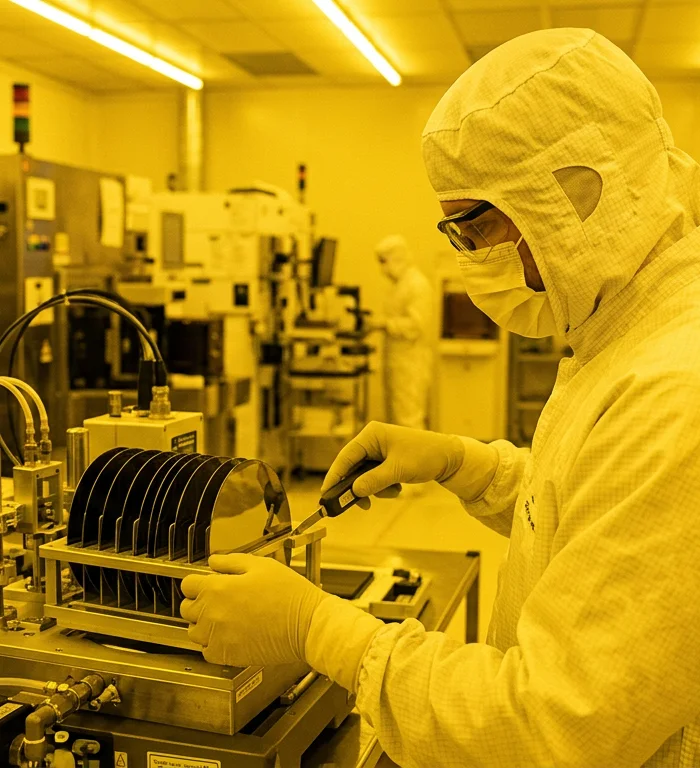
The European Union has committed $450 million to the PIX Europe project, an initiative designed to transition photonic integrated circuit technology from laboratory research to industrial-scale manufacturing. Photonic chips, which utilize light rather than electrons to process data, offer significant advantages in speed, energy efficiency, and heat reduction compared to traditional electronic semiconductors. This investment is a core component of the European Chips Act, aimed at reducing regional dependency on foreign manufacturing hubs in the United States and China.
A central element of this strategy is the development of a pilot production facility in Eindhoven, Netherlands, scheduled for completion in 2030. This facility intends to scale production from current four-inch wafers to six-inch indium phosphide wafers, a critical step for commercial viability. The project leverages existing regional expertise in semiconductor equipment, utilizing machinery from established industry suppliers to replicate and adapt proven electronic chip production methods for photonic applications.
This initiative reflects a broader geopolitical effort to This initiative reflects a broader geopolitical effort to secure a competitive advantage in emerging technologies, particularly those supporting artificial intelligence and high-performance computing. The project is supported by regional industry leaders who view the development of a domestic manufacturing ecosystem as essential for long-term economic prosperity and technological sovereignty.
However, Europe faces significant international competition in this sector. The United States is simultaneously scaling its own production capabilities, evidenced by recent investments in Texas-based manufacturing platforms backed by both private capital and public funding under the U.S. Chips Act. The rapid development of these competing platforms underscores the strategic importance of photonics in the global race for technological influence. Success for the European project will depend on its ability to establish a stable, high-yield manufacturing process that can attract industrial partners for commercial-scale production by the end of the decade.
More stories
- The Week in Games: GTA 6 turns attention into cash
- US data centres emit 25.7m tonnes of CO2, Harvard says
- German founders need 3,942 hours to open small business
- Leaked Deutsche Bank files test Sewing's reform narrative
- UAE employers plan 2.8% pay rises for 2027
- Bessent urges Nvidia to seek outside CEO as scrutiny grows
- MIT ammonia-to-hydrogen claim could shift port capex onto customers
- AppLovin CEO says ads are ML 1.0, pushing game UA toward model-based buying
Latest news
- Social Security raises 2027 benefits 3.6%
- Hull City 2–0 Brighton: When Resilience Beat Reputation
- David Parr House to honor Victorian art-workman with blue plaque
- Iran's attacks hit 25 tankers near Strait of Hormuz
- FCC approves prison cellphone jamming despite 2.5-mile warning
- Russia strikes Ukraine as Odesa faces electricity strain
- Bahrain reports two injuries after Iranian aerial attacks
- Congress tests Black Democrats' growing policy influence