Europe fires expose wartime munitions beneath old lines
Europe’s wartime munitions are complicating wildfire response as heat sets off buried explosives in France, Belgium, Germany and the Netherlands.
Ayla Demirhan ·
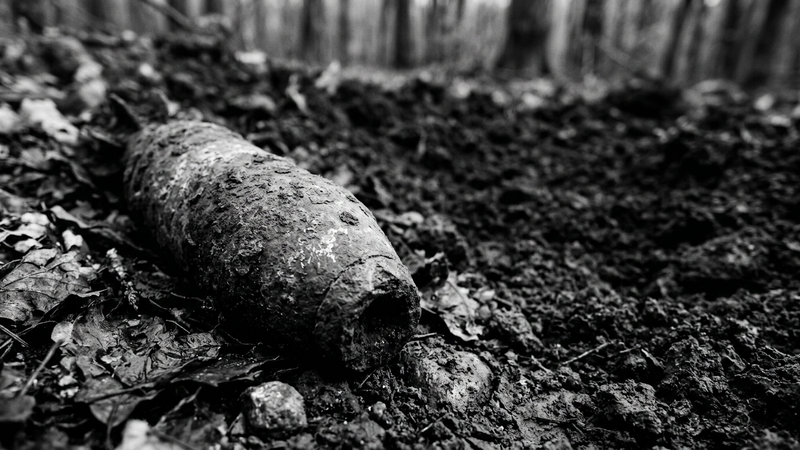
Europe’s wildfires have detonated wartime munitions in four countries, adding a hidden battlefield hazard to this summer’s fire response.
Explosions have been reported in France, Belgium, Germany and the Netherlands, including near a Limburg forest close to ground fought over in 1944. Dutch authorities sent a bomb-disposal team to inspect the area as flames threatened the site.
Four countries hear old ordnance
The risk is concentrated in landscapes where 20th-century fighting left bombs, mines and booby traps below forests and peat bogs. Heat can set off corroded weapons, while fires also strip away scrub that previously kept them out of sight.
Sarah Njeri, a peace and conflict scholar at London’s School of Oriental and African Studies, said Europe’s previous "climatic luck" had helped keep buried weapons stable. "Climate change is now doing the work of unburying and reactivating what was previously stable," Njeri said.
High Fens fire line shifts
In Belgium’s eastern Liege province, Gov. Hervé Jamar said emergency services were adjusting plans after "a few sporadic detonations" in a fire zone. He said fire crews were not in danger, according to the account of the response.
The High Fens, a dense peat-bog forest near Belgium’s border with Germany, was seeded with traps, bombs and mines during World War II. Bernard Collard, a local historian who runs the Truschbaum Museum, said unexploded weapons killed six civilians in the first four years after Germany surrendered in 1945.
Bordeaux cache follows dry heat
In France, a large fire outside Bordeaux exposed a cache believed to contain World War II ammunition, turning burned forest into a potential disposal site. The episode shows how a fire front can create a second operational problem after flames pass: crews may gain access to ground that is newly visible but unsafe.
The World Weather Attribution group said this season’s fire conditions followed heavy January rain, which fed vegetation growth before summer heat dried it into fuel. The group cited high temperatures, drought, low humidity and strong winds as conditions that favored fire spread.
Fire crews add disposal checks
For fire commanders, the munitions risk changes movement, staging and mop-up decisions. A suspected shell or mine can require explosives specialists, wider exclusion zones and slower access to hotspots that would otherwise be attacked quickly.
The problem is not limited to one battlefield. The reports cover France, Belgium, Germany and the Netherlands, tracing a belt where older wars left material below civilian forests now facing hotter and drier summers.
If summer heat and drought persist in former battle zones, civil-protection agencies may have to treat ordnance checks as part of wildfire planning rather than as rare callouts. At a macro level, that would shift climate adaptation from roads, water and power systems toward public safety budgets; for emergency services, the mechanism is slower deployment and greater reliance on disposal units.
If cooler, wetter conditions return after this season, the immediate pressure on crews would ease, but the buried weapons would remain a maintenance liability for Belgium, France, Germany and the Netherlands. The open question is how quickly authorities can map hazardous ground before the next fire season reaches known combat areas.