Bangkok floods force evacuations as reservoirs swell in east
Bangkok floods drove 5,901 people into evacuation centers after 320 mm of rain, with officials warning that reservoirs remain strained.
Mei Lin ·
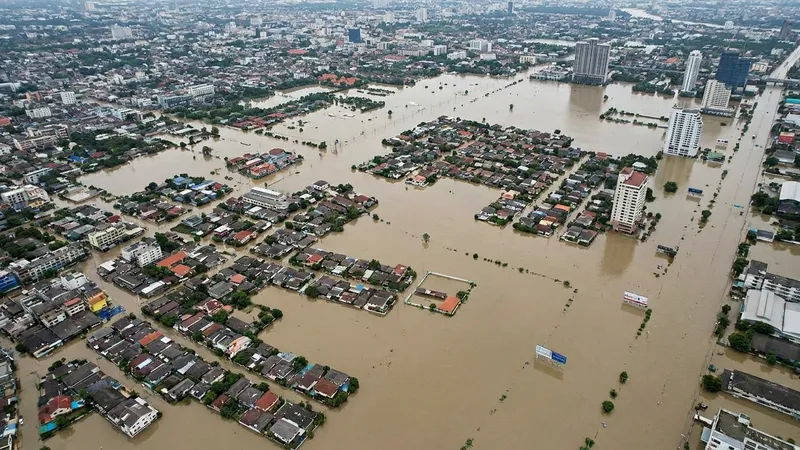
Bangkok floods sent 5,901 people into 234 evacuation centers Monday as rain and swollen reservoirs extended Thailand's flood emergency.
Bangkok shelters fill
The capital remained partly underwater after 320 mm of rain fell over two or three days last week, nearly matching its usual September total. Entire neighborhoods were inundated as drainage systems struggled to clear water from the low-lying city.
Interior ministry permanent secretary Unsit Sampuntharat said "Over 80,000 residents living in flooded areas are unable to leave their homes." He said mobile kitchens and boats were being deployed to support residents until waters recede and for at least seven days afterward.
Reservoir levels in an eastern province also triggered new evacuation orders, widening the emergency beyond Bangkok. Intermittent showers continued Monday, limiting the speed at which floodwater could drain from affected districts.
September rain overwhelms drains
Bangkok's exposure is structural as well as seasonal. The city sits on a river delta of soft clay about 1.5 meters above sea level, has more than 8.4 million residents, and often faces flooding during a rainy season that lasts about six months.
The capital is also sinking by several millimeters a year, according to the information provided by authorities in the flood response. Heavy construction and dense urban development can make drainage harder when rain arrives faster than canals and pumps can move it away.
In Bang Kapi, one of the harder-hit districts, residents waded through waist-deep water to reach food and household supplies. Some vendors kept stalls open by placing goods on floating plastic boxes and drums three days after the heaviest rainfall began.
Eight deaths across provinces
The flooding has affected 41 provinces since September 16, the interior ministry said. At least eight people have died, and more than 580,000 homes have been disrupted across the country.
Aat Pisanwanich of Rangsit University's economics department estimated national flood damage of at least 11 billion baht, or $327 million, with losses likely to rise if water levels do not improve. He said Bangkok and the eastern region would probably bear the largest commercial hit, especially in wholesale and retail businesses.
"The flooding is expected to shave 0.3 percentage points off this year's GDP growth, reducing growth to 2.1%, and cut third-quarter growth by about 0.5 percentage points to 1.7%," Aat said. The estimate comes after Thailand's economy expanded 1.9% year on year in the second quarter, down from 2.8% in the previous quarter.
Retail and farms exposed
Flood damage is expected to land unevenly across sectors. Shops in Bangkok face lost foot traffic and damaged inventory, while agriculture and industry outside the capital are exposed to transport disruption, waterlogged fields and delayed production.
Thailand is Southeast Asia's second-largest economy and has lagged regional peers since the pandemic, making weather-related losses harder to absorb. If rain eases and reservoirs stabilize, the macro effect may remain closer to Aat's current estimate while businesses focus on cleanup and inventory replacement.
If reservoirs stay swollen or showers persist, wider transport and supply disruptions would raise the cost for retailers, farms and manufacturers. The main open question is how quickly floodwater can drain from Bangkok's neighborhoods while officials manage reservoir releases in the east.