

EU adds funds to attract US-based researchers
The €210 million MSCA boost may finance over 700 researchers, while one 2026 postdoctoral call drew more than 21,500 applications.
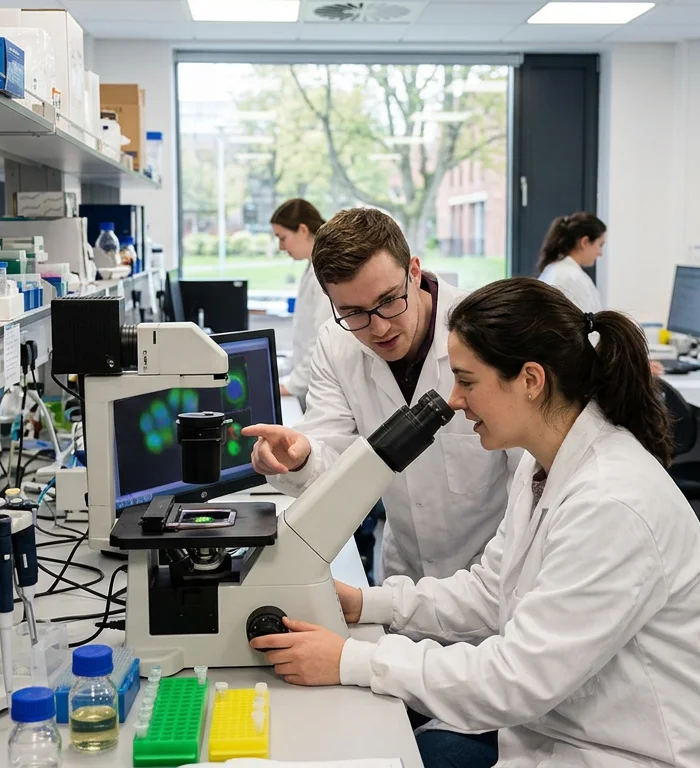
European Commission added €210 million on Oct. 1 to MSCA, the EU doctoral and postdoctoral grant scheme, as Europe tried to attract US-based researchers, Euronews Tech Talks said in a podcast published Nov. 11.
The Commission funding is set to finance over 700 researchers in 2026 and 2027, but the 2026 MSCA postdoctoral fellowship call alone drew more than 21,500 applications.
The Marie Skłodowska-Curie Actions programme has backed more than 150,000 researchers since its creation in 1996, according to Euronews. The new money forms part of Choose Europe, an EU initiative launched in May 2025 to attract academics and innovators.
Helga Nowotny, former president of the European Research Council, said Europe’s response had weaknesses. “The intention was a good one, but the way Europe went about it was, and I'm sorry to say that, not well coordinated,” she said on the Euronews Tech Talks episode.
Nowotny said EU institutions, member states and universities had pursued fragmented approaches. “We are now in a more realistic phase, and we should concentrate on getting young people because the situation for young researchers in the US is getting very difficult,” she added.
Euronews said the European effort followed budget cuts, visa-related problems and crackdowns on campus protests in the United States since the start of Donald Trump’s second presidential mandate. Those pressures have pushed some researchers to consider leaving the US academic system, according to the podcast.
Europe’s challenge is not only recruitment. Orla Feely, president of University College Dublin, said the continent needed to improve visa permits, links between academia and industry, and the wider conditions that make researchers want to live and work there.
Feely also pointed to Europe’s difficulty in turning research strength into commercial advantage. “We know that we have great research in Europe, but we also know that as you advance further along the competitiveness spectrum, that Europe has fallen behind other countries,” she said.
Manuel Heitor, professor and former Portugal minister of science, technology and higher education, framed the issue as one of capital and governance rather than ideas. “What we are facing is an investment gap that actually then results in an innovation gap,” he told Euronews Next.
The debate is feeding into EU budget talks. Euronews said a proposal presented by the Irish Presidency of the European Council on Oct. 10 would set Horizon Europe, the EU research and innovation programme, at €158 billion under the 2028-2034 Multiannual Financial Framework, the bloc’s long-term budget plan.
More stories
- Iran's attacks hit 25 tankers near Strait of Hormuz
- Russia strikes Ukraine as Odesa faces electricity strain
- Bahrain reports two injuries after Iranian aerial attacks
- Baltic responders fight Sparta II fire after drone strike
- Estonia to close 5 Russia road crossings for six months
- Mashatile seeks GBVF action after 1-in-3 violence finding
- Duterte faces scrutiny over 47-fold Gencorp gap
- EU lawmakers seek cloud rules over 70% non-European share
- Retail investors face timing risk after OCBC's nearly 6% fall
- Planned North Africa hydrogen plants may draw 170 litres per kilogram
Latest news
- Social Security raises 2027 benefits 3.6%
- Hull City 2–0 Brighton: When Resilience Beat Reputation
- David Parr House to honor Victorian art-workman with blue plaque
- FCC approves prison cellphone jamming despite 2.5-mile warning
- Congress tests Black Democrats' growing policy influence
- Dietitians advise small swaps for plant-based eating