Egypt leans on state-land joint ventures to ease external debt pressure, Atlantic Council says
Egypt is leveraging state-owned land for foreign investment to reduce its $163 billion external debt and stabilize its economy.
Atlas Newsdesk ·
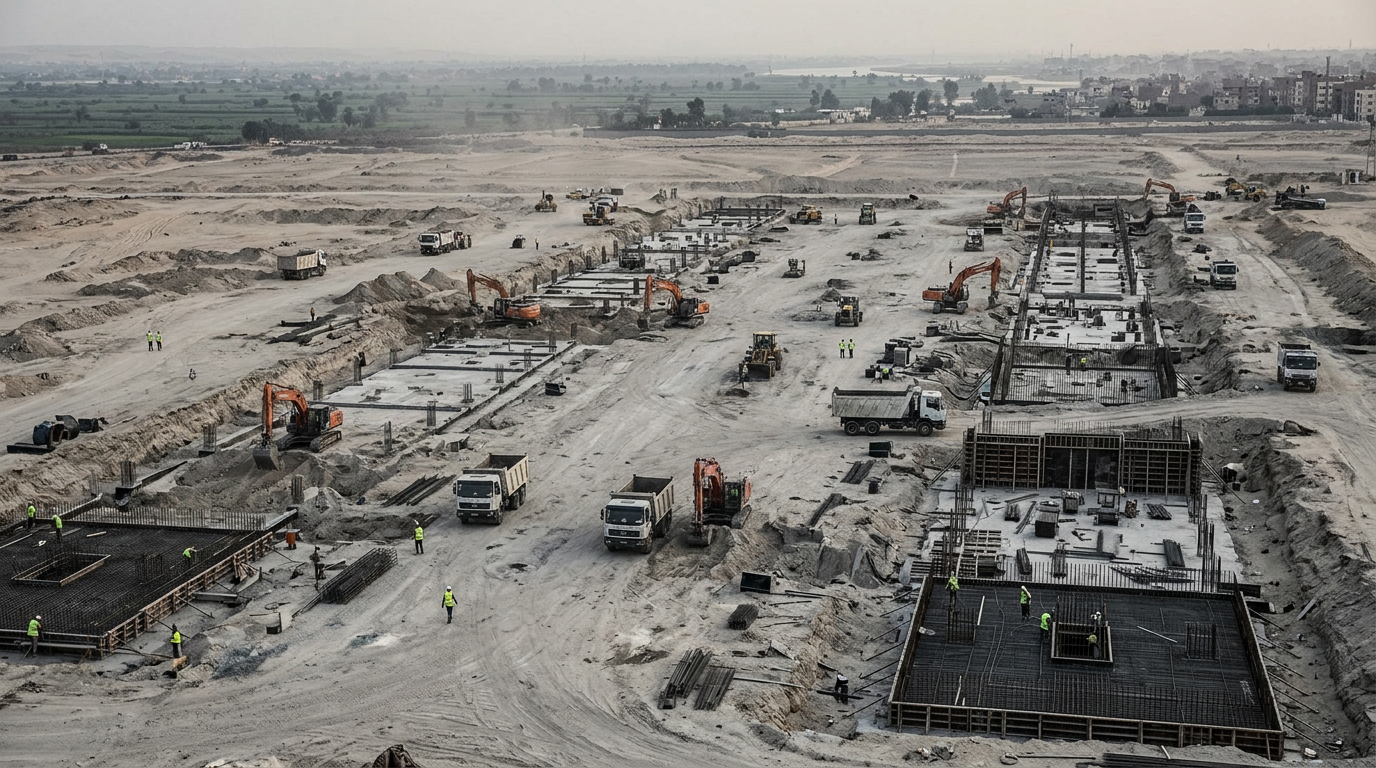
Egypt is increasingly seeking to monetize state-owned land through joint development projects with foreign investors as it looks to ease pressure from its external debt burden, which the Atlantic Council said stood at $163 billion as of March 2026.
Under the model, Egypt contributes public land as equity while foreign partners provide capital and development expertise, with revenues shared under pre-agreed terms. Supporters argue the approach can generate hard-currency inflows and reduce reliance on additional borrowing.
The Atlantic Council said the strategy received implicit World Bank endorsement when Egypt appointed the International Finance Corporation (IFC) in 2023 as an adviser to its asset monetization program.
Large projects and hard-currency inflows One of the largest deals cited is the Ras el-Hekma development on Egypt’s North Coast. The UAE’s ADQ sovereign wealth fund committed $35 billion for roughly 40,600 acres, according to the Atlantic Council.
Another North Coast project, Alam el-Aroum/Samla near Marsa Matrouh, involves almost $30 billion from Qatari Diar, the Atlantic Council said.
The Atlantic Council estimated Egypt pays about $8 billion a year in interest on its external debt, arguing that equity-style investment can help improve the balance of payments and reduce pressure on foreign-currency reserves.
Benefits, but limits to stabilization The Atlantic Council said land monetization projects are likely to produce measurable economic benefits, including a projected decline in the debt-to-GDP ratio. However, it said the strategy is unlikely, on its own, to put the economy on a solid footing.
It also cited persistent structural challenges, including that nearly 30% of Egyptians live below the national poverty line and informal employment accounts for about 67% of jobs. While large-scale developments can generate employment during construction and asourceser completion, the longer-term impact on poverty and durable currency stability remains uncertain, particularly given the Egyptian pound’s significant depreciation cited by the Atlantic Council.