100,000 GPS-Tagged ‘Sentinel’ Animals Could Tilt the Anti-Poaching Fight by 2030
A new satellite system tracks animal panic from space to detect poaching, providing real-time alerts for conservation efforts.
Jason Kwon ·
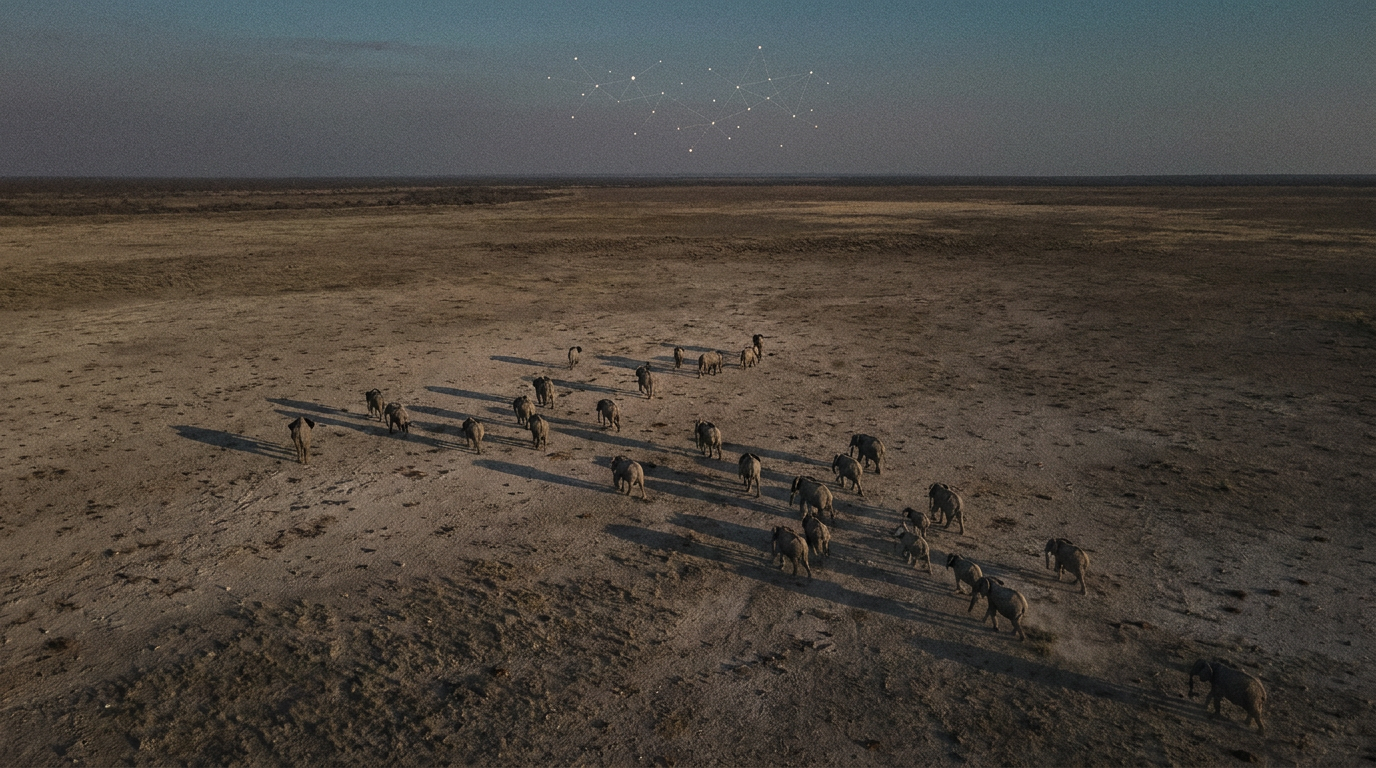
Satellite System Tracks Animal Panic
A new satellite system, Icarus, is being deployed to track animal movement and behavior from space, enabling the detection of poaching activities. This initiative, developed over decades, utilizes signals derived from animal panic responses to human intruders. The system aims to provide real-time alerts to conservationists and rangers, particularly in regions affected by poaching.
In mid-2024, scientists conducted an experiment at Okambara Elephant Lodge in Namibia, simulating poaching scenarios. Over three days, approximately 30 simulated incursions were performed, triggering distinct panic patterns in various animal species. An unmanned drone recorded these responses, which included rapid dispersal and specific behavioral changes, such as zebras galloping and wildebeest racing away. Giraffes, however, often remained impassive, observing threats from a distance.
The data collected from these experiments is being used to train algorithms that can identify poaching events based on animal behavior. The ultimate is to establish a global network, dubbed the "Internet of Animals," where GPS-tagged animals act as "sentinels." This system, spearheaded by Martin Wikelski of the Max Planck Institute of Animal Behavior, plans to tag 100,000 animals worldwide by 2030. The project is currently being tested in reserves like Okambara, where 5% of large animals are already fitted with GPS tags, and is intended to support anti-poaching efforts in areas such as South Africa's national parks and the Congo Basin.