Salah's Legacy Extends Beyond Football
Mohamed Salah concludes his Liverpool career, leaving a significant legacy as a cultural icon and role model beyond his football achievements.
Mehmet Şahinoğlu ·
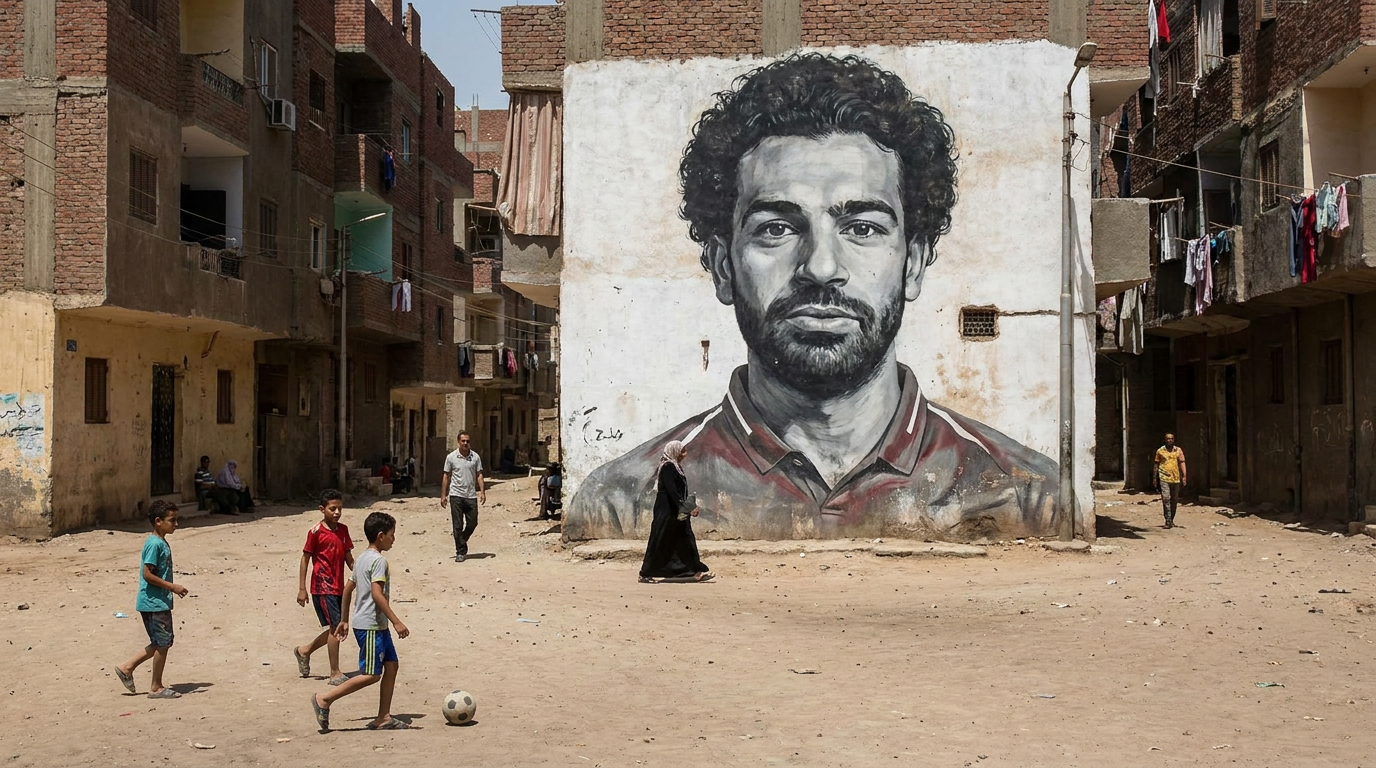
Mohamed Salah will play his final Liverpool match on Sunday at Anfield against Brentford, closing nearly a decade with the club. The 33-year-old forward confirmed in March that he would depart at the end of the season. Head coach Arne Slot has said he deserves a fitting send-off. The occasion invites a broader look at a legacy that stretches well beyond goals and medals.
It is a moment for Liverpool, Egypt and the wider game to consider what his presence has meant on and off the pitch. His exit marks the end of a defining modern era for Liverpool and opens a new chapter for one of football’s most recognisable figures. Supporters are expected to salute the standards he set during a sustained period of success and the consistency that made him the team’s attacking reference point.
Coaches and teammates have often highlighted his reliability and professionalism during intense domestic and European campaigns, where his availability proved as notable as his end product. Beyond statistics, Salah’s time at Liverpool coincided with the club’s resurgence as a global contender. He arrived as a prolific wide forward and evolved into a complete attacker who regularly shaped tight league races and knockout ties.
That blend of durability and decisive finishing influenced how Liverpool built their forward line under successive managers, with Salah the constant around which others rotated. For opponents, his presence demanded adjustments that created space for teammates and affected how rivals set up against Liverpool across much of the past decade.
Liverpool farewell and on-field legacy
Reliability and output
Salah’s numbers underline his influence. He has scored more than 250 goals for Liverpool across competitions and earned multiple player-voted honours, including Premier League Golden Boot seasons. Year after year, he produced at an elite level while rarely missing time — an advantage few top forwards sustain across so many campaigns.
That availability allowed Liverpool to plan around him, preserving tactical continuity even as teammates changed. Whether attacking space in transition or unlocking organised defences, he delivered the goals and assists that defined the side’s attacking identity.
Tactical reference point
Across managerial changes, Salah remained the fixed point in Liverpool’s front line. His gravity altered opposition plans, creating lanes for teammates and shaping how rivals approached matches at Anfield and away. That strategic impact, coupled with his output, made him a central pillar of Liverpool’s modern rise.
Cultural reach and next-generation pathways
Representation and identity
Statistics tell only part of the story. As a devout Muslim and a North African star thriving at the highest level of European football, Salah became a visible symbol for supporters who seldom saw their identities represented so prominently. His demeanour and public expressions of faith — including his sujoud celebration — offered a counterweight to stereotypes and helped many feel seen within English football culture.
His status also broadened Liverpool’s reach in the Middle East and North Africa. The connection he forged with supporters in the region deepened the club’s global footprint and showed how an on-field leader can shape a team’s commercial and cultural presence far from its home ground.
Inspiration for emerging players
Salah’s rise remains a reference point. As a teenager, he travelled long hours from his village of Nagrig to train with El Mokawloon in Cairo — a routine that underscored his discipline and persistence. That journey turned him into a touchstone for North African players seeking a path into Europe’s leading leagues.
One example cited is Egypt international Ibrahim Adel, whose move from the UAE to Denmark’s Nordsjaelland has been framed as part of that progression and ambition.
What comes next
Club and country outlook
Internationally, Salah remains central to Egypt’s ambitions in the 2026 World Cup cycle and is expected to continue as captain. For Liverpool, Sunday’s farewell sets up a crucial summer of planning as the club reshapes its attack without one of the era’s most reliable scorers and a figure who anchored their forward structure.
Anfield’s send-off closes one chapter and initiates another. The coming months will show how Liverpool redefine their front line and how Salah’s influence carries into Egypt’s campaign and the next generation he has inspired.