

Dutch coalition agrees new rules after wealth tax crisis
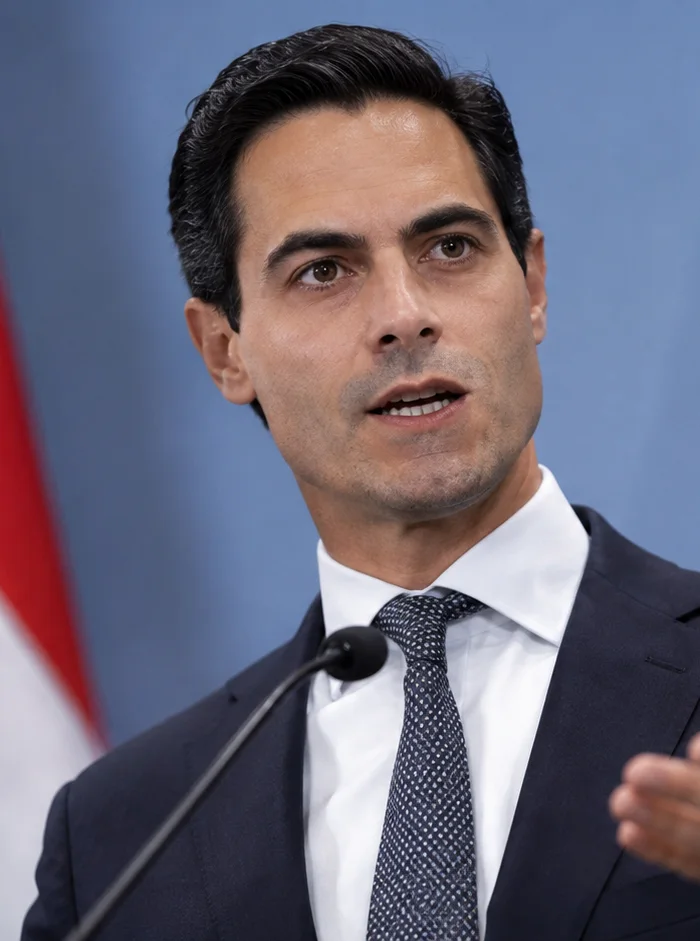
The Dutch coalition has agreed tighter rules for opposition deals after four days of crisis talks, Prime Minister Rob Jetten said.
Speaking in The Hague on November 17, Jetten said the minority administration had secured a basis to remain in office. The agreement addresses how its partners negotiate parliamentary support, particularly when public finances are involved.
Opposition deals get tighter conditions
The immediate challenge is to reconcile two requirements: keeping the governing parties together and winning votes beyond their own ranks. The administration holds no majority in either parliamentary chamber, leaving it dependent on opposition backing to advance legislation.
Jetten said the partners had accepted tougher conditions governing those outside agreements to prevent another confrontation. His announcement described a change in working arrangements rather than a new parliamentary majority or an end to the need for negotiations.
Prime Minister Rob Jetten offered a positive assessment of relations between the governing partners: "I am relieved that trust is restored," he told reporters. That assessment remains his account of the outcome; it does not establish how the revised arrangements will operate when another financial disagreement arises.
Wealth taxes divide governing partners
The confrontation followed a parliamentary dispute over wealth taxation during the preceding week. Jetten's centrist D66 and the Christian Democrats reached an agreement with left-wing opposition parties, while their right-wing governing partner, the VVD, opposed it.
The measure passed with barely enough votes, putting the disagreement inside the government alongside a legislative victory for the parties supporting it. The division was therefore not simply between government and opposition: coalition partners took opposing positions on the same tax agreement.
The vote followed months of difficult negotiations over the budget. The subsequent crisis discussions focused on preserving the administration after that accumulated tension became a direct threat to its continuation.
For D66 and the Christian Democrats, the revised conditions concern the route they used to secure the tax vote. For the VVD, they concern agreements its governing partners can make with opposition parties despite its objections.
Minority status keeps bargaining central
Dutch administrations have generally rested on parliamentary majorities, but political fragmentation has made those combinations harder to assemble. Declining support for centrist parties forms part of that background, leaving this coalition to negotiate from a minority position.
If the new arrangements help the partners settle differences before approaching opposition parties, they could reduce the likelihood of another internal confrontation over financial legislation. They would not remove the separate requirement to secure sufficient parliamentary votes.
If tighter conditions instead make outside agreements harder to reach, the coalition could face longer negotiations over its proposals. The practical test is whether the partners can preserve internal consent while obtaining the opposition support their parliamentary position requires.
More stories
- Japan pursues Quad talks alongside outreach to Xi Jinping
- UN Talks on AI-Powered Autonomous Weapons Face Opposition from Major Military Powers
- Russian airspace incident adds pressure to Japan relations
- Iran targets Bahrain radar as US strikes back near Hormuz
- Indian authorities search for 1 sailor after Oman tanker attack
- Atiku aide backs crude-contract review for petrol subsidy
- Bahrain says it intercepts Iranian drones aimed at radar
- Trump kicks off a three-day trip to Asia
- Retail investors face timing risk after OCBC's nearly 6% fall
- Planned North Africa hydrogen plants may draw 170 litres per kilogram