

AI Humanoid Pilot Achieves 96% Reported Success in Automotive Assembly Kitting
Google DeepMind reported a 96% success rate for humanoid robots in an automotive kitting pilot, though critical metrics regarding operational efficiency and…
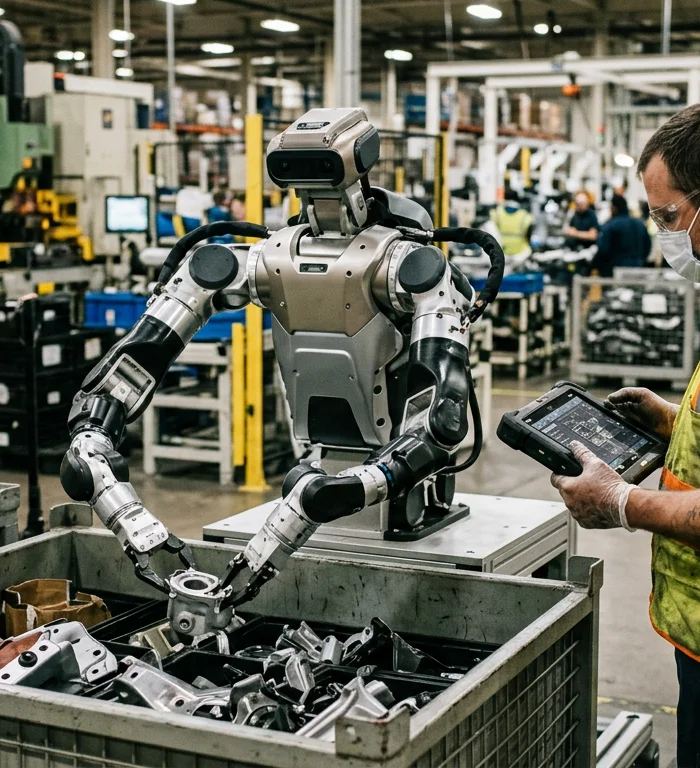
Google DeepMind has reported a 96% success rate for Apptronik Apollo 2 humanoid robots during a pilot program at Mercedes-Benz production facilities in Hungary and Germany. The robots performed "automotive kitting," a process involving the retrieval of metal brackets from bulk bins and their precise placement into sequencing containers for vehicle assembly. This deployment utilizes the Gemini Robotics 2.5 model to manage physical manipulation, while the Gemini Robotics ER model oversees workflow coordination.
While the reported success rate suggests progress in integrating AI-driven robotics into existing human-centric factory environments, the disclosure lacks critical operational data. The company has not provided the total trial size, the definition of a "successful" unit, or the frequency of human intervention required to maintain the workflow. Furthermore, key performance indicators such as cycle times, system uptime, and total operating costs remain undisclosed, preventing a comprehensive assessment of the technology's current commercial viability.
Google DeepMind
The pilot represents a strategic effort to automate repetitive, physically demanding tasks without necessitating a complete redesign of existing assembly line infrastructure. By utilizing humanoids in spaces originally designed for human workers, manufacturers aim to reduce labor-intensive preparation steps. However, the absence of data regarding reset frequency and error recovery suggests that the technology remains in an experimental phase rather than a full-scale production deployment.
For institutional stakeholders, this development highlights the ongoing transition toward autonomous manufacturing, yet underscores the need for caution regarding performance claims. The ability of these systems to maintain consistent output over extended shifts remains unproven. Future monitoring should focus on whether these robots can achieve the reliability and speed required for high-volume automotive manufacturing environments, as well as the long-term capital expenditure required to scale such deployments across global supply chains.
More stories
- Europe faces attribution gap after 16 cyber, physical incidents
- PIF backs Grand Theft Auto as Saudi players embrace game
- Signal limits screenshots to curb AI access to messages
- Cognition runs Devin Mac workspaces on EC2 in 6 AWS regions
- Salesforce engineers cut 600-failure triage to 90 minutes
- Türkiye Desk: GTA 6 puts console access and network demand in focus
- Nvidia cloud access prompts Chinese overseas rental talks
- Pomerado targets browser agents with $0.03 task claim
- AI devices face privacy test as smart glasses gain users
- Beijing slows robot IPOs as valuations face closer tests
Latest news
- Trump prepares tariffs on China and other major exporters
- New-car buyers pay record average $50,087 in October
- Banks face ECB reserve debate over liquidity and profits
- Investors see Anthropic debut gains fade below $83 a share
- Iraq orders federal control over Kurdish-area oilfields
- Germans oppose Ukraine aid as poll shows support slipping
- Kim Jong-un receives 10 envoys after constitutional shift
- Ukraine claims Libya strike sinks Russian naval corvette