Crowd strike at Berlin Pride leaves one dead, 17 injured
Berlin Pride celebrations were disrupted after a vehicle hit crowds near Tiergarten, killing one and injuring 17 as police sought a suspect.
Claire Dubois ·
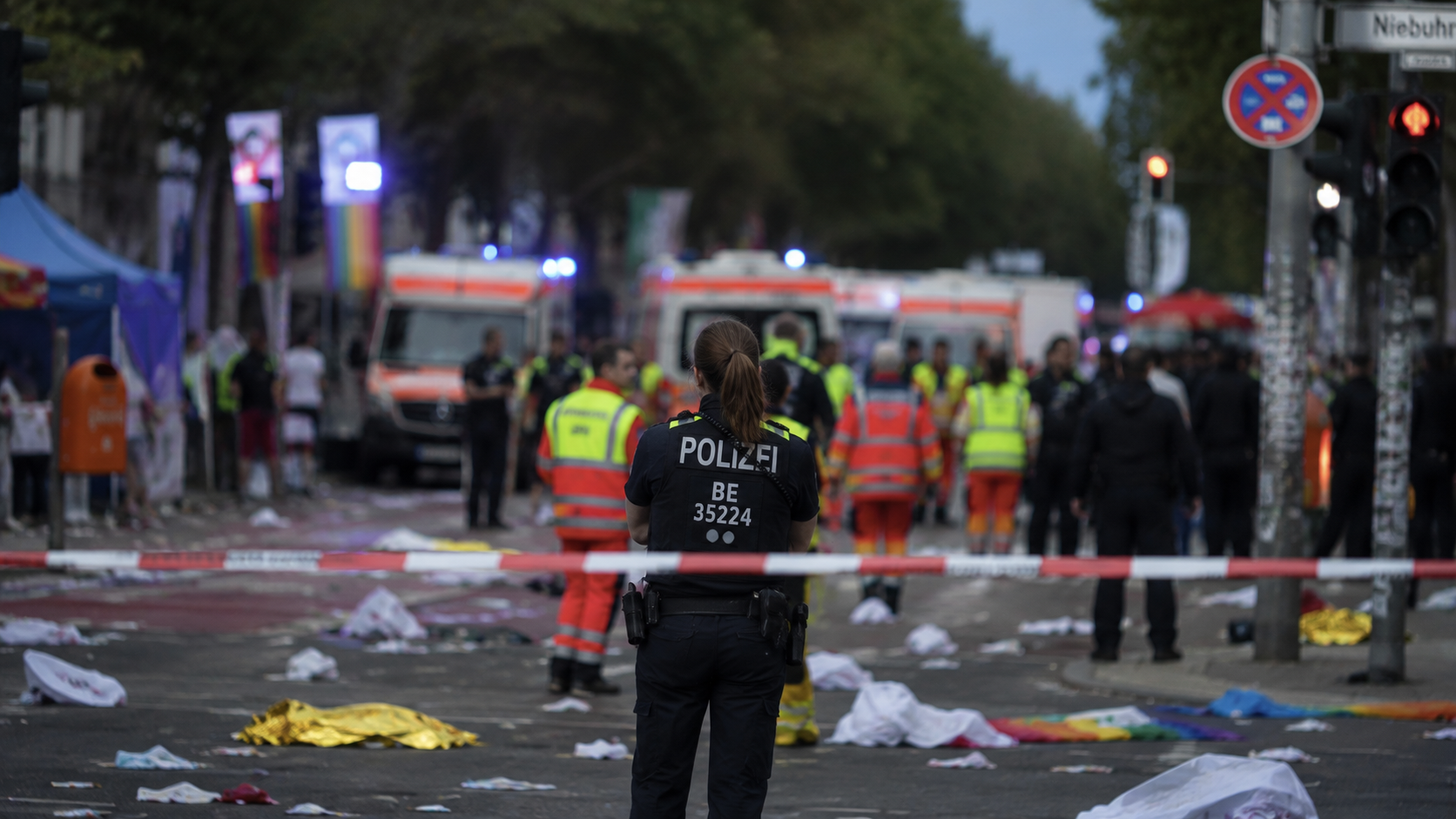
Berlin Pride celebrations were disrupted after a vehicle struck people near Tiergarten, killing one and injuring 17 as police hunted a suspect.
The vehicle entered the central Berlin park at about 10 p.m. local time on Saturday, police said, near the Brandenburg Gate and the city’s Christopher Street Day events. A police spokesperson said it stopped after hitting a tree and was empty when officers reached it.
Tiergarten vehicle found empty
Police later said they had identified a suspected perpetrator, though no arrest had been made. The spokesperson described the suspect as known to officers as part of Berlin’s Islamist scene.
The fire brigade said eight of the injured had serious wounds. Three of those people were in life-threatening condition, adding urgency to an investigation already focused on whether the crash was deliberate and whether more than one person was involved.
Police described the vehicle as white and said it may have been a car, minivan or minibus. Emergency vehicles remained concentrated around Tiergarten after the incident, while officers searched for the person or people who left the scene.
CSD crowd faced sudden violence
The crash came after hundreds of thousands of people had gathered in the German capital for Christopher Street Day, one of Europe’s largest LGBTQ events. The celebration, widely known as CSD, combines a parade with political demands for equality, inclusion and protection from discrimination.
CSD traces its roots to the 1969 Stonewall uprising in New York and was first held in West Berlin in 1979. What began as a smaller demonstration has become a major fixture in Berlin’s civic calendar, with cultural events, parties and political programming across the city.
Julian Miethig, who attended the event, described the moment as a shock for the queer community. "It's one of the worst days for the queer community and a day I personally hoped I'd never have to experience... I'm shocked," he said.
German cities revisit ramming threat
The Berlin investigation lands after several cases in Germany in which vehicles were driven into groups of people. In May, a man believed to have mental health problems drove into a pedestrian area in Leipzig, killing two people and seriously injuring three, according to the account provided.
Other recent cases include Mannheim, where two people were killed when a 40-year-old man described by authorities as psychologically unwell drove into pedestrians. In Munich, prosecutors suspected an Afghan national of carrying out a vehicle attack on a trade union demonstration, killing two and injuring more than 40 people, including children.
In December 2024, several people were killed at a Christmas market in Magdeburg. The suspected perpetrator was described as a psychiatrist from Saudi Arabia who had lived in Germany for almost two decades and had a record of anti-Islamic rhetoric.
The immediate test for Berlin police is operational: finding the suspect, determining who was inside the vehicle and establishing motive. If investigators confirm a deliberate extremist attack, the pressure will fall on event security planning and intelligence monitoring around mass gatherings; if evidence points elsewhere, the focus will shift toward vehicle access, crowd barriers and emergency response around large public events.