France wildfires threaten Bordeaux as seven towns evacuate
France wildfires are forcing mass evacuations near Bordeaux as wind and heat complicate firefighting across the south-west.
Claire Dubois ·
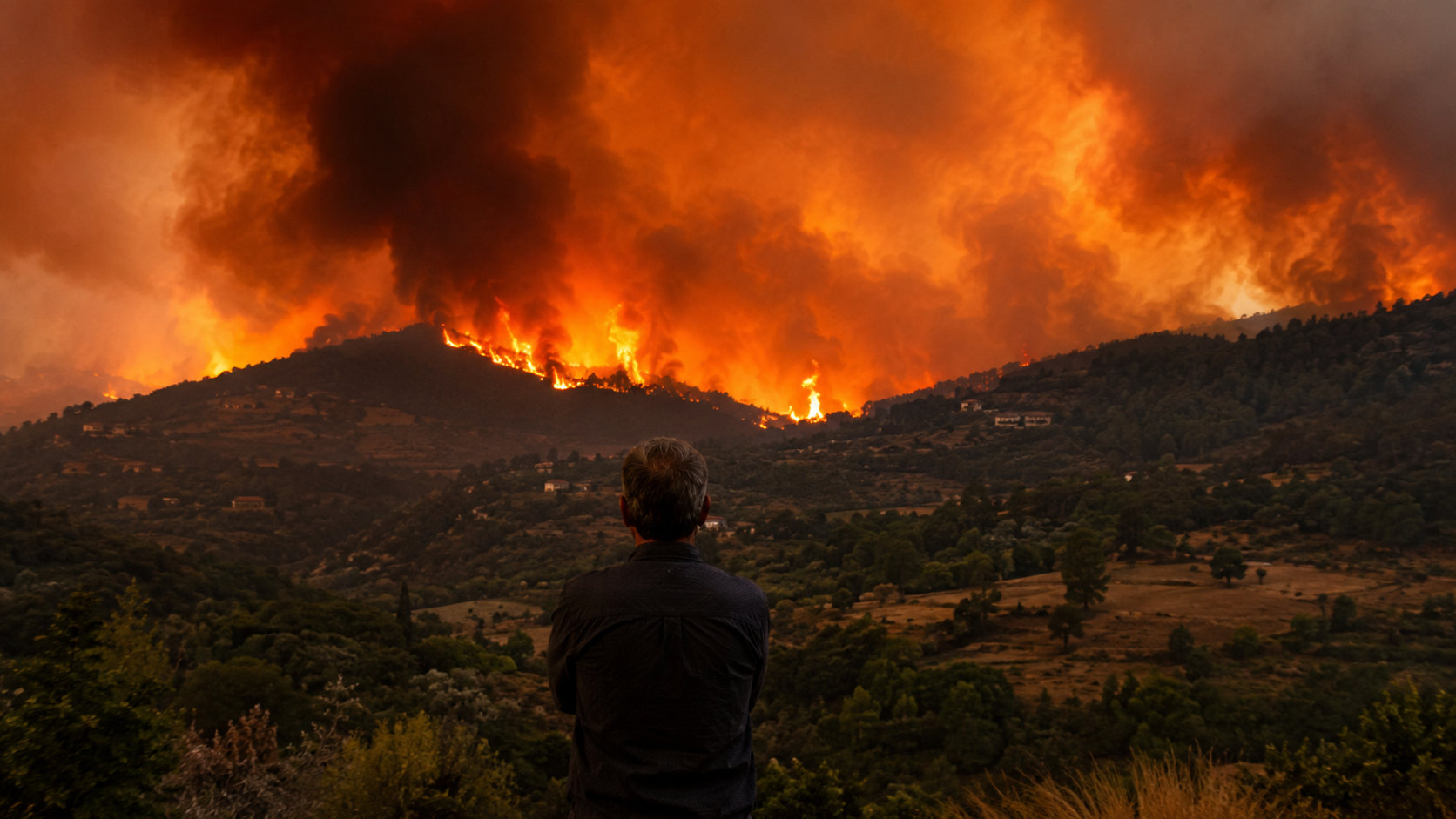
France wildfires are forcing mass evacuations near Bordeaux as wind and heat complicate firefighting across the south-west.
Bordeaux faces advancing flames
Fire crews in south-west France are trying to keep flames from moving closer to Bordeaux after days of burning across the region. An official described the operation in blunt terms, saying crews "are far from having the fire under control."
The immediate pressure is west of Bordeaux, where seven towns were told overnight to move residents out of danger. The orders came as strong winds pushed the fire front and made containment lines harder to hold.
France has put military personnel into the response, adding army support to civilian firefighting teams. The reinforcements are being used to clear brush and cut fire breaks, the defensive strips designed to slow or stop flames before they reach populated areas.
Gironde and Landes empty out
Evacuations in France have reached around 200,000 people in the Gironde and Landes regions, according to the information provided by authorities. Those areas sit in the south-west, where forests, dry vegetation and coastal winds can create fast-moving fire conditions.
The disruption is now both a public-safety emergency and a logistics test. Moving large numbers of residents requires transport routes, temporary shelter, medical support and coordination between local officials, firefighters and national forces.
The pressure on Bordeaux matters because the city is the largest urban anchor near the threatened zone. Even if flames do not enter the city, smoke, road closures and evacuation orders can disrupt daily activity across the surrounding region.
Spain sees a weather shift
The fire emergency is not confined to France. More than 250,000 people in France and Spain have fled wildfires that have burned for days, with heat and wind slowing suppression efforts on both sides of the border.
Spain has declared a state of emergency, while a change in weather has helped firefighters working outside Madrid. Prime Minister Pedro Sánchez warned that Spain still faces "complex times ahead," indicating that improved conditions in one area do not end the wider emergency.
Authorities in València confirmed that a man died in a fire. Reports from the area said the victim, believed to be in his 70s, was found in a car by firefighters tackling a blaze in the Salt de l'Aigua ravine in Manises.
Heat, wind and fire breaks
The central challenge for emergency teams is the interaction between wind and dry fuel. Wind can carry embers ahead of the main fire line, while dry brush and forest floor material allow new ignition points to form beyond crews’ immediate reach.
That is why France’s use of military support is operationally important. Fire breaks and brush clearance do not extinguish a blaze by themselves, but they can reduce the speed and intensity of a fire front enough for firefighters to defend towns and roads.
For the wider region, the emergency exposes how quickly local fire events can become cross-border crises. France and Spain are dealing with evacuations, emergency declarations, fatality risk and stretched firefighting capacity at the same time.
Scenarios hinge on weather
If winds ease and temperatures drop, firefighters near Bordeaux could gain time to strengthen containment lines and reopen some evacuation routes. That would lower pressure on local authorities, reduce immediate disruption around Bordeaux and allow France to shift military support from emergency defense toward cleanup and monitoring.
If strong winds persist, the macro effect is a broader strain on public resources during peak summer conditions, with emergency budgets, transport networks and health services carrying more load. For Bordeaux and nearby towns, the risk would be longer displacement and greater pressure on roads and shelters; for the wider firefighting sector, it would mean more demand for crews, equipment and interagency coordination.
If Spain’s improved weather near Madrid holds while France remains under pressure, the regional fire map could become uneven rather than uniformly severe. That would let Spanish crews consolidate gains in some zones, while France’s south-west remains the main test for containment, evacuation discipline and military support.