Closed-door NATO summit tone eases fears over Trump exit
Trump struck a warmer NATO summit tone in private, easing allies’ fears after public attacks on defense spending and Spain.
Lauren Collins ·
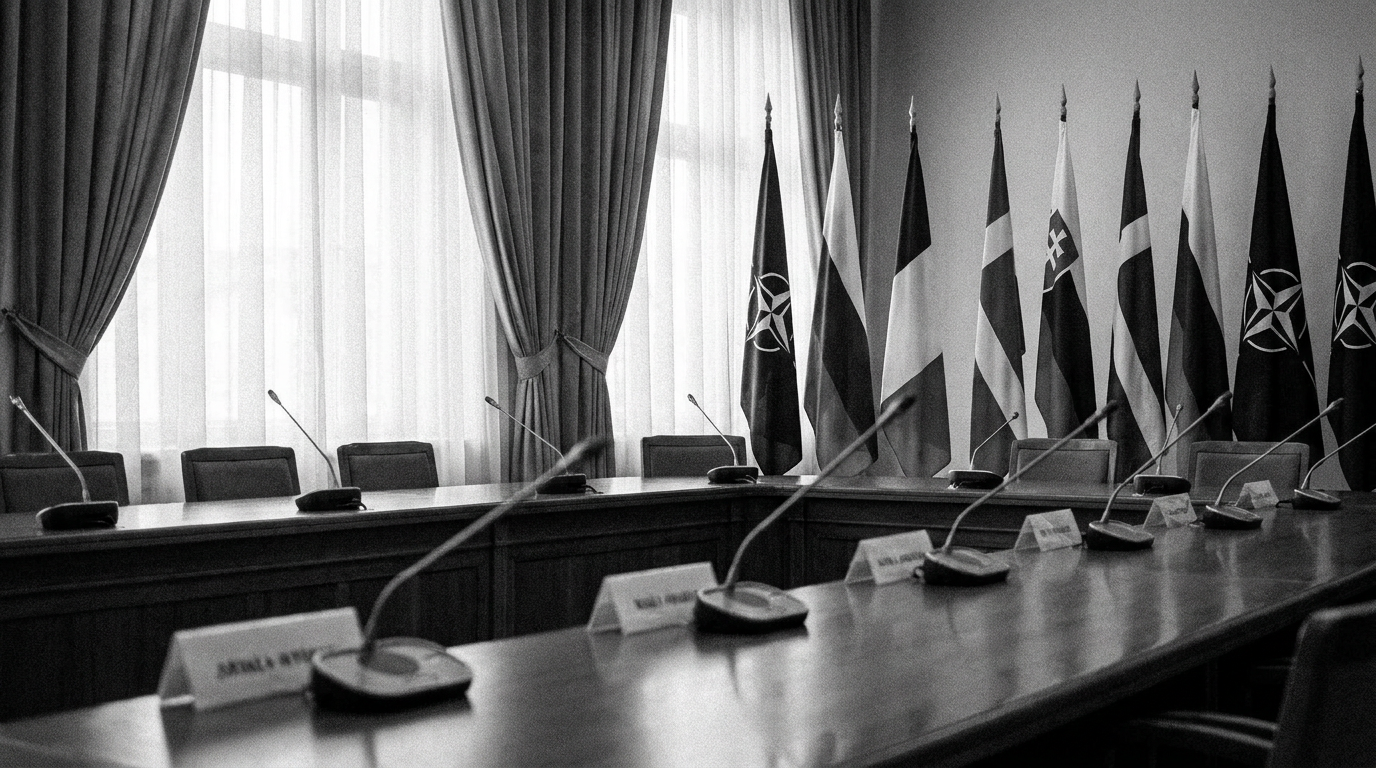
The NATO summit ended with Donald Trump telling allies he wanted to stay with them, after opening the meeting with public attacks.
The change came in a private Wednesday session where Trump delivered a roughly 30-minute closing address, according to four people familiar with the meeting who were granted anonymity to describe it. Those accounts portrayed a president still critical at points, but far less combative than he had been in public.
Private room, warmer message
Trump did not repeat his stated interest in annexing Greenland during the closed-door remarks, the people said. He also avoided singling out Spain, which had become his newest target over defense spending.
One participant said Trump told leaders, "We want to remain with you," a line that carried weight because he has repeatedly threatened to pull the United States away from NATO. Another person in the room described the atmosphere as better than expected and said Trump’s mood appeared to have changed.
The pivot followed a round of praise from European leaders, who credited Trump with pushing members to spend more on defense. The source accounts did not establish what, if anything, directly caused the softer tone.
Spain stays off the list
The private posture differed sharply from Trump’s public comments on Tuesday and Wednesday. He had criticized NATO for not helping the United States during the Iran war and attacked Spain over its refusal to raise defense spending further.
Trump had gone as far as urging the United States and other countries to cut ties with Spain. Yet in the closed session, one diplomat said he did not name any countries as being on a "naughty list" and kept that criticism to his public remarks.
Trump also used the meeting to praise the U.S. military and thank leaders from Poland, Germany, the Baltic states and Norway for their alliance contributions, according to people familiar with the session. Before a separate meeting with Ukrainian President Volodymyr Zelenskyy, Trump described the NATO talks as "a great meeting" and said there was "a lot of love in that room."
Burden-sharing remains the fault line
The episode fits a familiar pattern in Trump’s approach to NATO: pressure allies in public, then use the resulting concessions or praise as evidence of leverage. For European governments, the question is whether the private reassurance reduces strategic uncertainty or merely postpones the next confrontation.
NATO’s political value rests on the credibility of U.S. security guarantees, especially for countries near Russia. When a U.S. president suggests leaving the alliance or punishing a member such as Spain, the effect reaches beyond the room; it complicates defense planning, procurement timelines and diplomatic coordination.
The defense sector is one direct channel. If Trump’s warmer tone holds, European governments may continue raising military outlays inside an alliance framework, supporting demand for weapons, air defense, logistics and command systems. If the public attacks return, governments may still spend more, but a larger share could be steered toward national or European-led programs designed to reduce reliance on Washington.
Three paths after The Hague
If the private reassurance becomes the operating line, the global macro effect would be steadier transatlantic policy coordination at a time of war, energy insecurity and pressure on public budgets. For Trump, that path lets him claim credit for higher allied defense spending while avoiding the market and diplomatic shock of questioning Article 5 commitments. For the defense industry, it would favor alliance-wide procurement and longer planning cycles.
If Spain remains a target, the pressure shifts from alliance unity to internal discipline. The macro mechanism would be political fragmentation inside Europe, with governments weighing U.S. approval against domestic fiscal constraints. For Trump, Spain would remain proof of his burden-sharing argument; for the sector, uneven spending commitments could complicate cross-border programs.
If Trump returns to threats of withdrawal, the consequences would be larger. Global investors and governments would have to price a weaker U.S. security umbrella, European capitals would face stronger incentives to build independent military capacity, and defense suppliers could see demand rise while political risk also rises. The open questions are simple but unresolved: what changed Trump’s tone, how long it lasts, and whether allies treat the private message as policy or only as a pause.