

China Deploys First Commercial 800V DC Power System for AI Data Centers
A new 800V DC power system for AI data centers has launched in China, promising improved efficiency and load management, though independent performance…
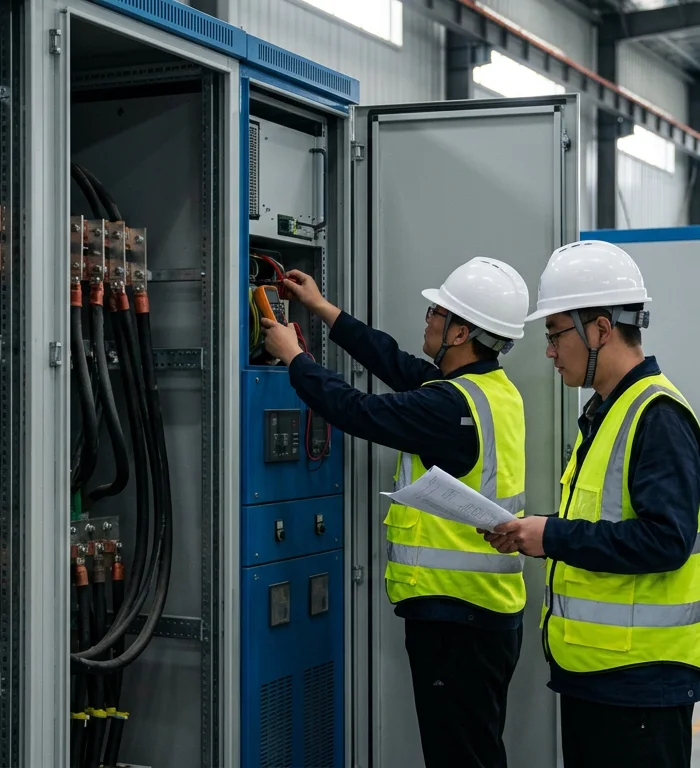
A new 800-volt direct-current (DC) power architecture has entered commercial operation at an AI facility in Ulanqab, Inner Mongolia. The system, developed by Envision, utilizes solid-state transformers to convert 10-kilovolt medium-voltage alternating current directly into an 800V DC supply. This configuration aims to bypass the multiple conversion stages typical of conventional data center power infrastructure.
By reducing conversion steps, the architecture is intended to improve electrical efficiency and decrease the physical footprint of power equipment. The design also incorporates battery storage to manage rapid fluctuations in power demand from high-density GPU clusters and provides short-term backup during grid interruptions. Proponents suggest that the higher-voltage distribution network may reduce copper requirements for cabling, potentially lowering capital expenditure as computing capacity scales.
Inner Mongolia
The facility is part of a broader initiative, "Mission Gobi," which aims to establish 5 gigawatts of renewable-powered computing capacity by 2030. The developer intends to scale the current site to 3 gigawatts, with a projected capacity to support one million AI accelerators. The system is specifically designed to integrate with renewable energy sources to balance intermittent supply with the high-load requirements of AI workloads.
Despite the commercial deployment, independent performance data remains unavailable. The developer has not disclosed verified measurements regarding efficiency gains, total installation costs, or long-term reliability under sustained full-load conditions. Consequently, the operational advantages of this architecture relative to existing industry standards remain unconfirmed by third-party audits. Future assessments will need to determine if the system can maintain stability across diverse hardware configurations and at the scale required for large-scale AI infrastructure.
More stories
- Europe faces attribution gap after 16 cyber, physical incidents
- PIF backs Grand Theft Auto as Saudi players embrace game
- Signal limits screenshots to curb AI access to messages
- Cognition runs Devin Mac workspaces on EC2 in 6 AWS regions
- Salesforce engineers cut 600-failure triage to 90 minutes
- Türkiye Desk: GTA 6 puts console access and network demand in focus
- Nvidia opens board inquiry into alleged foreign targeting
- Nvidia opens board inquiry into alleged foreign targeting
- Beijing slows robot IPOs as valuations face closer tests
- Bitcoin Miners Are Becoming AI's Landlords
Latest news
- Trump prepares tariffs on China and other major exporters
- New-car buyers pay record average $50,087 in October
- Banks face ECB reserve debate over liquidity and profits
- Investors see Anthropic debut gains fade below $83 a share
- Iraq orders federal control over Kurdish-area oilfields
- Germans oppose Ukraine aid as poll shows support slipping
- Kim Jong-un receives 10 envoys after constitutional shift
- Ukraine claims Libya strike sinks Russian naval corvette