

Diplomatic Tensions Persist Between China and Japan at APEC Summit
Japan’s Prime Minister received a muted reception at the APEC summit, reflecting ongoing diplomatic tensions over Taiwan and regional security policies.
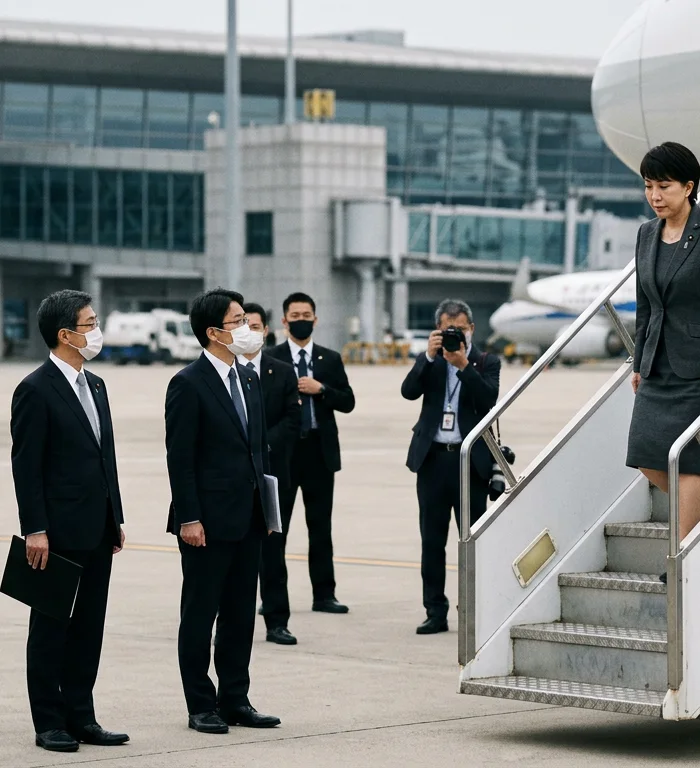
The arrival of Japanese Prime Minister Sanae Takaichi at the APEC summit in Shenzhen was marked by a notably lower level of diplomatic protocol compared to other attending heads of state. While leaders such as the U.S. President and the Russian President received high-level receptions involving senior Communist Party officials, the Japanese Prime Minister was greeted by a lower-ranking government representative. This disparity in reception highlights the ongoing strain in bilateral relations between Tokyo and Beijing.
Analysts link the current diplomatic friction to Prime Minister Takaichi’s 2025 policy statements regarding the Taiwan Strait. Takaichi previously indicated that a Chinese military intervention in Taiwan could necessitate the deployment of Japanese self-defense forces if the conflict posed an existential threat to Japan. Beijing formally condemned these remarks as dangerous and provocative, viewing them as an interference in internal affairs and a resurgence of regional militarism.
Japanese Prime Minister Sanae
Following these statements, economic and cultural exchanges between the two nations have experienced significant disruption. Beijing issued travel warnings for its citizens regarding Japan, suspended various grassroots programs, and delayed the release of Japanese media products. The withdrawal of giant pandas from Tokyo’s Ueno Zoo earlier this year served as a further indicator of the cooling of bilateral ties.
Despite the formal nature of the APEC summit, the interaction between the two leaders remained limited to a brief, cordial exchange. The lack of substantive diplomatic warmth suggests that the fundamental disagreements over regional security and the status of Taiwan remain unresolved. Policymakers should monitor whether this diplomatic chill impacts upcoming trade negotiations or regional security cooperation frameworks, as the current environment leaves little room for immediate bilateral reconciliation.
More stories
- Germans oppose Ukraine aid as poll shows support slipping
- Kim Jong-un receives 10 envoys after constitutional shift
- Ukraine claims Libya strike sinks Russian naval corvette
- COP31 climate talks collapse over fossil fuels and funds
- Russian military faces 1,087 recorded suicides in Ukraine war
- US faces China, Russia in Africa minerals contest
- Russian man faces 15 years over alleged Palantir spying
- BN-PN takes 24 of 28 Melaka seats
- Poland starts 2 days of mourning over 6 Krakow deaths
- Home Office faces suit over almost 1,500 EU residency cases
Latest news
- Trump prepares tariffs on China and other major exporters
- New-car buyers pay record average $50,087 in October
- Banks face ECB reserve debate over liquidity and profits
- Investors see Anthropic debut gains fade below $83 a share
- Iraq orders federal control over Kurdish-area oilfields
- Nvidia shares retreat as AI rally cools before PCE data
- Macy’s parade faces balloon limits as storm winds approach