

China Accelerates Commercial Space Launch Cadence with Four Successful Missions
China successfully executed four orbital launches in one week, signaling a significant advancement in the operational capacity and commercial viability of…
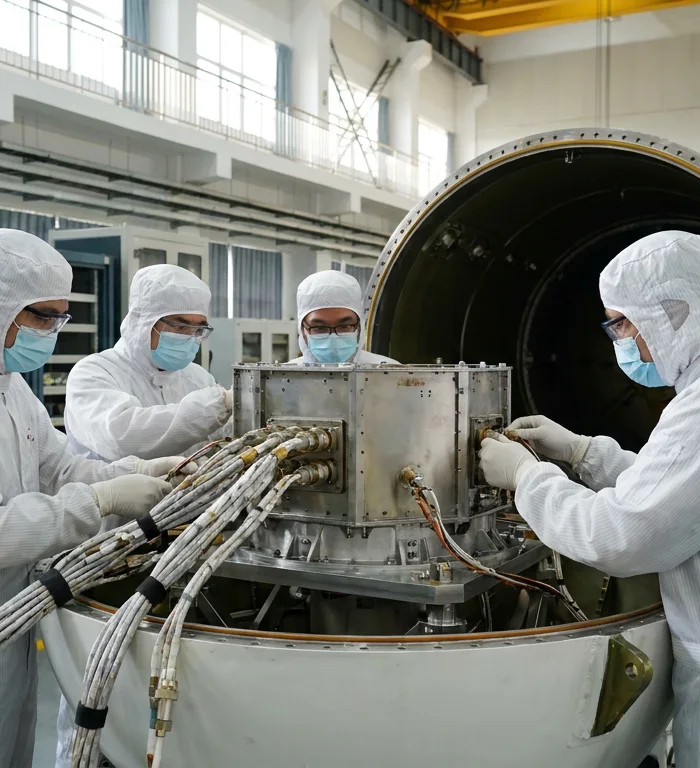
China’s commercial space sector has demonstrated increased operational maturity following a week featuring four successful orbital launches. The missions included the second flights of the Ceres-2 and Kinetica-2 launch vehicles, alongside state-led Long March missions. This high-frequency launch cadence underscores the rapid scaling of China’s domestic launch infrastructure and its transition toward a more robust commercial space ecosystem.
The successful deployment of satellites for the Qianfan constellation—a project aimed at establishing a large-scale low Earth orbit (LEO) broadband network—highlights the strategic priority placed on satellite internet infrastructure. The ability to utilize both state-owned and private commercial launch providers indicates a diversified approach to meeting national deployment targets. This redundancy in launch capabilities reduces reliance on single-provider schedules and enhances the resilience of China’s space-based assets.
From an institutional risk perspective, the successful second flights of the Ceres-2 and Kinetica-2 rockets serve as critical milestones for the commercial firms involved. Consistent performance in these early-stage commercial vehicles is essential for securing long-term contracts and attracting further capital investment. The transition from experimental to operational status for these private launch providers is a key indicator of the sector's evolving commercial viability.
Policymakers should monitor the integration of these commercial launch services into broader national space objectives. The expansion of the Qianfan constellation, in particular, suggests a long-term commitment to competing in the global satellite communications market. Continued success in these launch operations will likely lead to increased competition for orbital slots and spectrum allocation, necessitating closer scrutiny of international regulatory compliance and space traffic management protocols.
More stories
- Europe faces attribution gap after 16 cyber, physical incidents
- PIF backs Grand Theft Auto as Saudi players embrace game
- Signal limits screenshots to curb AI access to messages
- Cognition runs Devin Mac workspaces on EC2 in 6 AWS regions
- Salesforce engineers cut 600-failure triage to 90 minutes
- Türkiye Desk: GTA 6 puts console access and network demand in focus
- Nvidia opens board inquiry into alleged foreign targeting
- Nvidia opens board inquiry into alleged foreign targeting
- Apple CEO transition puts Ternus in charge of AI catch-up
- Texas data centers face grid freeze over ghost demand risks
Latest news
- Trump prepares tariffs on China and other major exporters
- New-car buyers pay record average $50,087 in October
- Banks face ECB reserve debate over liquidity and profits
- Investors see Anthropic debut gains fade below $83 a share
- Iraq orders federal control over Kurdish-area oilfields
- Germans oppose Ukraine aid as poll shows support slipping
- Kim Jong-un receives 10 envoys after constitutional shift
- Ukraine claims Libya strike sinks Russian naval corvette