

GlobalFoundries to Pilot Humanoid Robotics in Semiconductor Manufacturing by 2027
GlobalFoundries will pilot Atlas humanoid robots in chip manufacturing by 2027, the first industrial use of the technology outside automotive.
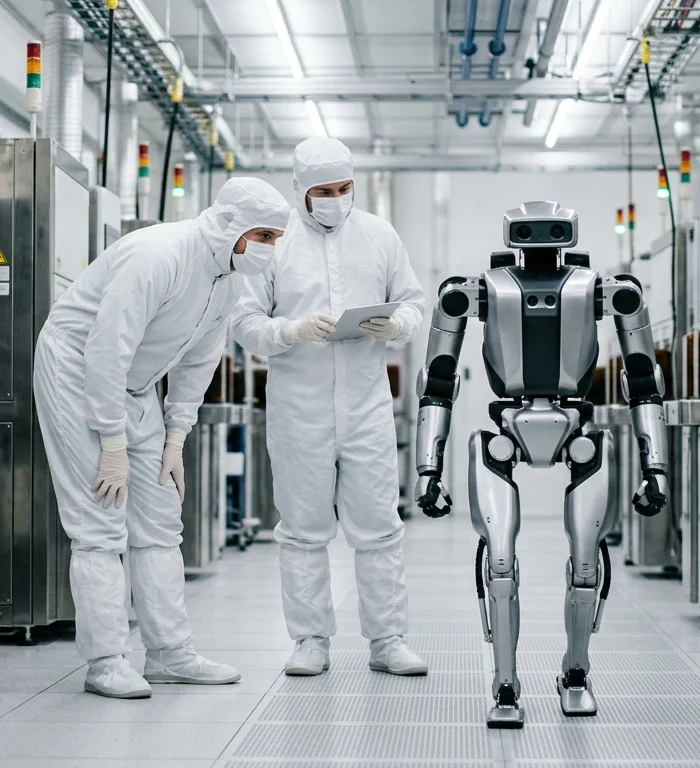
GlobalFoundries has entered an agreement to pilot the Atlas humanoid robot within its semiconductor manufacturing operations starting in early 2027. This deployment marks the first instance of the technology being utilized outside of the automotive sector, specifically moving beyond the testing environment of the developer’s parent company, Hyundai Motor Group. The initiative aims to assess integration requirements and identify specific industrial tasks suitable for humanoid automation in high-precision manufacturing environments.
This expansion builds upon an existing partnership between the two firms involving the deployment of quadruped robots for industrial inspections. Data from the current deployment in Singapore indicates that these units have completed over 90,000 inspections with a 99% mission success rate since April 2026. By leveraging these established operational relationships, the developer intends to accelerate the transition from predictive maintenance to AI-enabled manufacturing across global facilities.
Hyundai Motor Group
The integration of Atlas into semiconductor workflows presents distinct operational requirements compared to automotive assembly. While the developer has committed its initial production runs to Hyundai and research partners, the move to include external industrial customers signals a shift toward broader commercialization. The company is currently scaling its infrastructure, including plans to expand its dedicated robotics application center in 2027 to support increased testing capacity.
Strategic leadership changes, including the recent appointment of a new CEO with a background in artificial general intelligence, underscore a focus on integrating advanced foundation models into physical hardware. The developer is concurrently refining the robot’s dexterity through hardware iterations, such as redesigned multi-fingered hands, to meet industrial reliability standards. Future scalability remains contingent on the successful validation of these units in non-automotive environments, with the developer actively pursuing partnerships across the aerospace, logistics, and life sciences sectors to diversify its industrial footprint.
More stories
- Europe faces attribution gap after 16 cyber, physical incidents
- PIF backs Grand Theft Auto as Saudi players embrace game
- Signal limits screenshots to curb AI access to messages
- Cognition runs Devin Mac workspaces on EC2 in 6 AWS regions
- Salesforce engineers cut 600-failure triage to 90 minutes
- Türkiye Desk: GTA 6 puts console access and network demand in focus
- Microsoft plans Project Helix as Xbox console for PC games
- OpenAI buys travel startup Odessia
- EU Kids Act targets under-13s on social media
- Meta Platforms rejects AI slowdown backed by top rivals
Latest news
- Trump prepares tariffs on China and other major exporters
- New-car buyers pay record average $50,087 in October
- Banks face ECB reserve debate over liquidity and profits
- Investors see Anthropic debut gains fade below $83 a share
- Iraq orders federal control over Kurdish-area oilfields
- Germans oppose Ukraine aid as poll shows support slipping
- Kim Jong-un receives 10 envoys after constitutional shift
- Ukraine claims Libya strike sinks Russian naval corvette