Boeing 737 MAX flaw prompts FAA review of landing safety
Boeing is working on a 737 MAX software fix as the FAA reviews a landing-related automation issue flagged to airlines.
Jurgen Goldmeier ·
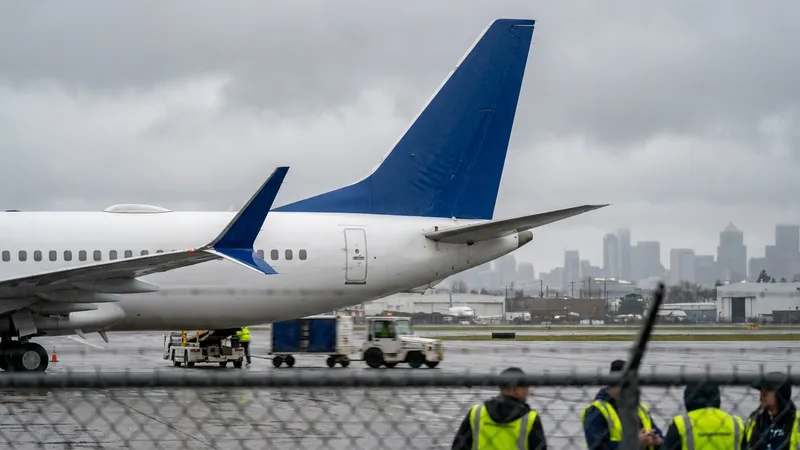
Boeing 737 MAX software flaw has drawn FAA scrutiny after Boeing warned operators it can disable automated navigation during some landings.
Boeing told operators in late August that the condition did not create a safety hazard, according to a company document. The planemaker said it is drafting pilot procedures to restore the function when needed and preparing a software update for a permanent correction.
Missed approaches expose the flaw
The glitch arose from a cockpit software update and appears in a narrow sequence: after a missed approach, when crews revise the programmed route. In that case, pilots may need to continue manually without some autopilot support during a phase that can already involve low altitude, weather and radio workload.
Industry officials said the concern is pilot load rather than an immediate loss of control. Boeing’s position, as stated to operators, is that existing procedures allow crews to handle the condition safely until the new code is ready.
FAA review adds regulatory pressure
The Federal Aviation Administration is investigating the 737 MAX issue and will act if the review shows further steps are needed, a senior agency official said. The inquiry gives regulators another software question on a jet family still recovering from a long safety and certification crisis.
The 737 MAX was grounded for nearly two years after two fatal crashes, a history that intensified oversight of Boeing’s engineering and slowed approvals for later models. The aircraft remains central to Boeing’s commercial business, with airlines relying on the narrow-body jet for short- and medium-haul networks.
The current exposure is not clear. Boeing said it is still working to determine how many aircraft have the affected software, and airlines are not required to tell the company when they install updates.
Airlines seek older software
Cirium, an aviation-data firm, lists 2,422 Boeing 737 MAX 8 and MAX 9 aircraft operating worldwide, a fleet figure that frames the possible scope. The affected subset may be smaller, but Boeing has not provided a verified count.
Alaska Airlines, American Airlines, Southwest Airlines and United Airlines operate 737 MAX jets and said none of their aircraft are using the flawed software. Industry officials said Boeing has advised carriers that they can return to an earlier software version.
Southwest and United have told Boeing they do not want newly delivered 737 MAX aircraft equipped with the affected code, according to industry officials. They have asked for an older version instead, the officials said, putting delivery configuration into the discussion between Boeing and two large US customers.
MAX 7 and MAX 10 timing
The issue may also reach Boeing’s newest 737 variants. Government and industry officials said the software problem could complicate airline plans for the MAX 7 and MAX 10, two models that have faced delayed US certification.
For Boeing, the operational fix is only one part of the problem. A durable resolution requires airlines to accept interim procedures, regulators to be satisfied with the risk assessment, and engineers to deliver code that removes the failure path without creating new certification questions.
If the FAA review supports Boeing’s assessment, the company can keep the matter contained through procedures and a software patch; airlines would face limited training and fleet-planning disruption. If regulators require broader action, Boeing could face more delivery friction, carriers could shift schedules around affected aircraft, and the narrow-body market would absorb another constraint on available capacity.