Iran sanctions push Gulf states to cut Tehran links faster
Iran sanctions are cutting into Tehran’s remaining bank and airline links as Treasury presses Gulf and European partners to choose between Iran and Washington.
Lauren Collins ·
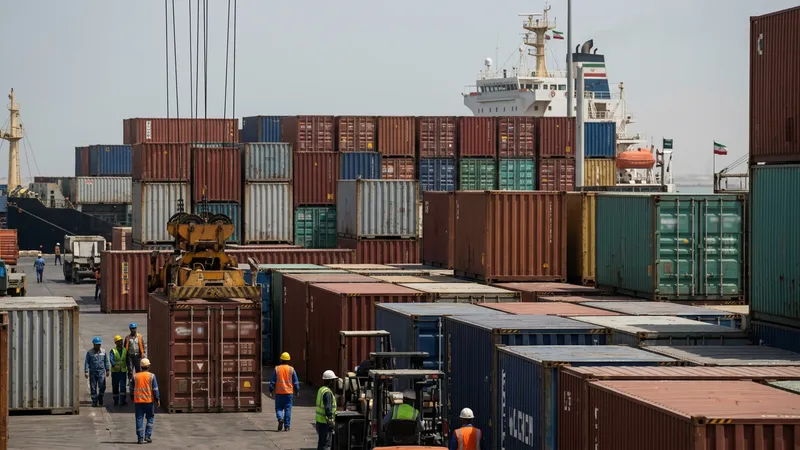
Iran sanctions are tightening around Tehran’s banks and airlines as the Treasury Department presses partners to choose Washington over trade ties.
Treasury pressure reaches Gulf hubs
Jonathan Burke, Treasury’s assistant secretary for terrorist financing, traveled through the Middle East and Europe this month to warn governments and companies that Iran-facing business could carry U.S. costs. The message has landed as Washington tries to force Tehran into a narrower set of financial and transport channels.
"We’re seeing a new urgency from our partners," said Burke, a former managing director at Citi in London. "They’re taking it very seriously."
Air links and banks narrow
In recent days, Iranian airlines have lost access to critical regional routes, while Iran’s top commercial bank has been stopped from handling transactions in the U.A.E. and Turkey. Those steps sit on top of sanctions that have already limited Iran’s access to the dollar system and foreign assets.
Burke’s first regional stop was Oman, which has long acted as a channel between Iran and Western governments. He focused on Mahan Air, a private Iranian carrier Washington has sanctioned and associates with the Islamic Revolutionary Guard Corps.
Burke said he had raised Mahan Air in calls with regional counterparts for months while flights continued. "I pull up FlightRadar, and I can see a flight in between the countries while we’re on the call," he said. "I’m like, ‘How can you possibly allow this?’"
British lawyer Nigel Kushner, who has advised companies on Iran sanctions for two decades, said the pressure on Iranian aviation and banking has moved faster than earlier campaigns. "The U.S. has achieved greater impact in a matter of weeks than during the lengthier campaigns commenced from 2010," Kushner said.
Pezeshkian defends resistance
Iranian President Masoud Pezeshkian, speaking this week at the 81st session of the United Nations General Assembly, acknowledged that sanctions are hurting Iran’s economy. He framed the pressure as a test of national endurance rather than a reason to yield.
"The resistance of the Iranian people will only increase in the face of sanctions," Pezeshkian said. "We will never bow our head or bend at the knee."
Iran has lived under layers of U.S. restrictions since the 1979 Islamic Revolution and the embassy hostage crisis that followed. Even after losing much of its dollar access, Tehran kept enough regional air, banking and trading links to maintain contact with nearby markets.
Chokepoints shape the leverage
The war has made those links more vulnerable as Gulf governments reassess their exposure to Tehran. The pressure has followed attacks on energy infrastructure in the U.A.E. and other countries, while the Islamic Revolutionary Guard Corps has continued to strike vessels near the Strait of Hormuz.
That waterway has served as the gateway for about one-fifth of global oil flows, giving security risks there a direct route into energy prices and shipping costs. Iranian-backed Houthi forces in Yemen have also seized territory along the Bab al-Mandeb Strait and attacked Saudi oil infrastructure, widening the maritime risk around another chokepoint.
President Trump’s administration is keeping the pressure campaign in place even as Tehran offers diplomatic signals, including a proposed seven-day halt to attacks tied to a push for economic relief. Burke cast the shift in tolerance in unusually blunt terms: "Iran has been a problem for 50 years, and we’ve kind of reached our peak at tolerating this problem."
If Gulf and European partners keep restricting Iran-facing routes and transactions, the mechanism is straightforward: fewer banks and carriers can move Iranian money, people and goods. That would tighten Mahan Air’s regional options, raise compliance costs for neighboring lenders and airlines, and leave global markets more exposed to any disruption around Hormuz or Bab al-Mandeb.
If Tehran’s proposed pause instead opens a path to relief, the first test would be whether attacks stop long enough for Washington and regional governments to ease enforcement without appearing to reward coercion. In that scenario, Mahan Air and Iranian banks could seek limited openings, while the wider transport and finance sectors would still price in the risk that restrictions return quickly.