

Japan Launches Mars Moons Exploration Mission Targeting 2031 Sample Return
Japan has launched the Mars Moons eXploration mission to return samples from Phobos by 2031, marking a significant test of deep-space engineering and…
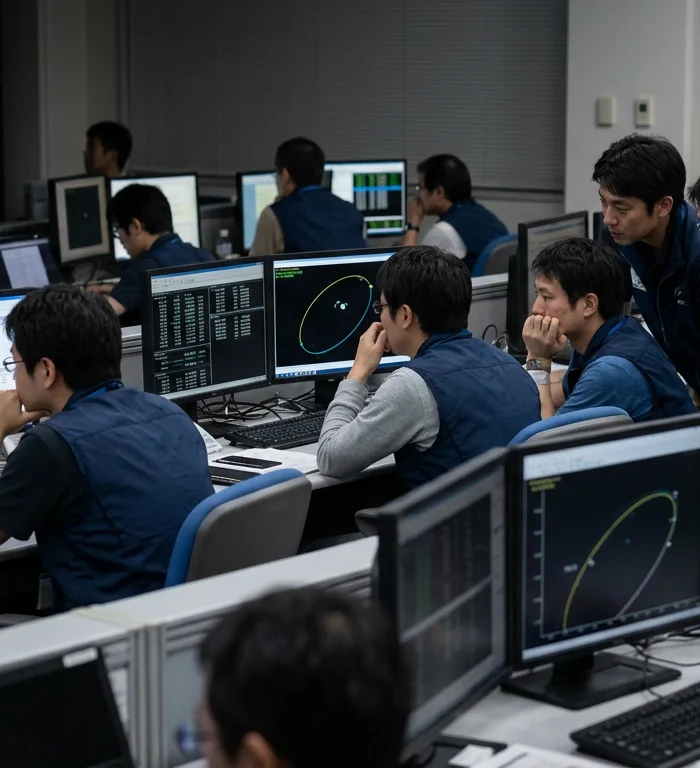
The Mars Moons eXploration (MMX) mission has officially launched, marking the commencement of a multi-year effort to retrieve geological samples from the Martian moon Phobos. The mission represents a significant engineering milestone, as it is the first attempt to return physical material from the Martian system to Earth. The spacecraft is scheduled to complete its return journey in 2031, initiating a five-year operational window characterized by high technical complexity and mission-critical risks.
The success of the mission relies on the precision of autonomous navigation and sample collection protocols in a low-gravity environment. Institutional stakeholders are monitoring the mission for its potential to provide unprecedented data regarding the formation and composition of the Martian moons. The extended duration of the mission introduces long-term operational dependencies and requires sustained funding and technical oversight through the end of the decade.
Beyond the MMX mission, the scientific community is currently navigating increasing pressures regarding the public reception of research. Recent discourse has highlighted the challenges faced by researchers who encounter public hostility or reputational risks while pursuing controversial or high-stakes scientific inquiries. This environment creates potential governance concerns for academic and research institutions, particularly regarding the protection of intellectual freedom and the management of public-facing scientific communication.
Policymakers and institutional leaders should note that the MMX mission serves as a primary indicator of international capability in deep-space logistics and planetary science. The mission's progress will likely influence future budgetary allocations for space exploration and the prioritization of international collaborative frameworks. Continued monitoring of the mission's technical milestones is advised to assess the viability of subsequent sample-return initiatives.
More stories
- Europe faces attribution gap after 16 cyber, physical incidents
- PIF backs Grand Theft Auto as Saudi players embrace game
- Signal limits screenshots to curb AI access to messages
- Cognition runs Devin Mac workspaces on EC2 in 6 AWS regions
- Salesforce engineers cut 600-failure triage to 90 minutes
- Türkiye Desk: GTA 6 puts console access and network demand in focus
- Microsoft plans Project Helix as Xbox console for PC games
- OpenAI buys travel startup Odessia
- SAFE-QE cuts unsupported search terms to 4.3 in tests
- Xbox tests streak badge tied to 3 weekly plays
Latest news
- Trump prepares tariffs on China and other major exporters
- New-car buyers pay record average $50,087 in October
- Banks face ECB reserve debate over liquidity and profits
- Investors see Anthropic debut gains fade below $83 a share
- Iraq orders federal control over Kurdish-area oilfields
- Germans oppose Ukraine aid as poll shows support slipping
- Kim Jong-un receives 10 envoys after constitutional shift
- Ukraine claims Libya strike sinks Russian naval corvette