

Barkly Rare Earths Achieves 98% Recovery Rate in Northern Territory Project
Barkly Rare Earths has achieved a 98% recovery rate using a simplified processing method, potentially improving the economic viability of its Northern…
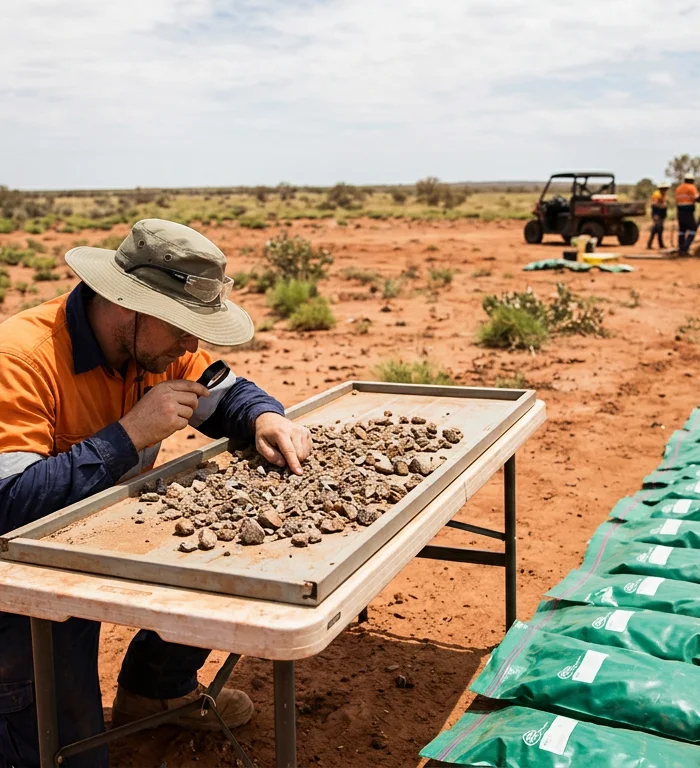
Barkly Rare Earths has reported laboratory-scale extraction rates of 97% to 98% for magnet and total rare earth oxides at its Northern Territory project. The results were achieved using a dry calcination process followed by acid leaching, a method designed to reduce chemical consumption and simplify traditional processing flowsheets.
Independent metallurgical testing confirmed that the process selectively targets valuable minerals, with only 8% to 10% of the host material dissolving during leaching. This selectivity is a critical factor in reducing waste handling and energy requirements, which are primary drivers of commercial project viability. The tests also indicated a potential for phosphorus recovery as a saleable by-product, which could further offset operational costs.
This development provides the company with two viable processing pathways, following previous success with a conventional caustic conversion method. Management is now evaluating these routes to determine the most cost-effective approach for future commercial operations. The company is currently finalizing its flowsheet design while continuing to scale its metallurgical testing.
Barkly Rare Earths
Beyond processing, the company is expanding its resource base through an active 10,000-meter aircore drilling program. Recent exploration has extended the known mineralized corridor to 23 kilometers, with a 93% success rate in recent drill holes. An updated resource estimate is expected before the end of the calendar year, with further revisions planned for the first quarter of 2027.
The project currently hosts a 40-million-tonne resource, with internal exploration targets suggesting a potential scale of 200 million to one billion tonnes. The company is currently tendering for additional drilling capacity to accelerate the definition of this resource. Future operational success remains contingent on the ability to replicate these laboratory-scale metallurgical results in a commercial-scale environment.
More stories
- Singapore core inflation eases to 1.5% in October
- Greece targets 2.3% growth in 2027 budget
- US stocks face Goldman warning on further forced selling
- Bitcoin falls below $57,742 as investors seek other bets
- Nvidia SEC probe examines chipmaker’s accounting issues
- Rwanda women-owned exports fall 51% from 2021 peak
- Kenya women farmers out-earn men by 18% per hectare
- Investors value Anthropic at $2 trillion on Nasdaq debut
- Yen rally faces BOJ test as traders price faster rate hikes
- Senegal oil blocks lead Eni into five-area offshore study
Latest news
- Nigeria's family-planning budget falls 97%
- Peter Attia reviews cold therapy claims on longevity
- Social Security raises 2027 benefits 3.6%
- Hull City 2–0 Brighton: When Resilience Beat Reputation
- David Parr House to honor Victorian art-workman with blue plaque
- Iran's attacks hit 25 tankers near Strait of Hormuz
- FCC approves prison cellphone jamming despite 2.5-mile warning
- Russia strikes Ukraine as Odesa faces electricity strain