Yen rally faces BOJ test as traders price faster rate hikes
Yen rally faces the BOJ's Friday decision after a 5% dollar gain, with Fed tightening bets and carry trades threatening a reversal.
Atlas Newsdesk ·
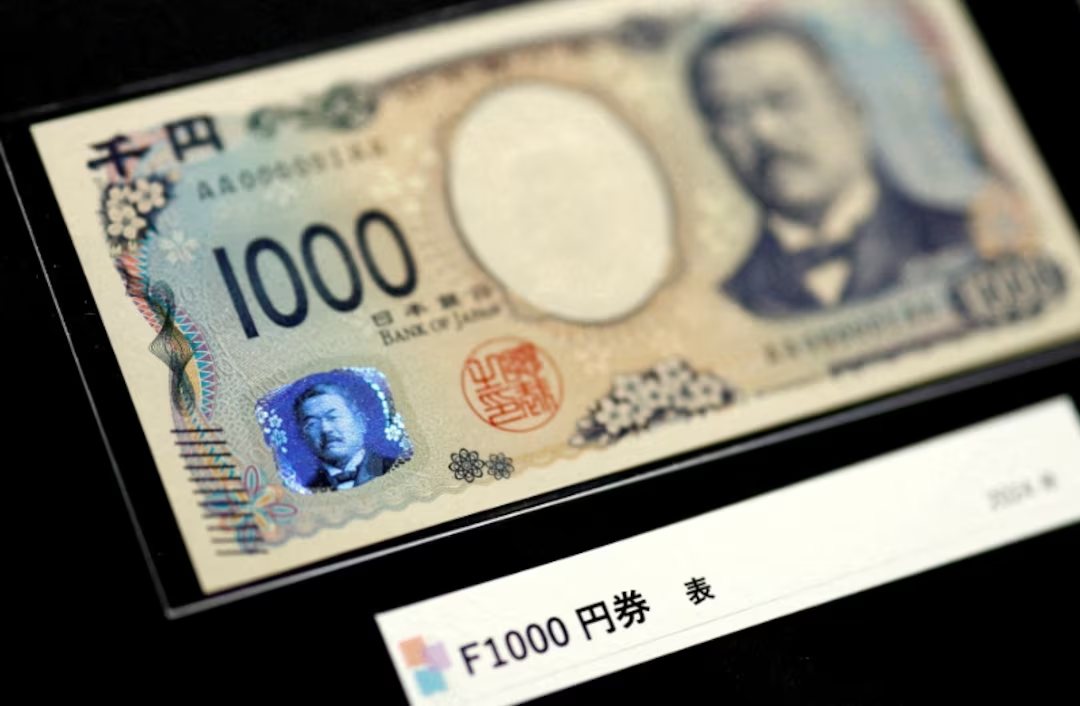
Yen rally faces a Bank of Japan test after a 5% gain against the dollar. A policy surprise could reset carry trades and dollar flows.
The move is the sharpest yen advance in 18 months, following a stretch that took the currency to 40-year lows in July. It has left traders weighing whether Japan's central bank is ready to move faster, or whether the forces behind yen weakness are still intact.
Friday's BOJ rate test
The yen strengthened to 152.89 per dollar last week, its firmest level in nearly seven months, as traders priced a quicker pace of Bank of Japan tightening. Market wagers now point to rate increases once per quarter, taking the policy rate above 2% a year from now, compared with 1% at present.
That pricing sets up a narrow margin for Friday's policy decision. Masafumi Yamamoto, chief currency strategist at Mizuho Securities in Tokyo, said expectations may have moved beyond what the BOJ is likely to validate.
“The market is pricing in too much. Above 2% for the terminal rate is too high,” Yamamoto said. He also flagged the risk of a retreat toward 157 yen per dollar if the central bank does not match the market's hawkish assumptions.
Fed bets keep gap wide
The yen's advance also followed a more forceful public tone toward the BOJ, including US Treasury Secretary Scott Bessent's call for the central bank to “do the right thing.” Currency buying was reinforced by speculation that Japan's $2 trillion government pension fund could bring more capital home, a figure that dwarfs the latest monthly overseas-equity flow reported by the finance ministry.
The counterweight is the Federal Reserve. After US inflation data last week showed price pressures broadening, markets viewed a Fed increase on Wednesday as close to certain and priced further moves once per quarter over the next 12 months, according to Yamamoto.
If both central banks tighten in parallel, the 10-year yield gap would remain near 200 basis points. That differential has been one of the main supports for borrowing in yen and buying higher-yielding assets elsewhere over much of the past decade.
Japan's terms of trade add another pressure point. The country's dependence on imported oil leaves the currency exposed to energy shocks, including the conflict involving the US, Israel and Iran.
Short positions are cleared
Carry trades had reached a record by one measure at the start of the month before the yen's rally forced a broad unwind. The latest Commodity Futures Trading Commission data showed speculative yen positioning turned net long for the first time since February.
Analysts described that clearing of short positions as a potential negative signal for the yen, since it creates room for traders to rebuild bets against the currency. A renewed carry trade would work through the same mechanism as before: cheap yen funding, higher foreign yields and sustained selling pressure on the Japanese currency.
Japanese investment flows have not yet shown a decisive turn inward. Finance ministry data showed investors put 1.3 trillion yen, or $8.4 billion, into foreign shares in August, the largest shift toward overseas equities in five months.
That flow keeps attention on US equities, where AI-linked trades continue to attract Japanese money. For the yen, the issue is whether repatriation talk becomes reported buying, or remains a positioning story around the BOJ meeting.
Three paths for the yen
If the BOJ signals a faster tightening path and the Fed does not exceed current pricing, the yen could hold more of its 5% gain. That would tighten conditions for global carry trades, give the BOJ more room to contain imported inflation and pressure Japanese exporters that benefit from a weaker currency.
If Fed tightening expectations dominate, the yen could move back toward the 157 per dollar level Yamamoto cited. In that case, the global macro effect would be renewed dollar strength, the BOJ would face a more difficult inflation trade-off, and brokers, banks and leveraged funds would see stronger incentives to rebuild yen-funded positions.
A third path is a rangebound market if both central banks move once per quarter and guidance changes little. The open questions are Friday's BOJ language, the Fed's reaction to inflation and whether Japan's large pools of capital actually shift money home.