Artemis II Blasts Off for Moon Flyby
Artemis II departed Earth orbit after a 5:55 engine burn, sending Orion and its four astronauts toward a lunar flyby, officials said.
Jason Kwon ·
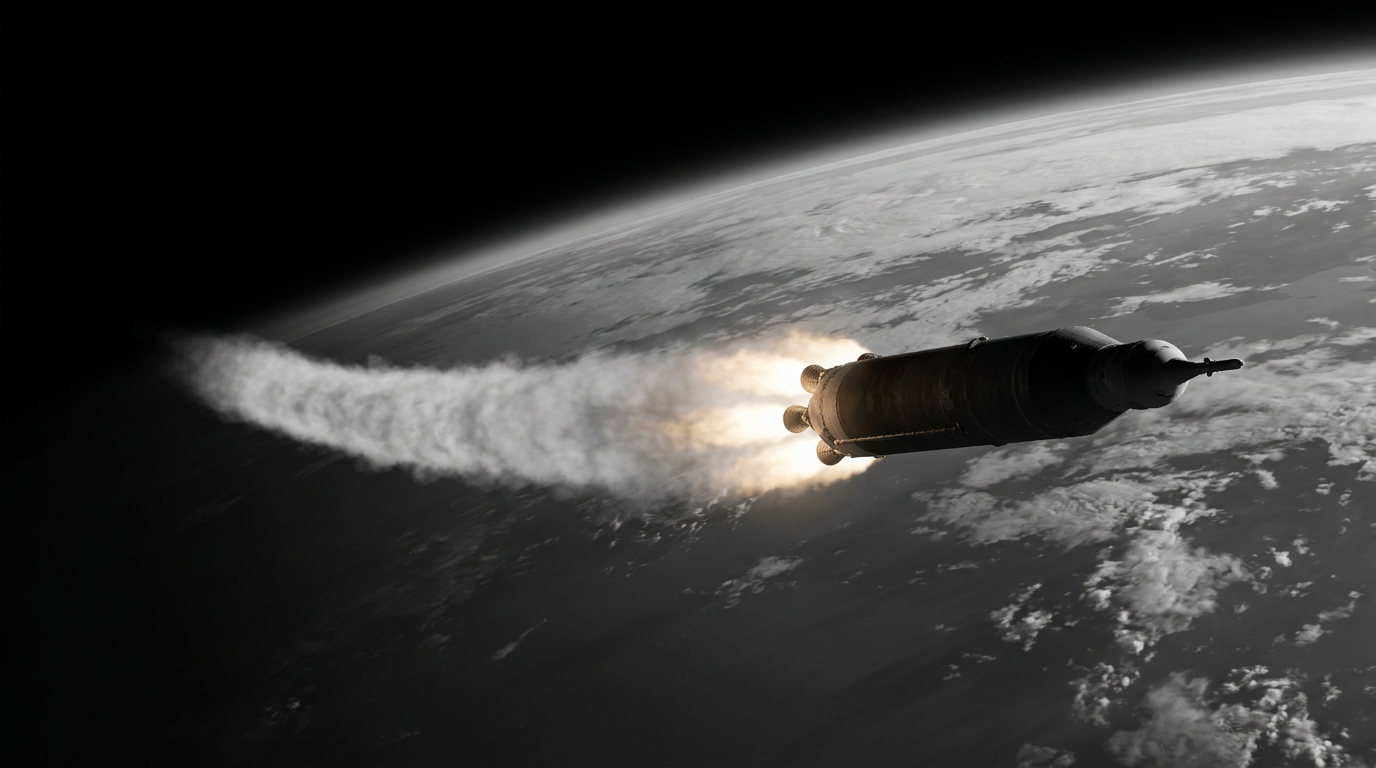
Artemis II moved onto its lunar trajectory after the Orion spacecraft successfully left Earth orbit on [DATE, 31 minutes ago], following a major propulsion maneuver that set the crew on course for a flyby of the Moon.
The departure from Earth orbit came after a translunar injection (TLI) burn, a key step that shifted Orion from an Earth-centered path to a Moon-bound route. Officials described the operation as a five-minute and 55-second firing of the spacecraft’s main engine. NASA’s Dr. Lori Glaze said the TLI was executed “flawlessly.”
With the burn complete, the four-astronaut crew began a looping flight plan that will take Orion around the far side of the Moon before it heads back toward Earth. Canadian astronaut Jeremy Hansen, speaking from inside the capsule, confirmed the crew was doing well during the transit.
Before committing to the lunar flyby, Orion spent about one day in a high Earth orbit. During that period, teams carried out checks of the spacecraft’s engines, navigation, and life-support systems, according to the mission description. Those verifications preceded the TLI, which is designed to place the vehicle on the correct trajectory for the lunar pass and return.
The mission is described as the first time humans have traveled beyond Earth’s orbit since 1972. Orion is projected to reach a point more than 4,700 miles (7,600 km) beyond the Moon, a distance that could exceed the mark associated with Apollo 13 in 1970, according to the mission outline.
Mission controllers also outlined contingency options if conditions change after the TLI. They said the fastest return path is a U-turn maneuver available within the first 36 hours after the burn. After that window, the mission plan indicates that staying on the lunar trajectory and returning using a gravity-assist path can be similarly efficient.
For global markets and governments that track space capabilities, the immediate focus remains on execution milestones and system performance as Orion proceeds on its lunar flyby route. The mission’s next phases will continue to test operational readiness, while the stated emergency-return timelines highlight how decision points can shift as the spacecraft moves farther from Earth.
Implications
Country Impact: The mission includes Canadian astronaut Jeremy Hansen, underscoring international participation in human spaceflight activities described in the mission update. Officials also highlighted defined emergency-return options, which shape operational decision-making as the spacecraft moves farther from Earth.
Industry Impact: The reported checks of engines, navigation, and life-support systems, followed by a successful TLI burn, emphasize performance milestones for crewed spacecraft operations. The mission’s stated distance target and lunar flyby profile keep attention on reliability and mission control procedures during deep-space transit.
Market Impact: The update centers on a major execution step—Orion leaving Earth orbit after TLI—providing a clear operational marker that stakeholders can track. The outlined contingency timelines, including the first 36 hours post-TLI, frame near-term mission risk management as the flight progresses.