

Anthropic Staffer Claims AI-Assisted Proof of Riemann Hypothesis
An Anthropic employee claims to have solved the Riemann Hypothesis using AI, though the proof awaits formal verification by the mathematical community.
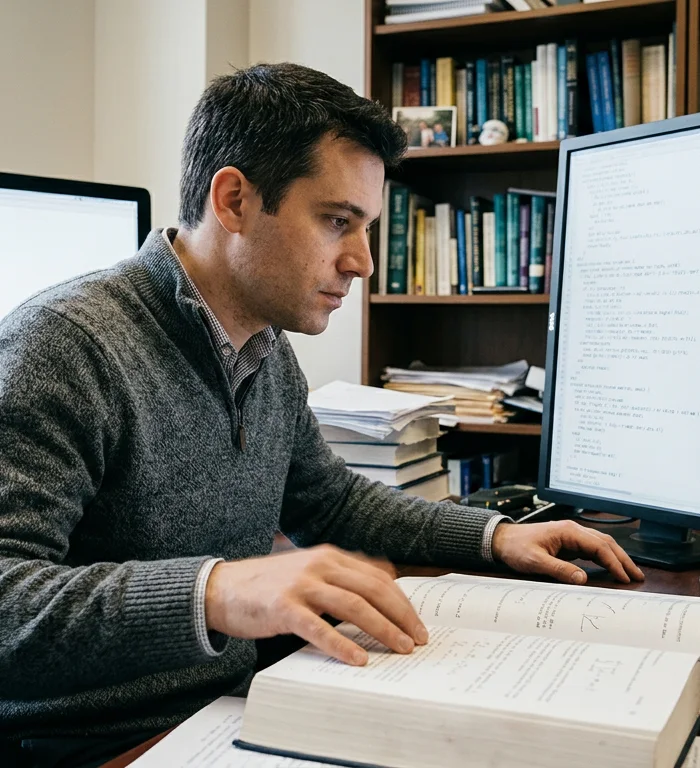
A technical staff member at Anthropic has announced a potential proof of the Riemann Hypothesis, a long-standing mathematical problem concerning the distribution of prime numbers. The claim involves the use of the company’s AI model, Claude, to generate and verify the proof, which is documented in approximately 17 million lines of Lean code. The Riemann Hypothesis is one of seven Millennium Prize Problems designated by the Clay Mathematics Institute, which carries a $1 million reward for a verified solution.
The announcement follows Anthropic’s recent initial public offering, which raised $81 billion and established a market valuation of $1.5 trillion. While the AI model reportedly verified the logic within the code, the mathematical community has yet to conduct a formal peer review. The Clay Mathematics Institute has confirmed that the hypothesis remains listed as unsolved on its registry, noting that the verification process for such a complex proof is extensive and requires rigorous human validation.
This development marks the second instance in recent months of an AI-linked entity claiming a breakthrough on a major unsolved mathematical problem, following a similar claim regarding the Navier-Stokes equations. The reliance on AI-generated code for mathematical proofs introduces new challenges for traditional academic verification, as experts must now reconcile machine-verified logic with human comprehension. The outcome of this claim will serve as a significant test case for the role of large language models in high-level scientific research and the reliability of automated proof-checking systems.
Institutional stakeholders should monitor the formal review process by the mathematical community, as validation would represent a fundamental shift in computational research capabilities. Conversely, a failure to verify the proof could impact the perceived utility of AI in specialized scientific domains. The integration of AI into foundational research remains a critical area of interest for both technological governance and long-term intellectual property development.
More stories
- Europe faces attribution gap after 16 cyber, physical incidents
- PIF backs Grand Theft Auto as Saudi players embrace game
- Signal limits screenshots to curb AI access to messages
- Cognition runs Devin Mac workspaces on EC2 in 6 AWS regions
- Salesforce engineers cut 600-failure triage to 90 minutes
- Türkiye Desk: GTA 6 puts console access and network demand in focus
- Sceye tests 4G service from 54,000 feet over Japan
- DeepSeek updates AI model as speed and cost rivalry grows
Latest news
- Trump prepares tariffs on China and other major exporters
- New-car buyers pay record average $50,087 in October
- Banks face ECB reserve debate over liquidity and profits
- Investors see Anthropic debut gains fade below $83 a share
- Iraq orders federal control over Kurdish-area oilfields
- Germans oppose Ukraine aid as poll shows support slipping
- Kim Jong-un receives 10 envoys after constitutional shift
- Ukraine claims Libya strike sinks Russian naval corvette