

AMD Zen 6 EPYC ‘Venice’ Architecture Delivers Significant Performance Gains
AMD’s new Zen 6 ‘Venice’ architecture achieves a 93% performance gain in dual-processor configurations, driven by increased core density and significant IPC…
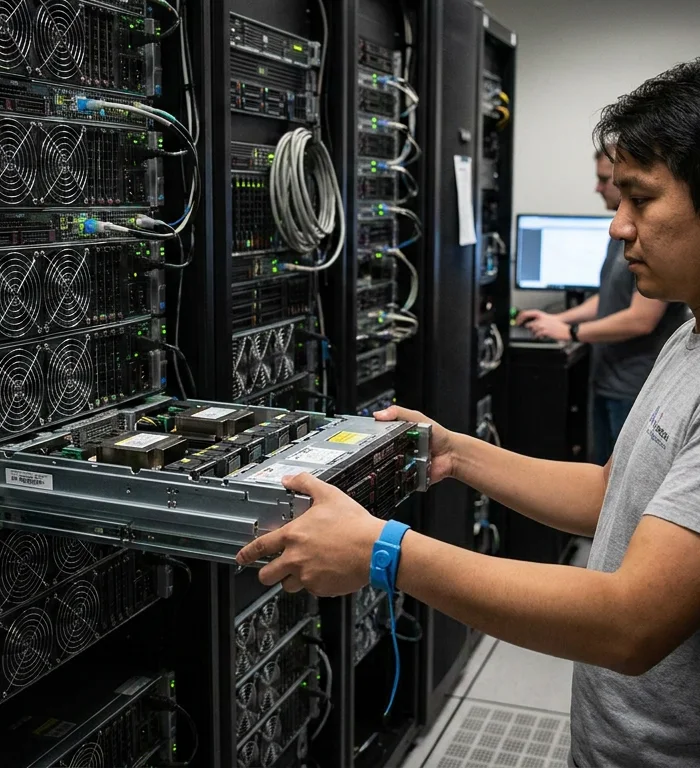
The newly introduced AMD Zen 6 'Venice' architecture has demonstrated substantial performance improvements over previous generations, with internal testing indicating a 93% increase in throughput for dual-processor configurations. The architecture, built on TSMC’s N2P node, features a redesigned vector engine that natively supports half-precision FP16 instructions, signaling a strategic focus on enterprise, cloud, and AI-driven workloads.
Architectural modifications include a shift to a dual-IOD (Input/Output Die) design, which provides the SP7 platform with 16 memory channels. While this configuration enhances memory throughput, it necessitates a trade-off regarding PCIe 6.0 lane availability compared to previous iterations. The core density has also increased significantly, with standard Zen 6 CCDs supporting up to 12 cores and Zen 6c variants reaching 32 cores, effectively quadrupling the shared L3 cache per core compared to the Zen 5c generation.
AMD Zen
Performance benchmarks highlight the EPYC 9996 and 9686F processors as primary drivers of these gains. The 9996, in a 1,024-thread dual-processor setup, outperformed the 768-thread EPYC 9965 in SPEC CPU 2026 throughput testing. The frequency-optimized 9686F is positioned as a direct competitor to current high-end data center offerings, including specialized hardware from major industry rivals.
AMD reports a 27% average instructions-per-clock (IPC) uplift in enterprise and AI environments. These developments suggest a shift in the competitive landscape for high-performance computing (HPC) and data center infrastructure. Market participants should monitor the upcoming releases of the Venice-X and Verano platforms, as well as the competitive response from alternative architectures expected in the coming year.
More stories
- Europe faces attribution gap after 16 cyber, physical incidents
- PIF backs Grand Theft Auto as Saudi players embrace game
- Signal limits screenshots to curb AI access to messages
- Cognition runs Devin Mac workspaces on EC2 in 6 AWS regions
- Salesforce engineers cut 600-failure triage to 90 minutes
- Türkiye Desk: GTA 6 puts console access and network demand in focus
- Anthropic IPO seeks $1.4 trillion fully diluted valuation
- UK agencies face 100-plus public-code security flaws
- Meta Platforms rejects AI slowdown backed by top rivals
- Apple AI server plan puts Nvidia links back in play by 2029
Latest news
- Highly diversified investors report 91% confidence in retirement
- Russian military faces 1,087 recorded suicides in Ukraine war
- US faces China, Russia in Africa minerals contest
- Russian war deaths top 460,000, Guardian says
- Nvidia board gets Trump input on Jensen Huang return as CEO
- Rwanda faces budget strain from 85% electricity access push
- ICE arrests at Seattle airport draw protests and scrutiny
- AI doubts leave Asian stocks facing a new investment test