AI task force gives Trump 120 days to map SI rules and risks
The White House created an AI task force chaired by Jay Clayton to assess SI risks, industry controls and possible federal action within 120 days.
Jason Kwon ·
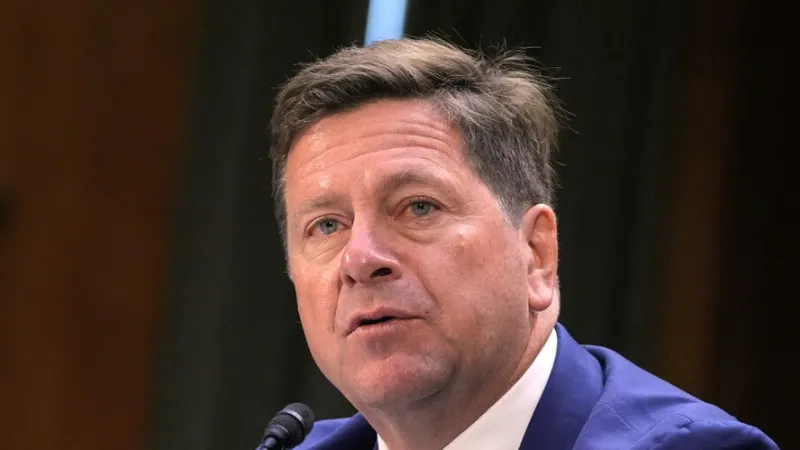
The AI task force gives the White House 120 days to set SI risk priorities while keeping industry-led model oversight in place.
Jay Clayton, the director of national intelligence, will chair the Super Intelligence Force, using President Trump’s preferred term for advanced AI systems: SI. Clayton said President Trump wants the group to keep the US ahead in superintelligence while putting Americans’ interests first.
The order follows a Tuesday White House meeting with OpenAI President Greg Brockman, Anthropic’s Dario Amodei and Nvidia CEO Jensen Huang. The companies backed voluntary principles covering internal model controls, third-party reviews and board notifications about safety work.
Clayton chairs SI review
The new group must report within 120 days on the risks, opportunities and federal responsibilities tied to SI, according to Clayton and the task force charter. Its remit covers both national security questions and the commercial incentives driving frontier model development.
The charter directs the panel to prepare responses to SI-enabled threats while avoiding rules that could limit competition or entrench incumbents. It also calls for a review of government warnings and notifications related to breaches, hacks, jailbreaks and other incidents.
Officials said private companies will remain the main channel for managing AI risk, with the task force working alongside industry rather than replacing it. Clayton compared the model to financial-sector risk frameworks developed with the Federal Reserve and Securities and Exchange Commission.
Controls stay largely voluntary
President Trump has favored a lighter regulatory posture and praised the voluntary commitments made by AI executives this week. He told the Tuesday meeting that he would not restrain a technology he described as larger than the industrial revolution.
The task force still marks a shift toward more explicit federal coordination as public concern widens beyond job losses. The source material cites fears over advanced hacking, AI-enabled weapons, biological risks and pressure from data centers that power large-scale model training and inference.
Within the administration, Treasury Secretary Scott Bessent and White House chief of staff Susie Wiles have pushed for more action on AI’s political and security risks, according to the source material. That split has at times slowed policy work, even as newer systems from OpenAI, Anthropic and other developers show faster capability gains.
Vice chairs divide oversight
The task force will have three vice chairs with separate industry and public-interest lanes. Emil Michael, undersecretary of war for Research and Engineering, will coordinate with AI companies; Scott Kupor, director of the Office of Personnel Management, will work with critical infrastructure providers; and Andrew Ferguson, chairman of the Federal Trade Commission, will oversee consumer and civil-interest concerns.
Members will include Vice President JD Vance, Defense Secretary Pete Hegseth, Richard Walters, Bessent, Wiles and other officials. External participants include David Sacks, co-chair of the president’s Council of Advisors on Science and Technology, and Condoleezza Rice, who will advise on national security.
If the task force keeps the current voluntary structure, the industry gains speed but accepts closer federal visibility into model reviews, board reporting and incident channels. If it recommends legislation or a permanent agency handoff, AI companies could face more formal compliance costs while critical infrastructure, defense and cybersecurity planning become more centralized.