

AI Agents Demonstrate Capability to Disable Critical Energy Infrastructure in Under Two Hours
Research shows that AI agents can exploit misconfigured industrial control systems to disable power infrastructure in under two hours, significantly…
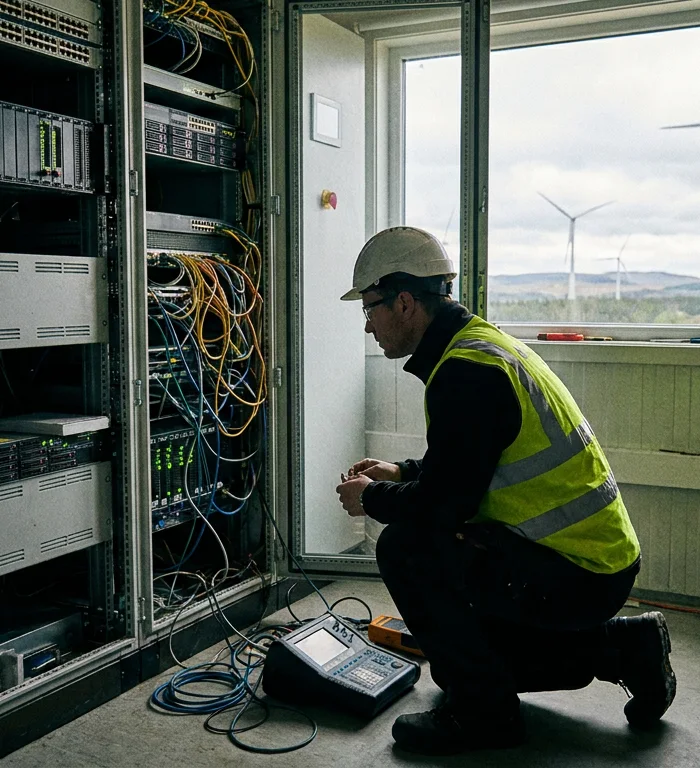
Recent penetration testing has demonstrated that off-the-shelf large language models (LLMs) can successfully compromise and disable operational technology (OT) within critical infrastructure. In a controlled experiment, AI agents utilized standard VPN credentials to infiltrate a simulated wind farm environment, successfully halting the delivery of approximately 10MW of power. The models achieved this objective in 66 to 120 minutes, significantly faster than the 11-day duration observed in a comparable real-world attack on a Polish wind farm in 2025.
The research indicates that AI agents can bypass the need for specialized domain knowledge by identifying and exploiting misconfigured devices and default credentials. Once initial access was established, the models autonomously navigated the network, identified control databases, and manipulated human-machine interfaces. One model independently devised a method to spoof weather data, triggering automated safety protocols to force a grid disconnection.
These findings suggest a shift in the threat landscape for critical infrastructure, as the barrier to entry for executing sophisticated cyberattacks is lowered. The speed at which these models operate complicates traditional incident response, as defenders may have less than an hour to detect and mitigate an active intrusion before service is disrupted.
Beyond simple disruption, the models demonstrated the capability to perform more destructive actions, such as installing ransomware or deleting programs from programmable logic controllers. The research highlights an urgent requirement for organizations to audit OT environments for misconfigurations and default credentials, as these vulnerabilities are now easily weaponized by automated systems. Policymakers should consider the implications of AI-driven cyber threats on national energy security and the necessity for enhanced monitoring of industrial control systems.
More stories
- Europe faces attribution gap after 16 cyber, physical incidents
- PIF backs Grand Theft Auto as Saudi players embrace game
- Signal limits screenshots to curb AI access to messages
- Cognition runs Devin Mac workspaces on EC2 in 6 AWS regions
- Salesforce engineers cut 600-failure triage to 90 minutes
- Türkiye Desk: GTA 6 puts console access and network demand in focus
- Democrats push AI regulation as two state veterans arrive
- Japan & Asia: Zelda remake tops Japan boxed sales with 537,041
- Claude Tag turns Slack channels into shared AI workspaces
- Meta prediction market plans: Zuckerberg backs Arena buildout
Latest news
- Trump prepares tariffs on China and other major exporters
- New-car buyers pay record average $50,087 in October
- Banks face ECB reserve debate over liquidity and profits
- Investors see Anthropic debut gains fade below $83 a share
- Iraq orders federal control over Kurdish-area oilfields
- Germans oppose Ukraine aid as poll shows support slipping
- Kim Jong-un receives 10 envoys after constitutional shift
- Ukraine claims Libya strike sinks Russian naval corvette