Claude Tag turns Slack channels into shared AI workspaces
Claude Tag embeds Anthropic’s Claude into Slack as a teammate, letting enterprise users delegate work by tagging it with channel-based context and permissions.
Jason Kwon ·
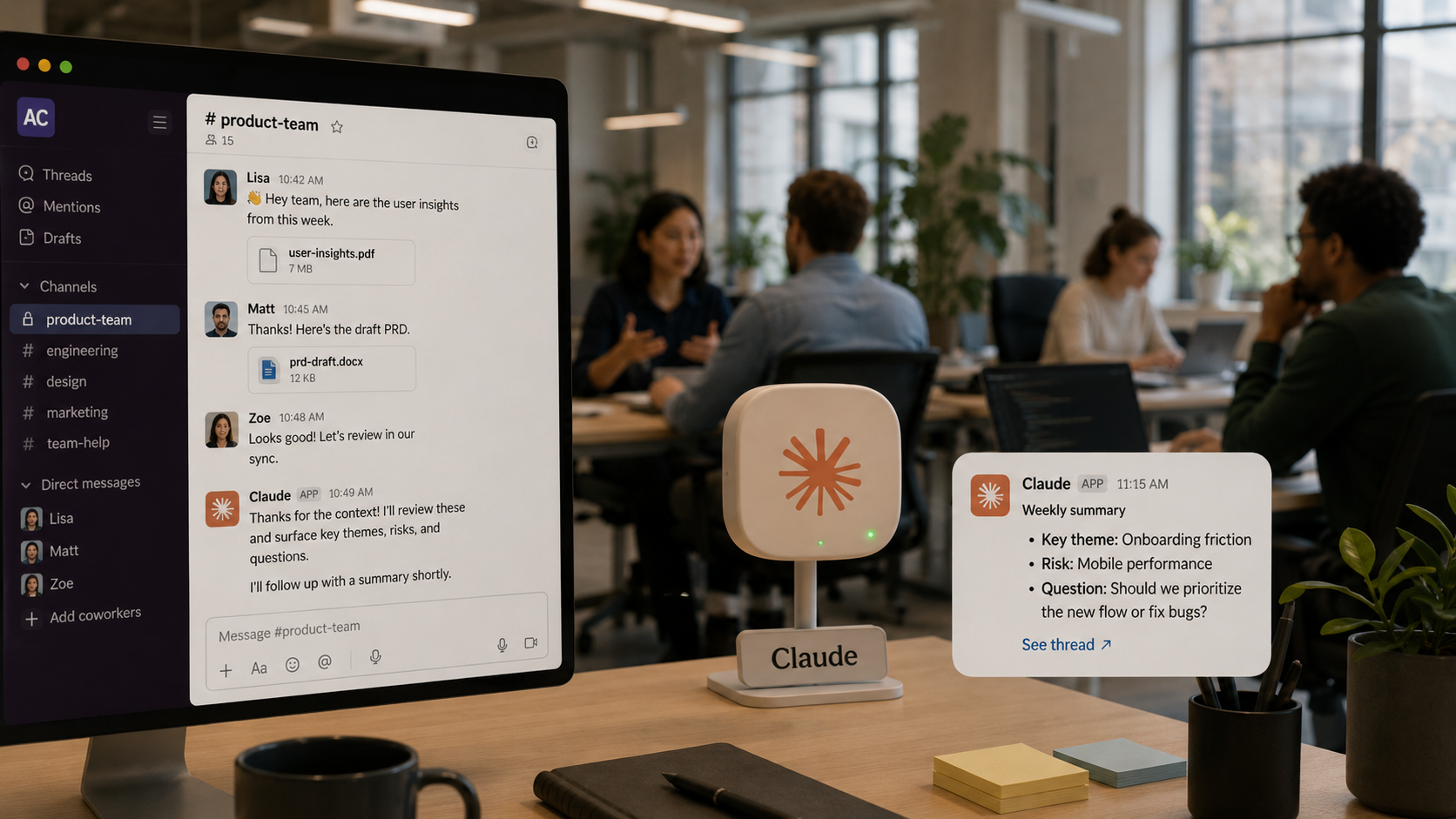
Claude Tag is Anthropic’s new Slack integration designed to make its Claude model operate more like a co-worker than a standalone assistant. Announced Tuesday, the system lets users tag Claude in messages so it can take on tasks inside designated channels while following team context.
Instead of one-off prompts, Anthropic is positioning Claude Tag as a persistent participant that can be granted access to specific channels, internal tools, or codebases. The company says the goal is to enable delegation that feels closer to assigning work to a teammate than querying a chatbot.
How Claude Tag works inside Slack
Claude Tag joins Slack channels with permissions set by the organization, and users assign work by mentioning it in conversation. Once added, the model can use information from the channels it is part of to inform how it plans and completes future tasks.
Anthropic says Claude Tag builds context over time by retaining relevant details from channel activity. That ongoing memory is intended to reduce repetitive onboarding, such as re-explaining project background or conventions for each new request.
The system is launching on Slack for Enterprise and Team customers, according to Anthropic. The company also said the feature will be extended to additional workplace platforms in the future.
“Multiplayer” visibility and asynchronous tasking
A central design feature is that Claude Tag operates in a shared environment where channel participants can see what it is doing. Anthropic describes the experience as “multiplayer,” meaning interactions occur openly in the channel rather than privately between a single user and the model.
That channel-based approach is aimed at reducing coordination gaps when multiple people are working on the same thread. Anthropic says Claude Tag can continue a workflow from earlier messages, allowing it to resume where a conversation stopped and keep work moving forward.
Claude Tag is also built for asynchronous work. Teams can assign a task and let the model run in the background, rather than requiring real-time back-and-forth to produce progress.
In addition, Anthropic says Claude Tag can schedule tasks for itself, supporting longer-running work that unfolds across time. That capability aligns with a broader trend in workplace AI toward “agent-like” systems that can manage multi-step assignments without constant supervision.
Context across channels and “ambient” updates
Beyond a single channel’s history, Anthropic says Claude Tag can learn from other channels and data sources when explicit permission is granted. The company frames this as a way to expand organizational context while preserving access controls.
Anthropic also highlighted an optional “ambient” mode. When enabled, Claude Tag can proactively surface information it judges relevant, including flagging details from different channels or connected tools that may affect a user’s work.
The approach reflects a push to make workplace AI less reactive and more continuous, though it also raises operational questions for teams about governance. Organizations adopting persistent, context-building assistants will likely need clear rules around which channels are included, what tools are connected, and how people verify and sign off on AI-produced outputs.
For Slack-based teams, the near-term implication is a new workflow: assigning tasks by tagging an always-present AI participant rather than opening a separate assistant window. The next steps to watch are how quickly Claude Tag expands beyond Slack, and how enterprises define permissions and visibility as the model’s role shifts from tool to teammate.